
Lieferung heute & morgen

Qualitätsgarantie

Willkommens-Angebote freischalten: KOSTENLOSE Lieferung | Bis zu 80 % RABATT | Kostenlose 30-Tage-JoyPlus-Testphase
App herunterladen
Baking tins are an essential part of any kitchen. Yet unclear size specifications, delicate coatings and unsuitable materials often lead to the wrong purchase. A tin may look versatile at first glance, but in practice it can be too shallow, too small or not heat-resistant enough for the dough you want to use.
This guide shows what hobby bakers, families, baking beginners, as well as small bakeries and baking courses, should look out for when buying.
The external dimensions of a cake tin do not always tell you how much batter it can actually hold. The rim height, internal measurement and capacity all affect the baking result. A rectangular tin with a low edge is suitable for brownies or tray bakes, for example, while a deeper bread tin needs more room for dough to rise.
Before buying, you should therefore check:
A non-stick coated baking tin can make releasing your baked goods easier. However, the coating will only stay functional for longer with the right care. Metal knives, harsh sponges, abrasive cleaners and very high temperatures can damage the surface.
Pay attention to the manufacturer's specific cleaning instructions. Some tins are dishwasher-safe, while others should only be cleaned with warm water, mild washing-up liquid and a soft sponge.
A silicone baking tin is flexible and can usually be stored away to save space. However, it can deform more easily than a rigid metal tin when being filled. For runny batters, it is therefore advisable to place it on a sturdy baking tray as a base, unless the product design includes a firm reinforcement.
Even with silicone, you should check the specifications for temperature resistance, oven use and cleaning. "Silicone" alone is not a sufficient mark of quality.
Carbon steel and steel heat up relatively quickly and offer a shape-stable construction when the material is thick enough. They are suitable for cakes, bread, brownies and savoury oven dishes. A coating can make releasing easier, but requires gentle handling.
Aluminium distributes heat evenly and is relatively light. According to the product description, the Tefal Success Baking Pan combines recycled aluminium with a ProBaking non-stick coating. The model is rectangular, measures 28 cm and is stated as dishwasher-safe; however, hand washing is recommended for a longer lifespan.
Silicone is flexible and practical for small cakes, muffins, madeleines or themed bakes. For large or heavy batters, the tin should be adequately supported while being transported to the oven.
For a non-stick coated baking tin, the following details are relevant:
A springform tin can be practical for cheesecakes, tortes and delicate layers. With a rectangular springform tin, you should also consider the locking mechanism and leak resistance. A removable base makes it easier to transfer to a serving plate, but does not replace checking for leakage with very runny batters.
An ovenproof baking tin must only be used within the stated temperature limits. Some models are intended solely for the oven and not for the microwave, hob, induction, open flame or grill.
Before first use, you should read the care instructions. For coated tins, baking paper, soft kitchen utensils and allowing the baked goods to cool completely before releasing are usually sensible. The respective manufacturer's instructions take precedence.
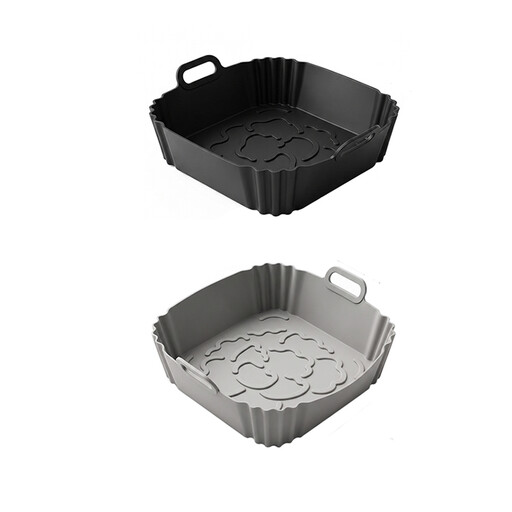
Why this product fits the profile: The two-piece set offers two square silicone tins for smaller cakes, brownies or savoury baking ideas. The compact size is suitable for limited storage space.
The stated dimensions help with planning the amount of batter. Thanks to the flexible tin, the baked goods are easier to release after cooling; a firm base should be used when filling.
Two tins in a set and a square format with a side length of 21.5 cm.

Why this product fits the profile: The bread tin, made from coated steel with an enamelled base, is designed for bread and cakes. According to the product description, it is ovenproof up to 250 °C and suitable for sourdough.
The specific capacity stated for 1 kg loaves makes it easier to choose for bread recipes. The care instructions are clear: hand wash only and no metal utensils.
Dimensions of 30 × 10.01 × 8.51 cm, enamelled base and stated heat resistance up to 250 °C.
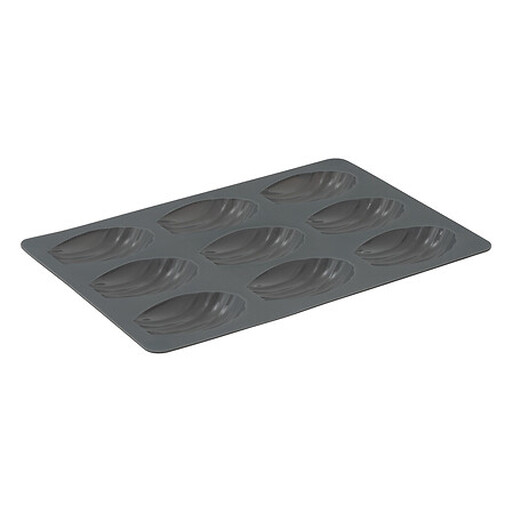
Why this product fits the profile: The mould with shell-shaped indentations and dimensions of 36 × 21.5 × 2 cm is aimed at people who want to make madeleines or small speciality bakes in a uniform shape.
The defined number and shape of the indentations prevents a general cake tin from being misused for a specific bake. Before buying, you should check the oven dimensions and care instructions.
Food-grade silicone according to the product description and a special shell format for madeleines.
We have put together a complete, regularly updated list of products that fully meet these strict selection criteria and the safety regulations in force in the EU.
For beginners, clearly dimensioned, shape-stable models that are easy to release are practical. A coated cake tin or a small baking tin set covers several recipes. With silicone, a firm base is useful when filling.
The lifespan depends on the material, usage temperature and care. Scratching utensils, abrasive cleaners and incorrect cleaning can damage the coating more quickly. Hand washing and soft sponges are the recommended approach for many models.
That depends on the recipe, the structure of the tin and the manufacturer's instructions. With smooth indentations, releasing may work without additional grease. For fine contours, low-sugar batters or the first use, a light greasing can still be sensible. The key is to let the tin cool completely before releasing the baked goods.