
Lieferung heute & morgen

Qualitätsgarantie

Willkommens-Angebote freischalten: KOSTENLOSE Lieferung | Bis zu 80 % RABATT | Kostenlose 30-Tage-JoyPlus-Testphase
App herunterladen
Baking tins need to offer more than just heat resistance in everyday use. A leaking springform tin can lose batter in the oven, an unsuitable loaf tin can make it difficult to remove bread, and a delicate coating can be damaged by incorrect cleaning. So if you are looking for baking tins for cakes, bread, quiches or small bakes, you should not choose based on price or product photos alone.
As a Joybuy Product Recommendation Officer, I have assessed the key buying criteria from a practical perspective. This makes it easier to decide whether a single cake tin, a baking tin set or a special tin with a removable base is right for your household.
A non-stick baking tin can make it easier to remove your bake. However, that does not automatically mean it is suitable for metal knives, scouring pads or every type of dishwasher cleaning. Many coatings retain their properties for longer when used with wooden, silicone or heat-resistant plastic utensils and washed by hand.
You should therefore check the specific cleaning instructions. For several tins in this selection, only the base is dishwasher-safe, or hand washing is expressly recommended.
Diameter and volume affect baking time, batter height and heat distribution. A 20 cm springform tin cannot simply be replaced with a 30 cm tin. With a bread tin, the internal dimensions and capacity are also important. A tin with a capacity of around 2.4 litres is suitable for different quantities of dough than a version holding approximately 1 litre.
Before buying, you should check:
A baking tin with a removable base makes it easier to turn out and serve your bake. With liquid fillings, however, the seal remains an important consideration. With a springform tin, the clasp, base and rim should fit together neatly. For quiches and tarts, a sturdy, removable and cut-resistant base can be useful, as the bake can be served directly on its base.
Steel and carbon steel conduct heat reliably and retain their shape when used correctly. Extra-thick material can increase resistance to bending, but it often makes the tin heavier. Stoneware retains heat and is also suitable for serving, but it is more sensitive to sudden changes in temperature.
An ovenproof baking tin must always be used within the stated maximum temperature. In the examples below, the stated limits vary by model between 240 °C, 250 °C and 260 °C. This is not a general recommendation for all ovens or grill functions.
For coated steel tins, three details are particularly important:
The clasp on a springform tin should be easy to operate while remaining secure. A high rim is useful for cakes and particularly voluminous doughs. For Bundt cake recipes, the central opening of the Bundt tin ensures that the dough is heated from several sides. A shallow quiche tin or tart tin, on the other hand, is designed with a low rim and a suitably sized base.
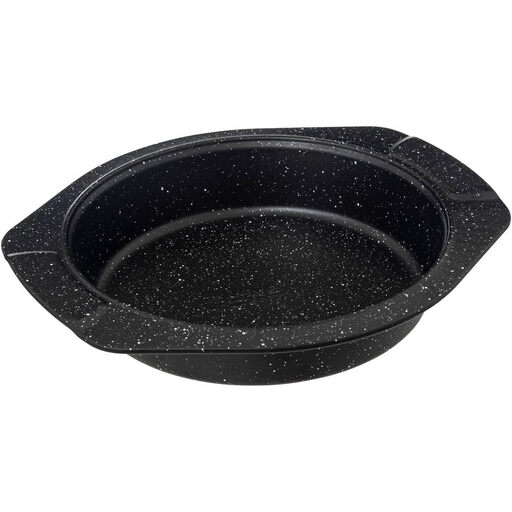
Why this product suits this profile: The 26 cm cake tin is designed for classic cakes in family households and features a steel body, steel handles and a PTFE coating.
The product details expressly state that this version is not dishwasher-safe. This means you can factor in the necessary hand washing before buying.
26 cm diameter, approximately 1.9-litre usable capacity and suitability for indoor ovens.
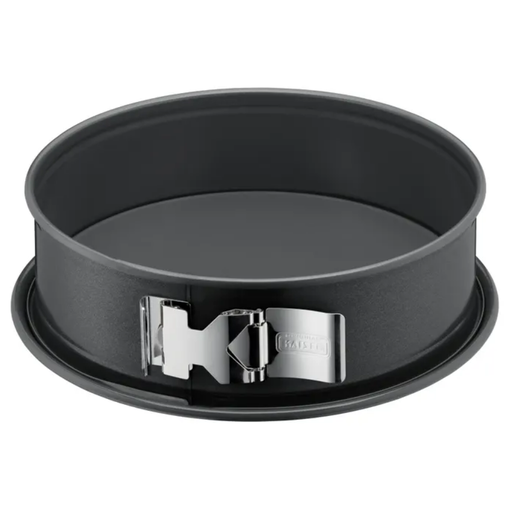
Why this product suits this profile: The 20 cm springform tin combines a SafeClick clasp with an enamelled, cut-resistant base and a stated heat resistance of up to 250 °C.
The specifications distinguish between a dishwasher-safe base and a ring that must be washed by hand. This prevents incorrect expectations about cleaning.
20 cm diameter, SafeClick system and a base described as cut-resistant and leakproof.
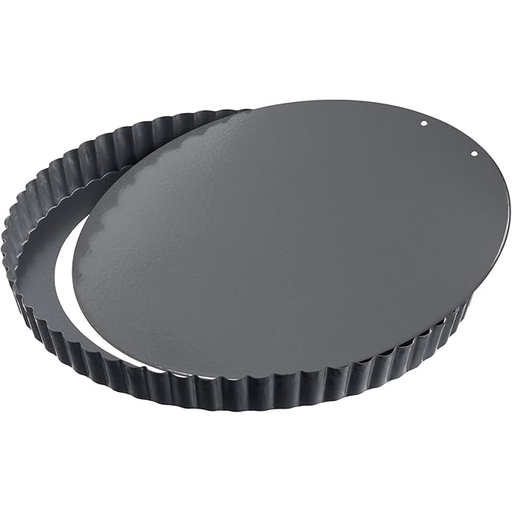
Why this product suits this profile: The removable enamelled base makes it easier to release and serve tarts and quiches with a large base area.
The tin is expressly intended for oven use and not for use on hobs. This restriction helps prevent misuse after purchase.
32 cm diameter, steel construction, KAIRAMIC coating and a heat-resistant base up to 250 °C.
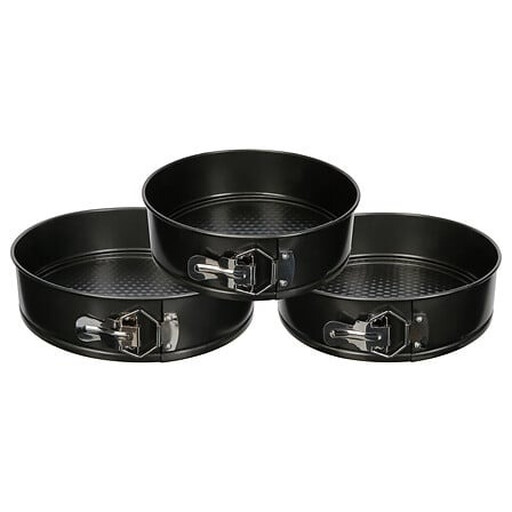
Why this product suits this profile: Three nestable sizes – 22, 24.5 and 26 cm – cover different quantities and types of cake.
The graduated sizes reduce the risk of using an unsuitable single size for every recipe. The maximum temperature is stated as 280 °C.
Three sizes, stackable storage and removable bases with a locking mechanism.
We have put together a complete, regularly updated list of products that fully meet these strict selection criteria and the safety regulations applicable in the EU.
With a muffin tin or individual tartlet tins, it is also worth checking the cleaning instructions. Small recesses can sometimes be cleaned more thoroughly by hand than in an overloaded dishwasher. Stoneware tins should not be moved abruptly from the freezer into a hot oven.
A springform tin is practical for classic round cakes and gateaux because the rim can be opened after baking. A diameter of 20 to 26 cm suits many household recipes. For larger quantities, a 30 cm tin may be suitable, provided the oven and recipe are designed for it.
The key factors are the temperature limit, risk of damage and cleaning requirements. Do not use sharp metal utensils, and check whether the entire tin or just the base is dishwasher-safe. Depending on the recipe, lightly greasing the tin may still be advisable.
A baking tin set is practical if you regularly bake cakes in different sizes or have limited storage space. Stackable tins save room. If you mainly prepare bread or quiche, however, you will often be better served by a suitable bread tin, loaf tin, quiche tin or tart tin than by a mixed set.