
Lieferung heute & morgen

Qualitätsgarantie

Willkommens-Angebote freischalten: KOSTENLOSE Lieferung | Bis zu 80 % RABATT | Kostenlose 30-Tage-JoyPlus-Testphase
App herunterladen
Whether you are baking cakes, bread, muffins or savoury oven dishes, the right baking tin affects ease of use, baking time and how easily the finished bake can be removed. Marketing terms such as “non-stick”, “heat-resistant” or “suitable for all uses” are only meaningful when the specific details about the material, temperature range and care requirements match.
This buying guide from the Joybuy Product Recommendation Officer helps home bakers, families and beginners choose baking tins using clear, practical criteria and avoid common buying mistakes.
A non-stick baking tin can make it easier to remove your bake. However, the coating will only remain effective if it is not damaged by metal utensils, abrasive sponges or unsuitable temperatures. Many carbon steel cake tins, for example, are specifically intended for hand washing only.
If you are looking for a dishwasher-safe option, you should therefore check not only the coating but also the manufacturer’s specific instructions. Silicone baking tins are often easier to care for, but they need a stable base when being filled.
A round tin with a diameter of 22 cm behaves differently when baking from a 26 cm springform tin. If you use a recipe intended for a larger tin in a smaller model, the batter may be considerably deeper and require a longer baking time. With baking trays and muffin tins, you should also check whether the external dimensions fit inside your oven.
Different sizes are useful in baking tin sets, but not every piece will be used equally often. For small kitchens, a stackable set may be more practical than several individual tins.
“Ovenproof” does not automatically mean that a tin is suitable for a microwave, hob, grill function or naked flame. Carbon steel models are generally designed for use in the oven. Depending on the product, ceramic dishes may also be suitable for microwaves, freezers and dishwashers. The stated temperature range and permitted applications are always decisive.
You should only move a dish directly from the freezer to a hot oven if the manufacturer explicitly permits this. With ceramic, sudden changes in temperature should generally be avoided.
Silicone baking tins are lightweight, flexible and space-saving. Some can be rolled or folded, and they are suitable for cakes, tart tins and Madeleine moulds. When filling the tin, place it on a sturdy baking tray, as soft silicone is less stable when holding heavy batter.
Carbon steel and steel conduct heat quickly and provide a firm shape. This category includes springform tins, muffin tins, bread tins and many classic cake tins. Coated versions make it easier to remove the bake, but require gentle cleaning.
Enameled stoneware retains heat and can be used for serving straight away. The material is heavier than silicone or steel. According to the product details, products such as the Le Creuset Baking Dish are suitable for temperatures from -18 °C to 260 °C, as well as use in the oven, microwave, freezer and dishwasher.
Before buying, check:
A tin with a stated temperature limit of 230 °C should not be used above this temperature on a regular basis. For non-stick baking tins, wooden or silicone utensils are also a coating-friendly choice.
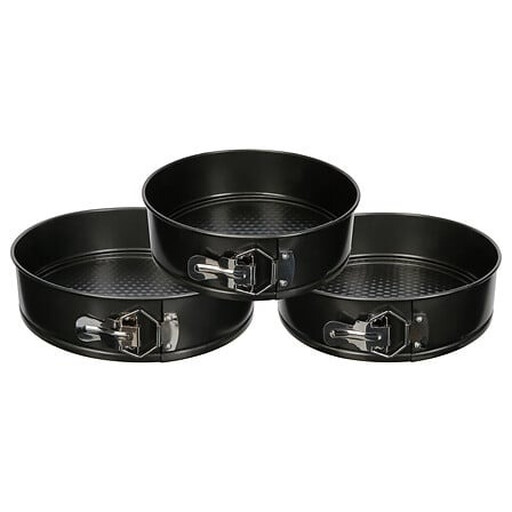
Why this product suits the profile: Three graduated sizes cover different quantities of cake and offer versatile use for beginners and families.
The sizes 22 cm, 24.5 cm and 26 cm are clearly specified. This means you do not need to buy a new springform tin for every recipe.
Steel construction, non-stick coating, removable base and stackable storage.
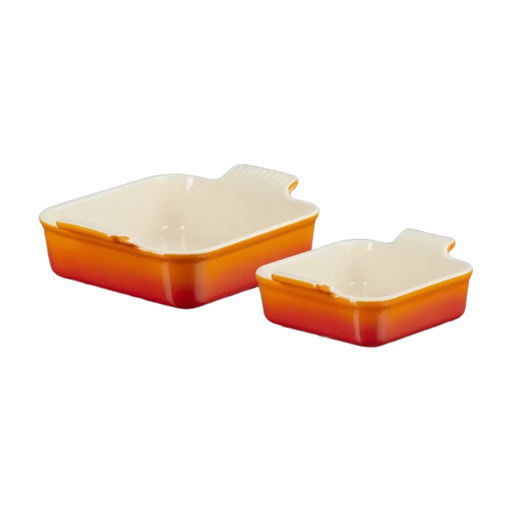
Why this product suits the profile: The two stoneware dishes, measuring 13 cm and 20 cm, are suitable for baking, serving and storing food.
The temperature range from -18 °C to 260 °C and the intended appliances are clearly specified. This makes it easier to plan how to use the dishes.
Enameled stoneware, two sizes, side handles, and suitability for ovens, microwaves, freezers and dishwashers according to the product details.
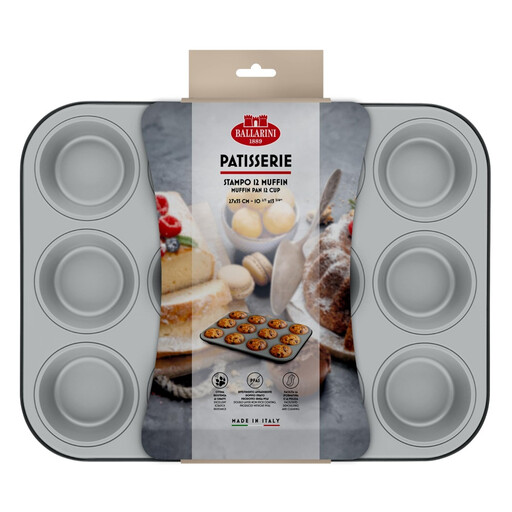
Why this product suits the profile: Twelve cups are designed for muffins, cupcakes and savoury portions when baking larger quantities.
The maximum oven temperature of 230 °C and the hand-wash requirement are clearly stated. This helps prevent incorrect use of the coating.
12 cups, carbon steel, two-layer PFAS-free non-stick coating and external dimensions of 27 × 35 cm according to the product description.
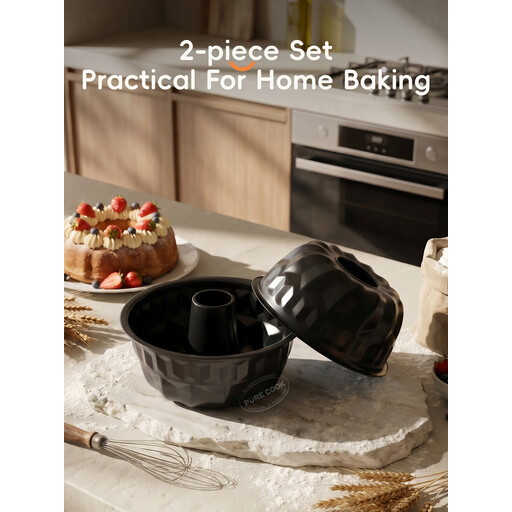
Why this product suits the profile: The 3D pumpkin design is ideal for keen bakers who want to create decorative cakes without additional carving.
The permitted oven temperature of up to 230 °C and the restrictions for microwave, hob and dishwasher use are clearly stated.
Carbon steel, a set of two tins, a textured pumpkin design and intended use in the oven and air fryers according to the product details.
We have put together a complete, regularly updated list of products that fully meet these strict selection criteria and the safety regulations applicable in the EU.
A springform tin with a removable base is practical for many cake recipes. A baking tin set with several diameters offers additional flexibility. If you want to bake muffins, you can start with a 12-cup muffin tin, but make sure you follow the cleaning instructions.
Silicone baking tins are lightweight, flexible and space-saving. Metal tins are stable and conduct heat directly. There is therefore no universally better option: steel can be practical for heavy batters, bread and precise edges, while silicone may make it easier to release tarts, Madeleines and delicate desserts.
Their service life depends on the material, coating, temperature and care. Coated tins should not be scratched or used above the stated temperature. With proper care, uncoated or enamelled models can remain usable for a long time. Before each use, check the coating, rim and base for visible damage.