
Lieferung heute & morgen

Qualitätsgarantie

Willkommens-Angebote freischalten: KOSTENLOSE Lieferung | Bis zu 80 % RABATT | Kostenlose 30-Tage-JoyPlus-Testphase
App herunterladen
Whether it’s cake, muffins, bread or small desserts: baking tins have a significant impact on shape, heat distribution and how easily your bake releases. For home bakers, families, beginners and small baking classes, it’s worth taking a closer look at materials, dimensions and care instructions. A flashy coating or a comprehensive baking tin set alone doesn’t tell you whether a model will suit your kitchen.
As a Joybuy Product Recommendation Officer, I filter product details by practical criteria and highlight typical buying pitfalls.
A non-stick baking tin can make releasing cakes and muffins easier. However, it will only stay functional if you follow the care instructions. Many coated models are not dishwasher-safe. Metal knives, abrasive scourers and harsh cleaning agents can damage the surface.
In practical terms, this means: before buying, check whether hand washing is required and whether the tin is suitable for your usual baking temperatures. For several Purecook models, cleaning with warm water and a soft sponge is recommended.
A silicone baking mould is easy to bend and can simplify releasing your bakes. However, with runny batter there is a risk that the mould will warp when you slide it into the oven. A stable base, such as a baking tray, is therefore advisable for flexible moulds.
Also pay attention to the exact dimensions, the maximum temperature allowed, and whether it is suitable for the dishwasher, freezer or oven. These features are not automatically guaranteed for every silicone mould.
A round springform tin with a 26 cm diameter is suitable for many classic cake recipes, but not for every oven size or every quantity of batter. A madeleine mould, a muffin tin and a loaf tin each serve different purposes. Even a baking tin set can be impractical if the included tins don’t fit in your drawers or cupboards.
Before buying, you should therefore compare the internal dimensions, external dimensions, height and storage space.
Carbon steel heats up relatively quickly compared to heavier materials and is used in numerous cake, bread and muffin tins. Even heat distribution can help the edges and centre to bake more evenly. Nevertheless, oven temperature, batter quantity and shelf height remain crucial.
Silicone is flexible and lightweight. For very soft moulds, a baking tray is recommended as a support. A combination of silicone and steel, as found in certain muffin tins, combines flexible cups with added stability.
For coated tins, look for specific details:
A coating does not always replace baking paper or grease. Particularly with sticky, sugar-rich or very wet batters, light greasing can be beneficial. With a springform tin, a cleanly closing mechanism also helps prevent runny batter from leaking out.
A cake tin should match the recipe quantity. For a springform tin, the diameter and height are important; for a loaf or bread tin, the internal length matters too. For batch production in small dessert shops or baking classes, a 12-cup muffin tin can be more time-efficient than individual cases.
For products with measurements in inches, buyers should also check the dimensions in centimetres. This helps avoid buying the wrong size for your oven.
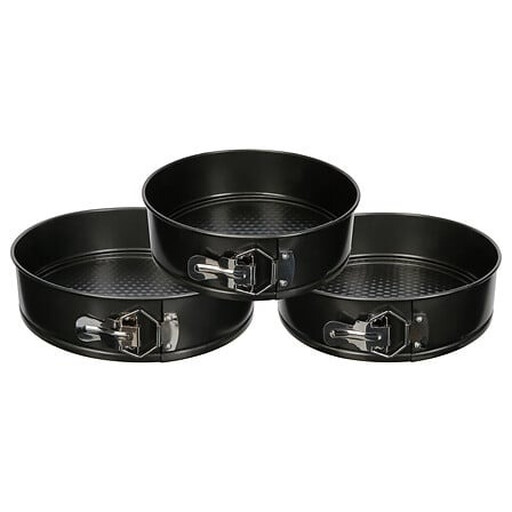
Why this product fits the profile: Three sizes – 22 cm, 24.5 cm and 26 cm – cover different cake quantities and can be stacked inside one another.
The graduated sizes reduce the risk of having to use a single tin for every recipe quantity. The hinge mechanism and removable base help with releasing the cake.
Stackable 3-piece set made from steel with non-stick coating; oven-safe up to 280 °C according to the product details.
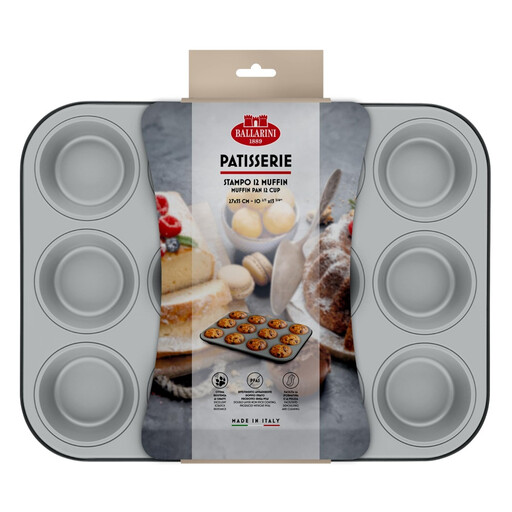
Why this product fits the profile: The 12-cup muffin tin made from carbon steel is designed for baking multiple portions at once and is suitable for both sweet and savoury recipes.
The product details specify a concrete temperature limit of 230 °C, a two-layer PFAS-free non-stick coating and hand washing rather than a blanket dishwasher-safe claim.
12 round cups, dimensions of 27 × 35 cm and carbon steel with stated heat conductivity.
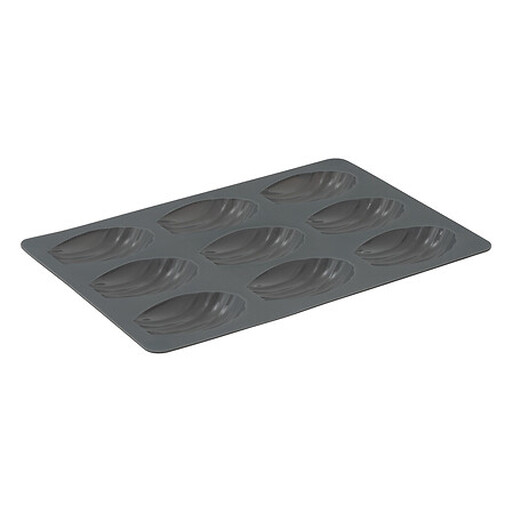
Why this product fits the profile: The 36 × 21.5 × 2 cm silicone mould has several shell-shaped cavities and is aimed at fans of madeleines, small desserts and decorative baking ideas.
The shallow mould is designed for small baked items. When filling, it should be placed on a sturdy baking tray so that the flexible silicone mould goes into the oven safely.
100 % food-grade silicone according to the product details; suitable for madeleines as well as small chocolate or cornbread portions.
We have put together a complete, regularly updated list of products that fully meet these strict selection criteria and the safety regulations in force in the EU.
Alongside the tin itself, suitable baking accessories can simplify your workflow. A pastry brush, dough scraper and whisk cover many basic tasks. For muffins, reusable or muffin cases are a practical addition, especially when you want to serve portions neatly.
A roll of baking paper measuring 30 cm wide and 10 m long can line baking trays, loaf tins and air-fryer baskets. Always check the temperature ratings of the product before use and avoid direct contact with heating elements or open flames.
For bread lovers, a loaf tin in a 2-piece set is a great option. According to the product details, the tins are made from carbon steel, are suitable up to 220 °C and are intended for oven use only. A bundt tin with a decorative inner pattern, on the other hand, can be interesting for pound cakes, pumpkin cakes or similar batters.
A springform tin with a removable base is easy to handle for many classic cake recipes. A 3-piece set also offers different diameters. For muffins, a 12-cup muffin tin is useful if you regularly bake several portions at once.
The lifespan depends on the material, coating, temperature and care. Coated tins should not be used with metal utensils or abrasive cleaners. Hand washing with warm water and a soft sponge can protect the surface. If the coating becomes visibly damaged, the tin should no longer be used.
Not always. For many recipes, light greasing is sufficient, provided this is specified in the product or recipe instructions. For particularly wet or sticky batters, baking paper can provide extra security when releasing the bake. With a springform tin, the paper should be cut to size so that the rim still closes cleanly.