
Lieferung heute & morgen

Qualitätsgarantie

Willkommens-Angebote freischalten: KOSTENLOSE Lieferung | Bis zu 80 % RABATT | Kostenlose 30-Tage-JoyPlus-Testphase
App herunterladen
A baking tin should not only look good, but also suit your recipe, oven and preferred cleaning method. There are clear differences between bread tins, loaf tins, cake tins, quiche tins and oven dishes when it comes to material, capacity and ease of use. If you focus solely on a non-stick coating or a well-known brand, you may overlook important details.
A non-stick baking tin can make it easier to remove cakes and bread. However, the coating will remain intact for as long as possible only if you avoid sharp-edged metal utensils and abrasive sponges. A baking tin with a non-stick surface is not always dishwasher-safe either. The care instructions for the individual model are therefore crucial.
Depending on the product, the stated dimensions may refer to the external or internal measurements. For the quantity of mixture, the capacity is more meaningful. A loaf tin for around 1,000 g of dough is not automatically suitable for a recipe containing 1,500 g of bread dough. If a tin is filled too full, the mixture may overflow or fail to bake evenly.
Many baking tins are intended exclusively for use in the oven. This also applies to models with an enamel base or removable base. They must not be used on induction, gas or electric hobs unless the manufacturer expressly permits it. Temperature changes can also cause stress in stoneware.
Steel distributes heat evenly in many baking tins and provides a rigid construction. An additional ceramic coating can make it easier to remove baked goods. An enamelled baking-tin base is resistant to cutting and, with certain tins, can be used directly for serving.
Stoneware retains heat for longer and is suitable not only for cakes and bread, but also for gratins and oven-baked dishes. Depending on the model, the stated temperature range may be -23 °C to 260 °C, for example. Allowing the tin to cool before washing reduces the risk of thermal shock.
If you use a tin regularly, it is worth checking the internal dimensions. Two tins with the same external length may hold different quantities.
A baking tin with a removable base helps you take out tarts or quiches with minimal damage. With a baking tin featuring an enamel base, it is also important to check whether the base is resistant to cutting and can be used directly as a serving surface.
When cleaning, you should weigh the manufacturer’s instructions against your personal habits. Some tins are dishwasher-safe, while others – such as several Kaiser La Forme Plus bread tins – are explicitly intended for hand washing. Mild washing-up liquid, a soft sponge and avoiding metal utensils are sensible basic care practices for coated models.
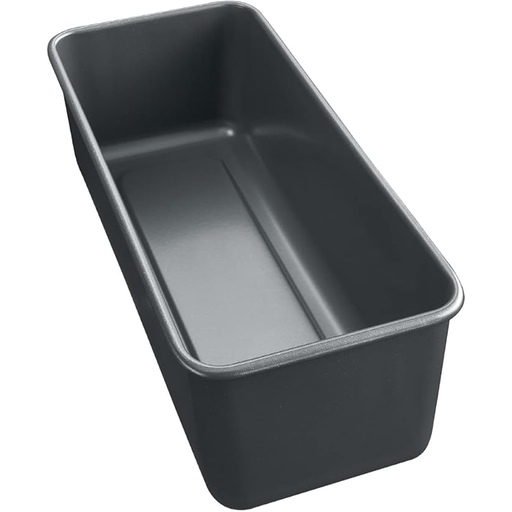
Why this product suits this profile: This 30 cm loaf tin is designed for bread and cakes and has a stated capacity of 2.4 l. It is suitable for households looking for a versatile tin for use in a domestic oven.
The product details specify the dimensions, capacity and heat resistance up to 250 °C. This makes it easier to match the tin to your own recipe.
Coated steel, enamelled base, sourdough resistance according to the product description and a 10-year guarantee on the non-stick coating.
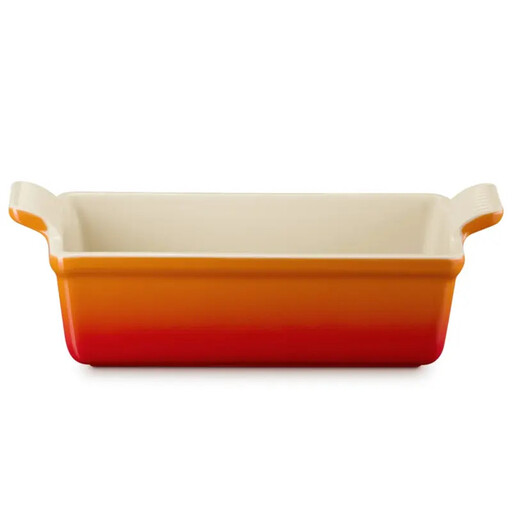
Why this product suits this profile: This stoneware model has a capacity of 2.8 l and is designed for bread, cakes, quiches and oven-baked dishes. According to the manufacturer’s specifications, it can be used in the oven, freezer, microwave and dishwasher.
The temperature range of -23 °C to 260 °C is clearly stated. Nevertheless, the tin should be allowed to cool before cleaning to avoid significant temperature changes.
Enamelled stoneware, stated dishwasher and microwave suitability, plus a capacity of 2.8 l.

Why this product suits this profile: According to the product details, this 35 cm bread tin is designed for loaves weighing up to 1,500 g. It is therefore aimed at sourdough and bread bakers who work with larger quantities of dough.
The stated loaf capacity reduces the risk of choosing a tin based on unsuitable external dimensions. Hand washing is recommended for the coating.
Coated steel with an enamelled base, heat resistance up to 250 °C and stated suitability for sourdough.
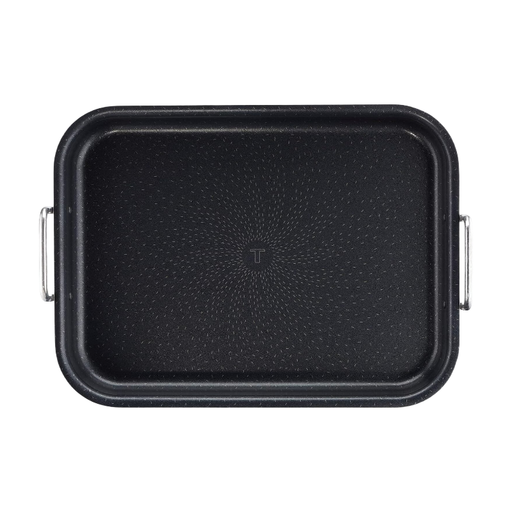
Why this product suits this profile: Measuring 37 x 27 x 4.5 cm and with a capacity of around 4.5 l, this oven dish is designed for lasagne, gratins, vegetables and larger desserts.
The dimensions and capacity are clearly stated. The side handles make it easier to remove the dish, but do not replace heat-resistant oven gloves.
Recycled aluminium, ProBaking non-stick coating, handles and, according to the product details, suitability for the oven, freezer and dishwasher.
We have put together a complete, regularly updated list of products that fully meet these strict selection criteria and the safety regulations applicable in the EU.
A bread tin should be explicitly described as suitable for sourdough or as acid-resistant. Models made from coated steel with an enamelled base may be suitable, provided this is stated in the manufacturer’s information. The quantity of dough should match the stated loaf weight and capacity.
There is no standard lifespan. It depends on usage, temperature, cleaning and the utensils used. Metal utensils, harsh cleaning products and abrasive sponges can damage the surface. For many coated tins, hand washing with a soft sponge is the gentler option.
No. According to the product details, some stoneware tins and certain oven dishes can be placed in the dishwasher. Several coated Kaiser La Forme Plus bread tins, on the other hand, are explicitly not dishwasher-safe. You should therefore check the care instructions for the specific model before buying and before cleaning it for the first time.