
Lieferung heute & morgen

Qualitätsgarantie

Willkommens-Angebote freischalten: KOSTENLOSE Lieferung | Bis zu 80 % RABATT | Kostenlose 30-Tage-JoyPlus-Testphase
App herunterladen
The right baking tin makes preparation easier and affects the shape, browning and ease of removing your bake. However, if you focus only on colour, brand name or a supposedly particularly durable coating, you may overlook important details. Before buying a baking tin, you should therefore check which recipes it is designed for, how it may be cleaned and which temperature limits apply.
A non-stick baking tin can make it easier to remove your bake. However, the coating usually remains intact only if you avoid using metal knives, forks or abrasive sponges. The claim “dishwasher-safe” should also apply specifically to the entire product. With some tins, for example, only the base may be placed in the dishwasher, while the ring and fastening mechanism must be washed by hand.
The maximum oven temperature is a technical limit, not a target temperature for every recipe. A tin with a stated heat resistance of 240 or 250 °C cannot automatically be used on the hob, under the grill or over an open flame. With an ovenproof baking tin, information about microwave, freezer and thermal shock compatibility is also relevant.
With a cake tin, the external dimensions, internal diameter and capacity may differ. A 24 cm springform tin is not interchangeable with every rectangular tin of a similar external size. You should therefore check the recipe, the height of the tin and the available space in your oven. With muffin tins, the number of cups and their diameter also matter.
A springform tin with a removable rim is practical for cheesecakes and delicate cakes. A muffin tin with twelve cups is suitable for larger batches, while individual tartlet tins can be used for portion-sized bakes. For bread and loaf cakes, you need a bread tin or loaf tin with sufficient height. A baking dish should have high sides and a capacity suitable for the portion size.
A baking tin set can also be useful if you regularly bake different quantities. However, check whether the tins can be stacked inside one another and whether every tin included is genuinely suitable for your recipes.
Before first use, baking tins should be cleaned according to the manufacturer’s instructions. With coated models, a thin layer of grease is often sufficient; with silicone, this may be unnecessary depending on the recipe. Use warm water, mild washing-up liquid and a soft sponge unless different care instructions apply.
The following points are also important:
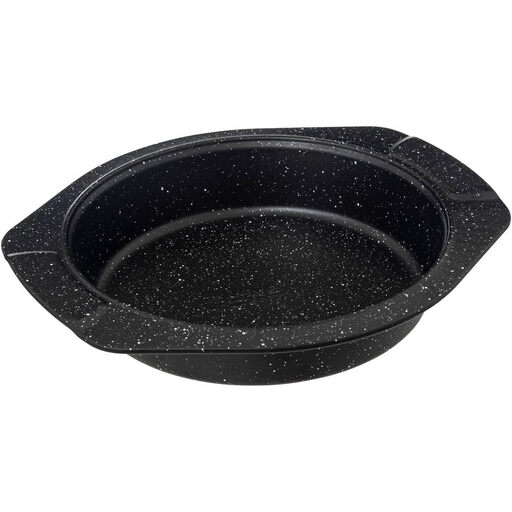
Why this product suits the profile: The 26 cm round cake tin is suitable for classic cakes and offers a practical 1.9-litre capacity for everyday baking.
The product details expressly state that it is suitable for use in the oven, but not in the microwave. Hand washing is also recommended, making the care requirements clear.
Steel construction, integrated handles and 1.9-litre usable capacity. The tin is not designed for use in the microwave or dishwasher.
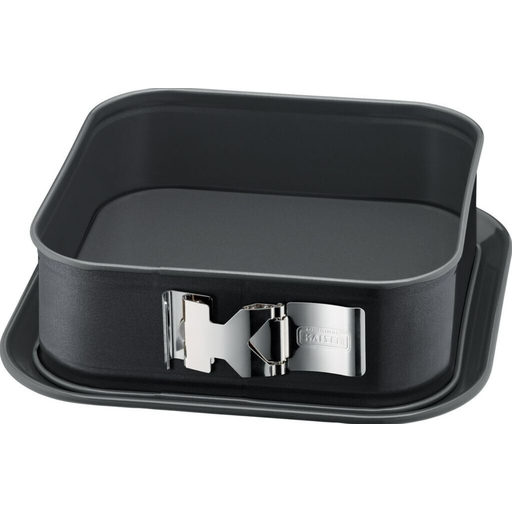
Why this product suits the profile: The square springform combines a removable rim with a 2.9-litre capacity, making it suitable for cakes, brownies and savoury bakes.
The 250 °C temperature limit and the restrictions for dishwasher, hob and open flame use are clearly stated. Only the base is dishwasher-safe.
Square shape, steel construction and removable rim. Wooden, plastic or silicone utensils are recommended for use with the coating.
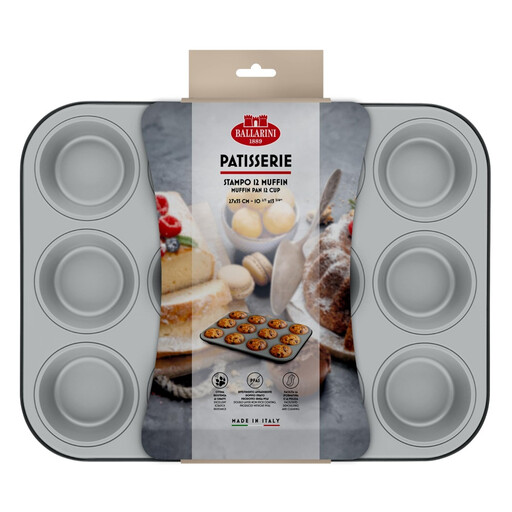
Why this product suits the profile: Twelve cups in one tin are practical for families, celebrations and preparing sweet or savoury muffins at the same time.
The details specify the exact size of 27 x 35 cm, a maximum temperature of 230 °C and hand washing. The coating is described as two-layer and PFAS-free.
12 round cups and carbon steel for even heat distribution. Not designed for use in the microwave, on the hob or in the dishwasher.
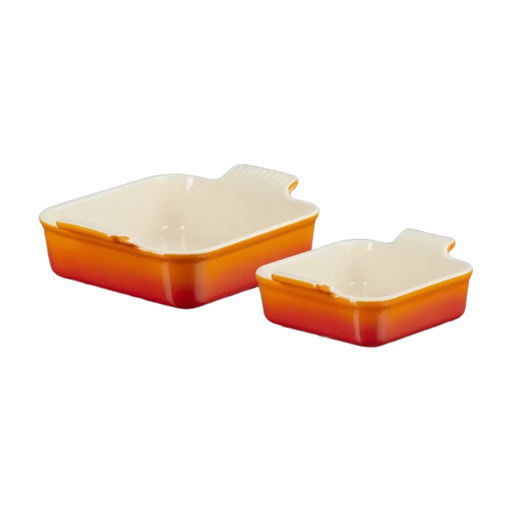
Why this product suits the profile: Two square dishes measuring 13 and 20 cm are suitable for individual portions, side dishes, gratins and bakes in different quantities.
The set specifies an operating range of -18 to 260 °C and, according to the product details, is suitable for use in the oven, microwave, freezer and dishwasher. Nevertheless, sudden temperature changes should still be avoided.
Enameled stoneware, two sizes and side handles. According to the details, the smooth surface is odour- and flavour-neutral.
We have put together a complete, regularly updated list of products that fully meet these strict selection criteria and the safety regulations applicable in the EU.
For beginners, a tin with clear dimensions, a sufficiently high rim and straightforward cleaning is a sensible choice. A classic cake tin or springform tin covers a wide range of recipes. If you often bake for several people, you can add a muffin tin with twelve cups.
It depends on how you plan to use them. Silicone is flexible, lightweight and space-saving. Metal conducts heat differently and often gives baked goods a more stable shape while baking. The key factors are the temperature rating, the level of browning you want, stability when filling the tin and the care instructions.
There is no single fixed service life. It depends on how often the tin is used, the temperature, cleaning method and utensils used. Visible scratches, flaking areas or distortion are reasons to stop using the tin. Hand washing and soft kitchen utensils can help protect the coating in everyday use.