
Lieferung heute & morgen

Qualitätsgarantie

Willkommens-Angebote freischalten: KOSTENLOSE Lieferung | Bis zu 80 % RABATT | Kostenlose 30-Tage-JoyPlus-Testphase
App herunterladen
The right baking tin affects far more than the appearance of your bake. The material, dimensions, coating and care requirements determine whether a cake comes out cleanly, a baking dish heats evenly or a bread tin keeps its shape. If you focus only on colour, brand name or advertised non-stick performance, you can easily overlook important details.
A non-stick baking tin can make it easier to remove your bake. However, the coating only remains effective if you follow the care instructions. Metal kitchen tools, knives, abrasive sponges and sudden changes in temperature can damage the surface. Also, “non-stick” does not automatically mean that the tin is dishwasher-safe.
Several tins in the range, including various Kaiser and Le Creuset models, are specified as suitable for hand washing only. Check this point before buying and make sure it fits with your usual habits.
A cake tin with a diameter of 20 cm takes a different amount of batter from a 26 or 28 cm springform tin. If a tin is filled too full, the batter may overflow or cook unevenly in the centre. In an oversized tin, on the other hand, the bake will be flatter and may dry out more quickly.
The stated bread quantity is also important for bread tins. A loaf tin designed for around 1,000 g of dough cannot simply be swapped for one designed for 1,500-g loaves.
The term oven-safe baking tins refers to use in the oven. Many models must not be used on a hob, induction hob or over a direct flame. Ceramic tins also carry the risk of thermal shock: unless the manufacturer expressly permits it, a very cold dish should not be placed straight into a thoroughly preheated oven.
Carbon steel and coated steel heat up relatively directly and are widely used for cake, bread and tart tins. Extra-thick material can help the tin retain its shape. For example, the Kaiser La Forme Plus models use steel with a KAIRAMIC coating and an enamelled base. According to the product information, the maximum temperatures are up to 250 °C.
Enamelled stoneware is often suitable for bakes, gratins and desserts that are served directly in the dish. According to the manufacturer, the Staub ceramic set is oven-safe up to 260 °C, stackable and dishwasher-safe. Depending on the model, the Le Creuset stoneware dishes are also specified for temperatures of up to 260 °C and as suitable for the freezer, microwave and dishwasher.
A baking tin with a removable base is practical for delicate tarts, quiches, fruit cakes and bases that should not be turned out. The base can make it easier to transfer the bake to a serving plate. A sturdy rim, secure fastening and construction that is as leak-resistant as possible are important.
With springform tins, the side fastening should close securely. For tart tins with a lift-off base, also check whether the base is enamelled and resistant to cutting, and whether the tin must be cleaned by hand only.
Before buying, check the following details side by side:
A baking tin set can be useful if you regularly prepare different quantities. However, the number of pieces should not be the only consideration. Different, genuinely useful sizes are usually more practical than several almost identical tins.
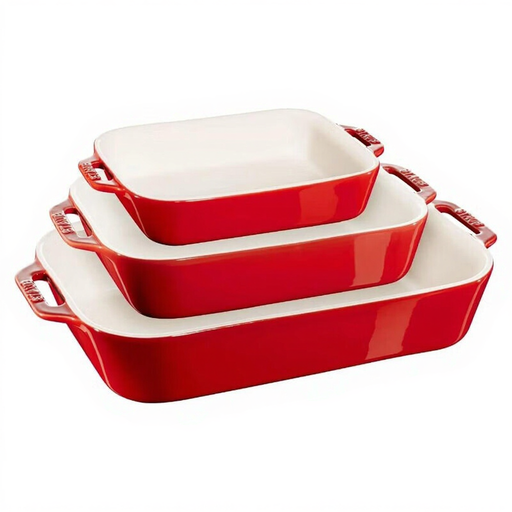
Why this product suits this profile: Three rectangular ceramic dishes measuring 20 × 16 cm, 20 × 27 cm and 24 × 34 cm cover individual portions, side dishes and larger bakes.
The three clearly stated sizes reduce the risk of buying a standard size that is simply unsuitable. According to the product information, the dishes are dishwasher-safe.
Enamelled ceramic, stackable design, ergonomic handles and oven-safe up to 260 °C.
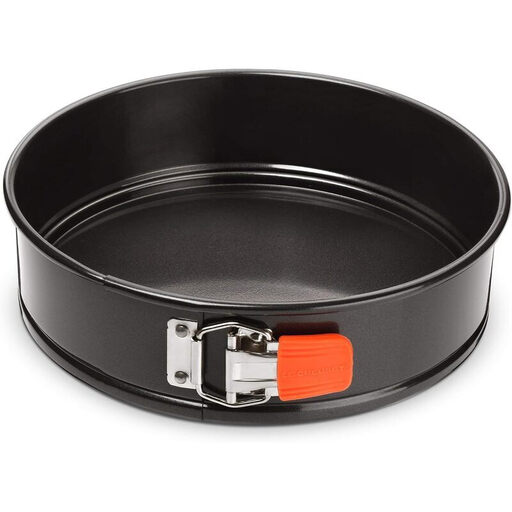
Why this product suits this profile: This round springform tin is ideal for people who often bake delicate sponge cakes, cake bases or cheesecakes and want to remove them with confidence.
The side fastening and removable base help release the bake without having to turn the cake out. Hand washing is required.
Carbon steel, non-stick coating, silicone inserts around the rim and oven use up to 240 °C.

Why this product suits this profile: According to the product information, this 35 cm bread tin is designed for loaves of up to around 1,500 g and is also suitable for cakes and savoury bakes.
The stated bread quantity helps you choose suitable recipes. The enamelled base is resistant to cutting; however, the tin is not dishwasher-safe.
Steel construction, KAIRAMIC coating, enamelled base and heat resistance up to 250 °C.
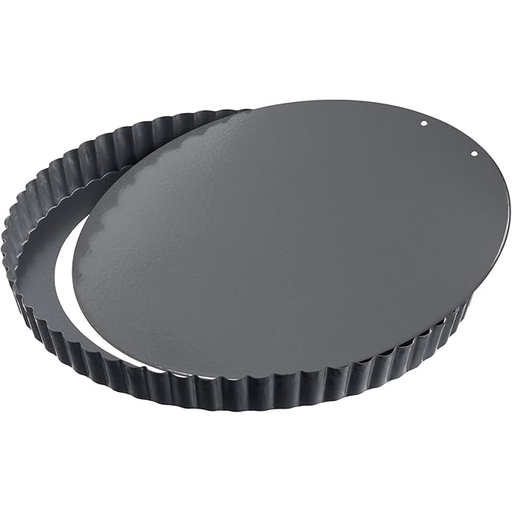
Why this product suits this profile: The removable base makes it easier to serve quiches, tarts and fruit cakes directly. With a diameter of 32 cm, this tin is suitable for larger households and entertaining.
The lift-off base reduces the risk of breaking delicate bases when lifting them out. The stated maximum temperature of 250 °C provides a clear usage limit.
1-litre capacity, enamelled removable base and steel body with KAIRAMIC coating.
We have put together a complete, regularly updated list of products that fully meet these strict selection criteria and the safety regulations applicable in the EU.
Before placing your order, it is worth checking the internal dimensions of your own oven. Particularly wide tins measuring 33 to 36 cm may be a tight fit in smaller appliances. The height of the oven rack is also relevant for Bundt and loaf tins.
For bread, sturdy loaf tins made from coated steel or enamelled bread tins are suitable. The key factors are the bread quantity specified by the manufacturer, the tin’s dimensions and its temperature limit. Sourdough can place greater demands on materials, so check specifically for resistance to acids or sourdough.
There is no universal fixed lifespan. It depends on how the tin is used, the temperature, cleaning and the kitchen tools used with it. Hand washing, soft sponges and wooden or silicone utensils can help protect the surface. If you notice scratches or damaged coating, stop using the tin.
Ceramic dishes are suitable for bakes, gratins and desserts, provided you take their weight and risk of breakage into account. They can retain heat for longer, but need careful handling when exposed to sudden temperature changes. Depending on the model, they may be dishwasher-, microwave- and freezer-safe. The information provided by the relevant manufacturer is decisive.