
Lieferung heute & morgen

Qualitätsgarantie

Willkommens-Angebote freischalten: KOSTENLOSE Lieferung | Bis zu 80 % RABATT | Kostenlose 30-Tage-JoyPlus-Testphase
App herunterladen
The right baking tin does more than determine how a cake looks. The material, dimensions, coating and cleaning method all affect whether your bake comes out cleanly and whether the tin remains usable for years to come. Many products are advertised as “non-stick”, “heat-resistant” or “suitable for all recipes”. However, these claims are only useful when the technical details support them.
This guide explains what home bakers in the UK should look for when buying and which baking tins suit different kitchen needs.
A non-stick baking tin can make it easier to remove your bake. That does not automatically mean it is suitable for the dishwasher, metal utensils or abrasive sponges. Several coated tins in the range are recommended for hand washing. Knives and metal spatulas can damage the surface.
Before buying, check the following:
A 30 cm baking tin can hold considerably different quantities depending on its width and height. With a loaf tin, the length, width, height and capacity all matter. Too much mixture can overflow, while a tin that is too large can result in flat cakes or dry edges.
Where possible, follow the recipe specifications and compare not only the diameter but also the capacity in litres.
Many baking tins are designed for a conventional oven but are not suitable for hobs, induction, gas flames or the microwave. An ovenproof baking tin should always be used in accordance with the manufacturer’s instructions. Even when a product is highly heat-resistant, sudden temperature changes can be problematic, particularly with glass, stoneware or enamelled materials.
A longer service life depends heavily on proper care. Coated tins should be cleaned according to the instructions before first use and lightly greased if necessary. Avoid sharp objects, sudden temperature changes and abrasive cleaning products. If you notice visible scratches, peeling coating or cracks, stop using the tin.
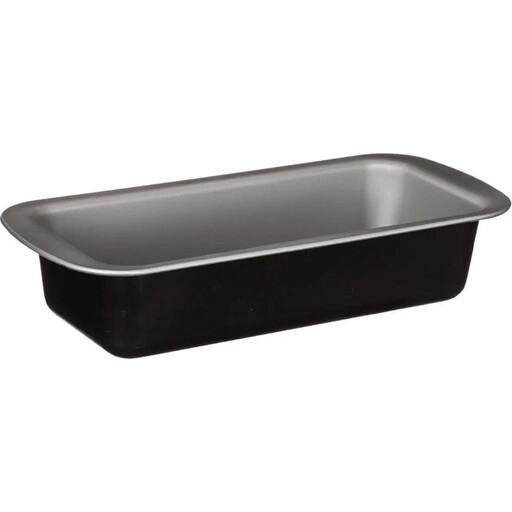
Why this product suits the profile: This compact metal tin is designed for classic loaf recipes in everyday family baking and requires no assembly.
The specifications explicitly state that it is suitable for oven use and hand washing. This makes it easier to plan its use appropriately.
Metal construction, stated length of 29 cm and maximum capacity of 1.3 litres.
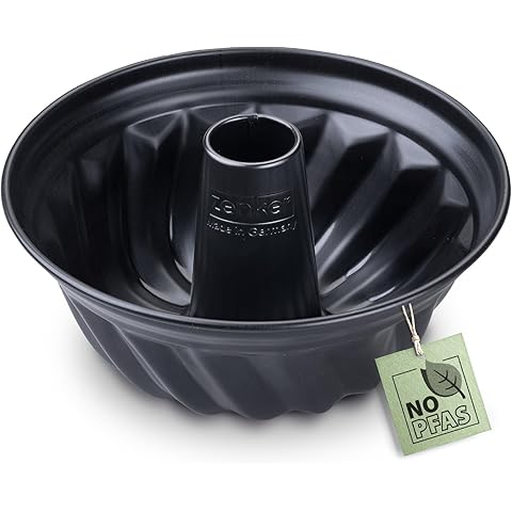
Why this product suits the profile: This Bundt tin combines coated steel with an enamelled base and is designed for baking while retaining its shape.
The maximum oven temperature of 250 °C and the hand-washing requirement are clearly stated. This prevents temperature and care claims from being interpreted too broadly.
22 cm diameter, 11 cm height, 2.8-litre capacity and enamelled base.

Why this product suits the profile: This bread tin is designed for loaves of up to around 1 kg, as well as sweet and savoury loaf recipes.
The tin is explicitly described as acid-resistant and suitable for sourdough. The stated hand-washing requirement helps protect the coating from unnecessary wear.
Dimensions of 30 × 10.01 × 8.51 cm, enamelled base and heat resistance up to 250 °C.
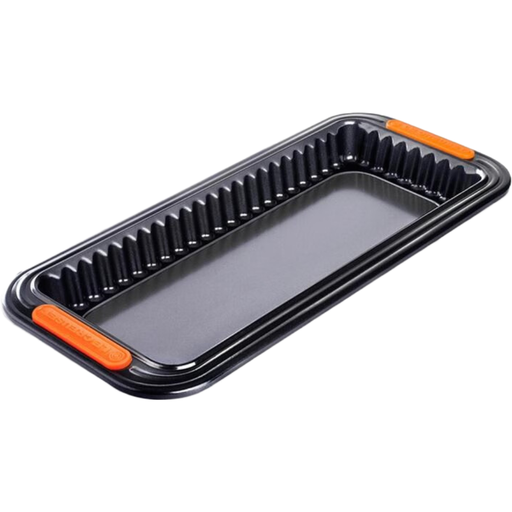
Why this product suits the profile: This rectangular tin is designed for tarts, quiches, gratins and similar shallow oven dishes.
The removable base makes it easier to release and serve your bake. According to the product information, the reinforced edge is designed to resist deformation.
Carbon steel, PFOA-free non-stick coating, removable base and oven suitability up to 240 °C.
We have put together a complete, regularly updated list of products that fully meet these strict selection criteria and the safety regulations applicable in the EU.
Before placing your order, check the following:
A loaf tin is practical for loaf cakes, banana bread and many bread recipes. A classic bread tin should be suitable for the dough’s weight in terms of length, height and capacity. For gateaux and delicate cakes, a springform tin with a removable side is often more suitable.
That depends on the recipe and your personal priorities. Silicone baking moulds are lightweight, flexible and space-saving. Metal tins often offer greater stability and work well for cakes with straight edges. With silicone, a stable support underneath is useful when carrying the mould into the oven.
There is no single answer. Material, coating quality, frequency of use and care all make a difference. With coated tins, hand washing, soft sponges and suitable kitchen utensils can extend their useful life. Uncoated stoneware and enamelled surfaces can last for many years when treated properly, but they must be protected from cracks and thermal shock.