
Lieferung heute & morgen

Qualitätsgarantie

Willkommens-Angebote freischalten: KOSTENLOSE Lieferung | Bis zu 80 % RABATT | Kostenlose 30-Tage-JoyPlus-Testphase
App herunterladen
Whether it is a cake tin, springform tin, Bundt tin or muffin tin: the right baking tin affects not only the shape of your bake, but also baking time, heat distribution, cleaning and durability. For home bakers in Germany, it is therefore worth looking at specific product data rather than relying on general marketing claims.
A non-stick baking tin can make it easier to remove your bake, but it will usually still need gentle cleaning. Some models are not dishwasher-safe, while for others this applies only to individual components. Overlooking this information can put unnecessary strain on the coating.
Look out for:
The stated size does not always describe the usable capacity. A 24 cm springform tin, a 30 cm loaf tin and a deep Bundt tin are suitable for different quantities of batter. If a tin is overfilled, the batter may spill over or remain underbaked in the centre.
It is useful to check the diameter, height and capacity before buying. For families or frequent entertaining, a baking tin set with several sizes may be more practical than buying several individual tins.
A silicone baking mould can be stored in a space-saving way and may make it easier to remove your bake. However, it is less stable than a steel tin when being filled and moved. A reinforced rim or sturdy steel frame can make it easier to handle.
Steel baking tins or carbon-steel tins retain their shape and distribute heat comparatively evenly. A coating can help with releasing your bake, but it must not be damaged by sharp or metal objects. With silicone, flexibility is the main advantage; for safely carrying it out of the oven, a solid support underneath is helpful.
Also check the stated maximum temperature. Depending on the model, the recommended products in this selection are rated for temperatures of up to 240 °C, 250 °C or 280 °C. This limit must not be exceeded.
A coating is only useful in the long term if it suits your routine. Several of the models listed here are intended for hand washing. Use warm water, a mild washing-up liquid and a soft sponge. Knives, forks and scouring pads can damage the surface.
If you notice scratches, flaking or deformation, stop using the tin. The manufacturer’s instructions regarding naked flames, grill functions and hobs must also be followed: baking tins of this type are designed for use in the oven, not on induction, gas or electric hobs.
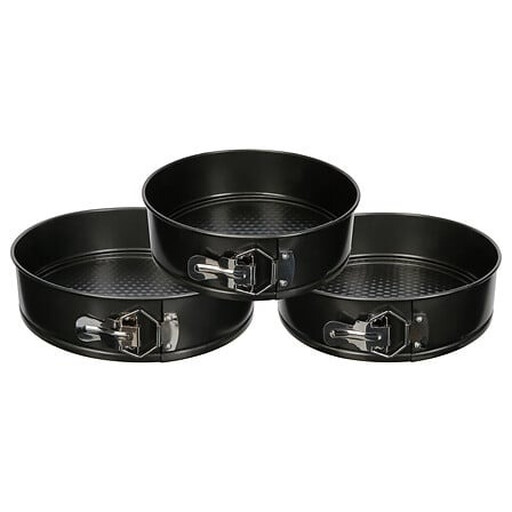
Why this product suits this profile: Three graduated sizes of 22 cm, 24.5 cm and 26 cm cover different quantities of cake and can be stored inside one another.
The different diameters reduce the risk of using a tin that is too small or too large for the amount of batter.
Steel construction, non-stick coating, removable bases and stackable storage.
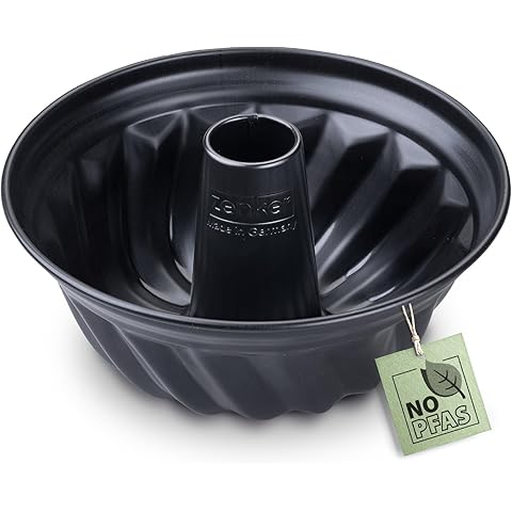
Why this product suits this profile: This steel Bundt tin has a capacity of 2.8 litres, a central tube, a high rim and an enamelled base.
The specified temperature limit of 250 °C and the stated hand-wash requirement make the care instructions clear and easy to follow.
Double ceramic coating, shape-retaining material and an enamelled, cut-resistant base according to the product information.
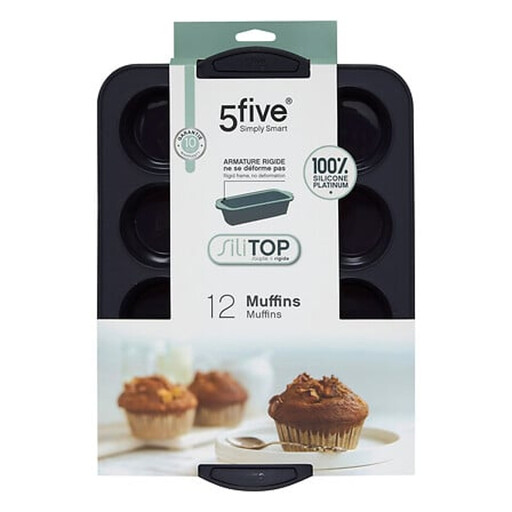
Why this product suits this profile: Twelve cavities, each measuring 6.5 cm in diameter, are ideal for families, batch baking and individual muffins or cupcakes.
The steel reinforcement counteracts the typical lack of stability of flexible silicone moulds when they are being filled or carried.
Food-grade silicone, steel structure, 12 cavities and a capacity of 0.85 litres.
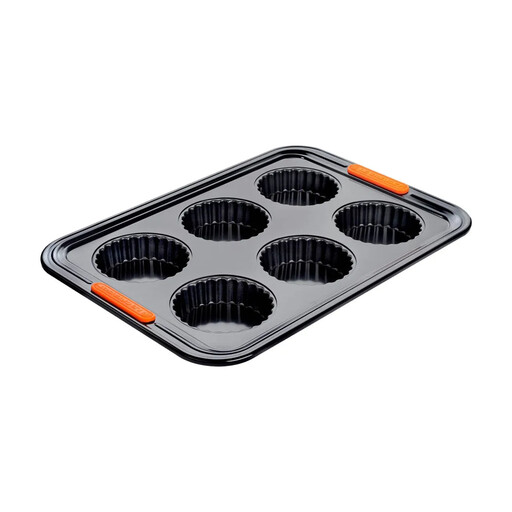
Why this product suits this profile: Six shallow, fluted cavities are ideal for individual tarts, quiches and small sweet or savoury bakes.
The six separate cavities help prevent individually baked tarts from falling apart when sliced.
Carbon steel, reinforced rim with silicone inserts and a stated heat resistance of up to 240 °C.
To keep coatings and the body of the tin usable for as long as possible, a simple routine is recommended:
We have put together a complete, regularly updated list of products that fully meet these strict selection criteria and the safety regulations applicable in the EU.
For loaf cakes, a loaf tin, Bundt tin or round springform tin is suitable. The size and capacity specified in the recipe are crucial. If the dimensions differ, the baking time may need to be adjusted.
That depends on how you intend to use them. Silicone is flexible, lightweight and space-saving. Steel tins retain their shape and are well suited to heavy mixtures or when careful transportation is required. A silicone mould with a steel frame combines flexibility with additional stability.
There is no standard lifespan that can be given for every product. It depends on use, temperature, cleaning and how the coating is treated. Hand washing, soft sponges and suitable kitchen utensils can help protect the surface. Manufacturer claims such as a 10-year guarantee on the non-stick coating should always be checked for the specific product.