
Lieferung heute & morgen

Qualitätsgarantie

Willkommens-Angebote freischalten: KOSTENLOSE Lieferung | Bis zu 80 % RABATT | Kostenlose 30-Tage-JoyPlus-Testphase
App herunterladen
Baking tins are part of the basic equipment in many German households. Even so, unclear material specifications, unsuitable dimensions or delicate coatings can quickly lead to disappointing purchases. If you regularly bake cakes, gateaux, muffins, bread or tarts, you should look beyond the design. The key factors are intended use, temperature limit, cleaning and the construction of the tin.
As a Joybuy Product Recommendation Officer, I filter product information according to practical criteria and match it to different usage scenarios. This makes it easier to identify which baking tins or baking tin sets are right for your household.
A non-stick baking tin can make it easier to remove baked goods. However, this does not automatically mean that it is scratch-resistant or dishwasher-safe. Many coated cake tins need to be washed by hand with a soft sponge. Metal knives, scouring pads and harsh cleaning products can damage the surface.
Before buying, you should therefore check three details:
Silicone baking tins can be stored in a space-saving way and often make it easy to remove baked goods. However, filling and carrying soft models can be more difficult. An unstable tin should therefore be placed on a baking tray before the batter is added. Muffin tins with steel reinforcement are generally easier to handle than those made entirely from flexible silicone.
You should also check the specified temperature range. Not every silicone tin is approved for the same temperatures, microwave use, freezer use or dishwasher cleaning.
A 22 cm springform tin behaves differently during baking from a 26 cm model. With the same amount of batter, the height of the cake changes, as does the baking time. For a loaf tin or tart tin, the internal dimensions and capacity are also more important than the external measurements.
For standard recipes you use frequently, it is advisable to choose a tin size that suits your recipe book and your oven.
With coated tins, the maximum oven temperature should not be exceeded. A tin approved for temperatures up to 230 °C is not automatically suitable for higher temperatures.
With springform tins, you should consider both the diameter and the height of the rim. A set with several sizes can be useful if you regularly bake different quantities of cake. For a muffin tin, the diameter of the individual wells is just as important as their number. Twelve wells measuring approximately 6.5 cm in diameter are suitable for classic muffins and cupcakes.
With a loaf tin, the capacity should match the weight of the dough. Too much dough can spill over the rim as it rises, while too little dough will result in a flat loaf.
Many non-stick tins are specifically designed to be washed by hand. After baking, the tin should be allowed to cool completely before the baked goods are removed. This protects both the coating and the tin from sudden changes in temperature.
Silicone models can often be folded or rolled up. Steel and carbon steel tins should be stored dry to prevent moisture from collecting on unprotected areas.
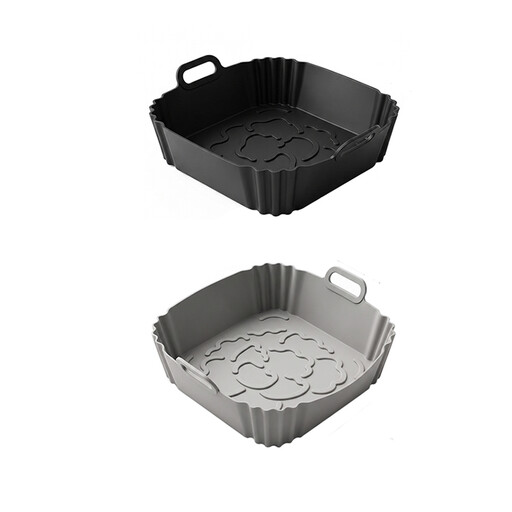
Why this product suits this profile: This two-piece set contains two square silicone tins for smaller cakes, brownies or savoury baked goods, while taking up very little storage space.
The compact size and clearly stated quantity make it easier to understand exactly what is included. For greater stability, the tin should be placed on a baking tray.
Two tins, a square format and flexible silicone; the manufacturer and EU responsible person details are listed in the product description.
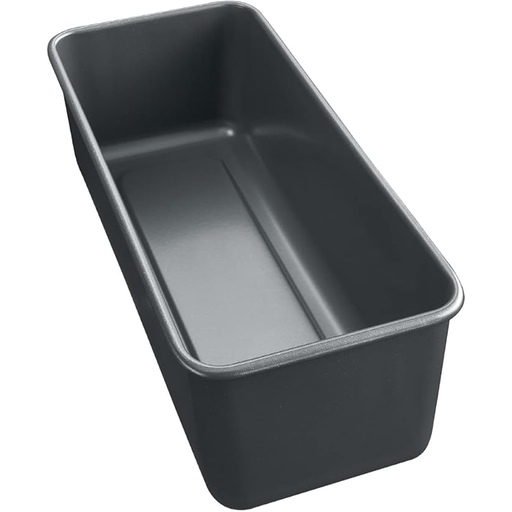
Why this product suits this profile: This 30 cm steel loaf tin has an enamelled base and, according to the product details, is oven-safe up to 250 °C.
The temperature limit, hand-wash requirement and instruction to avoid metal utensils are clearly stated. This makes it easier to plan the care requirements and usage limits before buying.
Steel construction, non-stick coating, enamelled base and a stated capacity of 2.4 l.
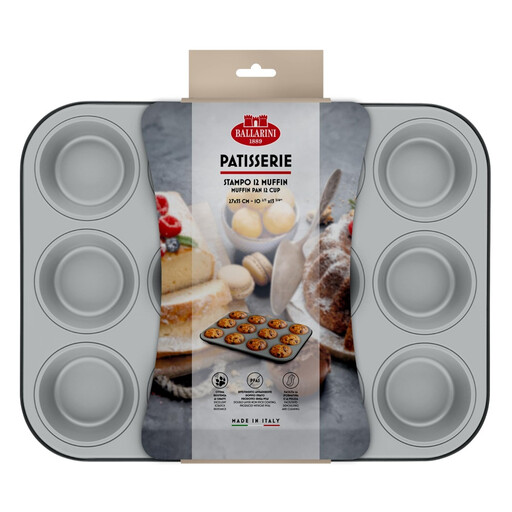
Why this product suits this profile: With twelve wells, this muffin tin is ideal for batch baking, family-sized portions and sweet or savoury muffins.
The tin specifies the number of wells, external dimensions, material, a temperature limit of 230 °C and hand washing as the care instruction. The two-layer PFAS-free coating is also specified.
Twelve individual baking wells, carbon steel and a stated PFAS-free non-stick coating for muffins and cupcakes.
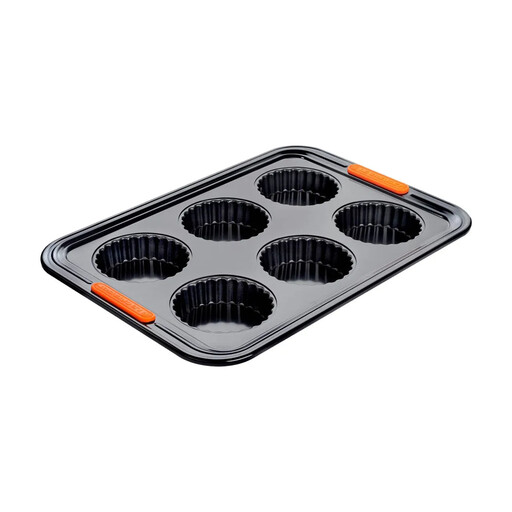
Why this product suits this profile: Six fluted wells make it easy to prepare individual tarts, quiches and small sweet or savoury bakes.
The product details specify carbon steel, a non-stick coating, hand washing and a maximum oven temperature of 240 °C. The tin is explicitly stated not to be dishwasher-safe.
Six individual moulds, a fluted design and a reinforced rim with silicone inserts, according to the product description.
We have put together a complete, regularly updated list of products that fully meet these strict selection criteria and the safety regulations applicable in the EU.
Depending on the recipe, additional utensils can make the process easier. Stainless steel biscuit cutters are suitable for seasonal designs and different types of dough. A baking tin set with several sizes saves space when the tins can be stacked. Plastic or silicone spatulas are also useful for delicate coatings.
Before buying, you should check whether the accessories are actually included. Product images often show bowls, trays or decorations that are not part of the delivery. The decisive information is the list of “Included Components” or “What’s included”.
For beginners, a springform tin, muffin tin or simple silicone tin with clearly stated dimensions is a good choice. Important features include easy-to-understand care instructions, a suitable oven temperature and a stable base for filling.
Their lifespan depends on how they are used, the temperature and how they are cleaned. Metal tools, high temperatures and abrasive cleaning products can cause the coating to wear prematurely. Gentle hand washing and allowing the tin to cool completely before removing the baked goods can help extend its service life.
Silicone baking tins are flexible and space-saving, while metal and carbon steel tins retain their shape and can often be positioned more easily on the oven shelf. The right choice depends on the recipe, the desired browning, storage space and your cleaning habits.