
Lieferung heute & morgen

Qualitätsgarantie

Willkommens-Angebote freischalten: KOSTENLOSE Lieferung | Bis zu 80 % RABATT | Kostenlose 30-Tage-JoyPlus-Testphase
App herunterladen
Whether you need a cake tin, springform tin, Bundt tin or quiche tin, choosing the right baking tin affects how evenly the mixture bakes, whether the cake comes out cleanly and how much effort is involved in cleaning. For home bakers, families and baking enthusiasts, it is therefore worth taking a close look at the material, size, coating and care instructions.
A non-stick baking tin can make it easier to remove your bake. However, that does not automatically mean it is dishwasher-safe. Several models in this selection may only be cleaned by hand. Harsh detergents, scouring pads and metal utensils can damage the surface.
So always check the specific manufacturer’s information:
With a springform tin featuring a removable base, it is also important that the fastening closes securely. An imprecise clamping mechanism can cause leaks when used with runny mixtures.
A round baking tin with a diameter of 28 or 30 cm holds considerably more mixture than a tin measuring 20 or 22 cm. If the quantity of mixture is not adjusted, the cake may be too shallow or may not bake evenly in the centre.
As a rough guide:
When changing tins, check the baking time and depth of the mixture. The recipe instructions can only remain unchanged if the diameter and height of the tin are similar.
A tin that is suitable for oven use up to 240 or 250 °C is not automatically suitable for hobs, induction or naked flames. Many coated steel tins are designed exclusively for use in the oven. Before buying, check:
Steel and carbon steel are widely used for cake tins and can provide a sturdy shape when made with an appropriate material thickness. Even heat distribution helps create even browning. This is particularly important with tall Bundt tins: the central tube directs additional heat into the middle of the mixture.
Aluminium heats up relatively quickly. According to the product description, the Tefal PerfectBake tin is made using recycled aluminium. However, the specific coating and permitted care method remain decisive.
A non-stick coating makes it easier to remove a cake, but it does not always eliminate the need for greasing. With delicate mixtures, a thin layer of fat or a little flour can provide extra reassurance. A cut-resistant, enamelled base is practical if the cake is to be cut or served directly on the base of the tin.
With springform tins, the base should fit neatly and the fastening should be easy to operate while remaining secure. A removable base makes it easier to transfer cakes and tarts.
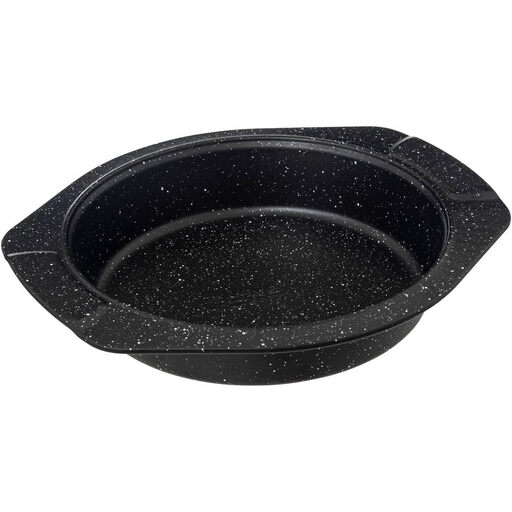
Why this product suits this profile: The 26 cm cake tin is a popular size for everyday cakes and family recipes. The handles make it easier to place the tin in the oven and remove it.
The product information clearly states the PTFE coating, oven suitability and hand-wash requirement. This makes the care limitations clear before purchase.
26 cm diameter, 1.9 l usable capacity, steel construction and coated surface.

Why this product suits this profile: The 28 cm springform tin is designed for larger cakes and gateaux. The SafeClick fastening, leakproof base and enamelled underside meet several practical requirements.
The maximum temperature of 250 °C and the limitation that “only the base is dishwasher-safe” are clearly stated. This prevents misunderstandings about cleaning.
3.4 l capacity, cut-resistant base, non-stick coating and a 10-year guarantee according to the product information.
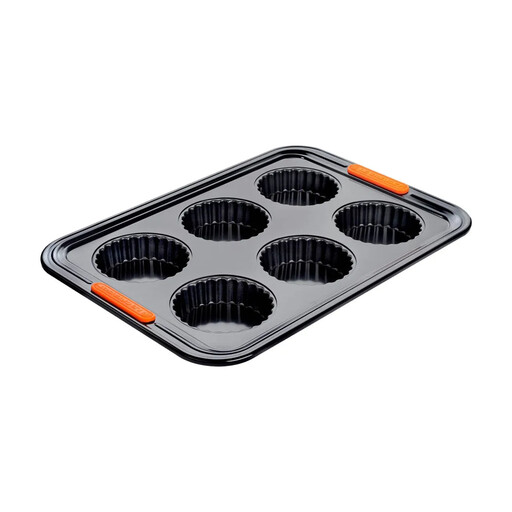
Why this product suits this profile: The tartlet tin with six wells is suitable for individual sweet or savoury tarts, quiches and small pies. It is designed for households that enjoy baking more than just classic cakes.
The six individual wells make its intended use clear. The reinforced rim with silicone inserts makes it easier to grip while wearing oven gloves.
Carbon steel, non-stick coating, six baking wells and oven suitability up to 240 °C according to the product information.
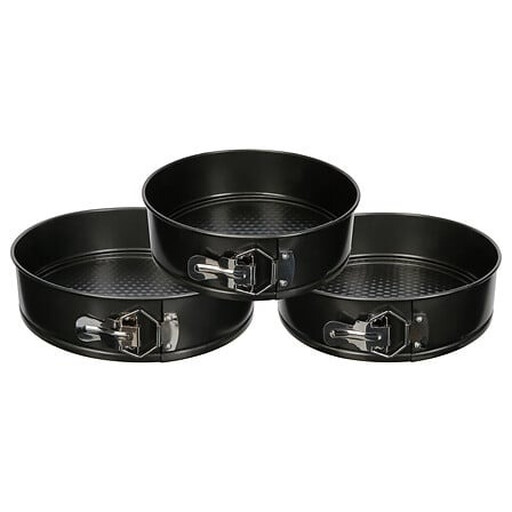
Why this product suits this profile: This baking tin set contains three sizes with diameters of 22, 24.5 and 26 cm. This lets you adjust the portion size and recipe type with ease.
The sizes are clearly stated and the tins can be stacked. This means you do not need to buy a separate tin with an unsuitable diameter for every recipe.
Three springform tins, non-stick coating, stackable design and heat resistance up to 280 °C according to the product description.
We have put together a complete, regularly updated list of products that fully meet these strict selection criteria and the safety regulations applicable in the EU.
Even suitable baking tins need to be treated properly:
A springform tin or round cake tin with a diameter of 24 to 26 cm works well for many standard recipes. For cheesecake, sponge and cake bases, a springform tin with a removable base is particularly practical.
The tin should be clean and dry. Depending on the mixture, lightly greasing the tin and dusting it with flour or breadcrumbs can be useful. With coated tins, you should also use only soft kitchen utensils.
The service life depends on the material thickness, coating quality, temperature limits and care. Hand washing, soft sponges and avoiding metal utensils can help protect the surface. Guarantee details such as the ten-year guarantee offered with some KAISER models are subject to the respective manufacturer’s terms and do not automatically apply to every component of the tin.