
Lieferung heute & morgen

Qualitätsgarantie

Willkommens-Angebote freischalten: KOSTENLOSE Lieferung | Bis zu 80 % RABATT | Kostenlose 30-Tage-JoyPlus-Testphase
App herunterladen
Baking tins are part of every kitchen’s basic equipment. However, the wide range of options does not automatically guarantee you will find the right tin. A cake tin may be too small for the recipe, a loaf tin may be difficult to clean despite its non-stick coating, or a flexible silicone baking tin without a sturdy rim may shift when being moved.
Before buying, it is therefore worth considering three common pitfalls:
The tin affects not only the appearance, but also the height of the batter, baking time and heat distribution.
Steel and carbon steel heat up relatively quickly and support strong browning. Thicker walls can improve the tin’s stability, but usually make the baking tin heavier. With coated models, care is crucial: wooden or silicone utensils protect the surface better than metal.
Enameled stoneware retains heat and, according to the product specifications, may be suitable for use in the oven, microwave, freezer and dishwasher, depending on the model. Even so, always follow the specific manufacturer’s instructions. Sudden temperature changes can also be problematic for temperature-resistant materials.
Silicone is easy to bend and store compactly. Integrated steel frames or a sturdy rim are helpful for safe handling. The temperature limit must be suitable for the recipe. A baking tin specified for temperatures up to 220 °C should not be used at higher baking temperatures.
A tin with a capacity of 1.5 litres is not automatically suitable for every recipe that calls for a “26 cm tin”. Round, square and rectangular tins distribute the same quantity of batter differently. For family-sized portions and tall cakes, the internal height and capacity are particularly important.
For a bread tin, you should also consider the desired loaf size and how much the dough will expand. With a tart tin, the diameter or length affects the thickness of the base and therefore the baking time.
Pay attention to three specifications:
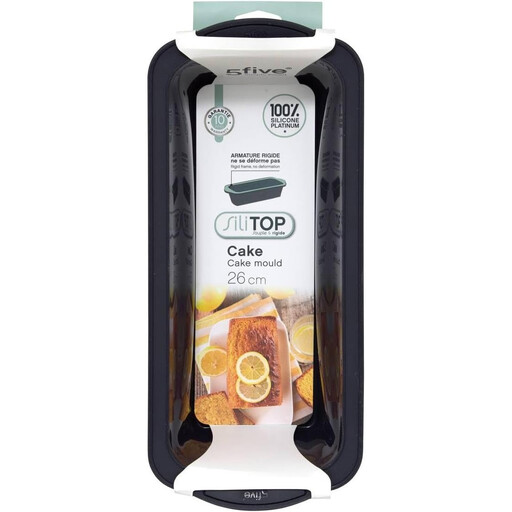
Why this product matches the profile: This 26 cm loaf tin combines a sturdy steel frame with silicone, making it suitable for bread, cakes and rectangular oven dishes.
The integrated frame reduces distortion when filling and removing the tin. The temperature range of -20 °C to 220 °C covers use in the oven and freezer.
1.59-litre capacity, dishwasher-safe and easy to release from thanks to its flexible material.
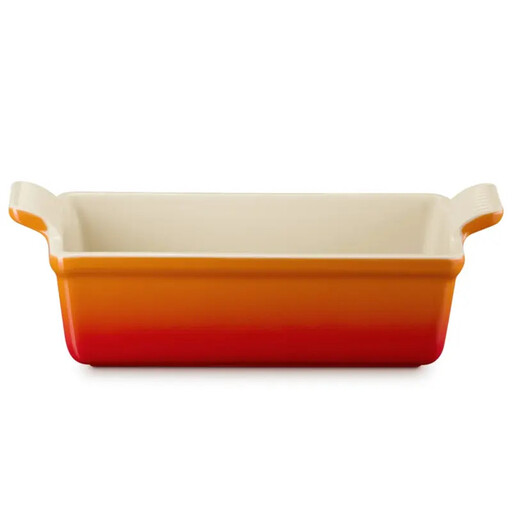
Why this product matches the profile: This enamelled stoneware tin is designed for sweet and savoury recipes such as bread, cakes, lasagne and meatloaf.
The manufacturer’s specifications state a temperature range of -23 °C to 260 °C and confirm suitability for the oven, microwave, freezer and dishwasher.
1.4-litre usable capacity and a scratch-resistant, glazed surface with stated dishwasher suitability.
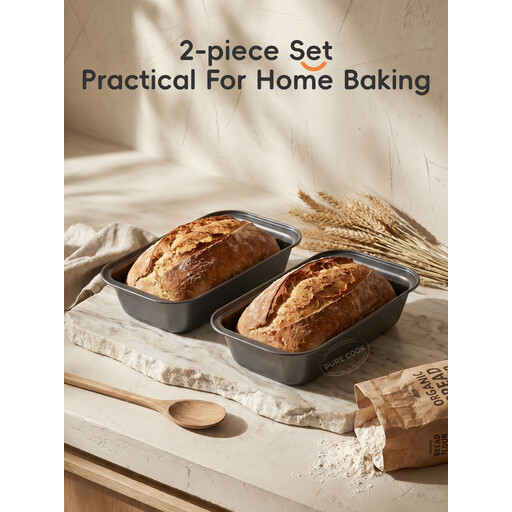
Why this product matches the profile: This set of two square bread tins is designed for households that want to prepare bread, brownies, cakes or meatloaf in different-sized tins.
The usage limits are clearly stated: oven use only, not suitable for the microwave, hob or grill. Hand washing is recommended to protect the coated surface.
Two tins with a capacity of 2.13 quarts each and a stated heat resistance of the non-stick coating up to 220 °C.
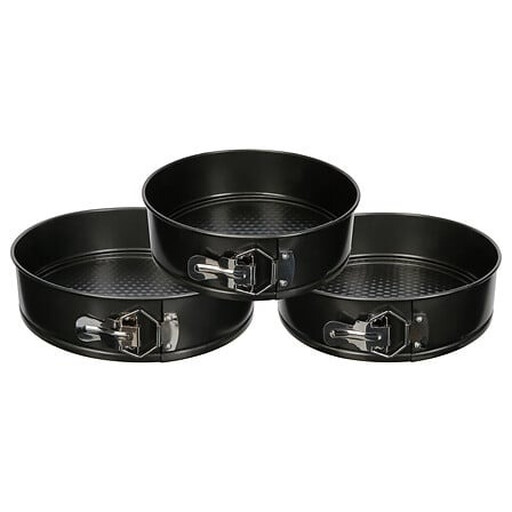
Why this product matches the profile: Three diameters accommodate different quantities of cake, while the stackable design saves space in the kitchen cupboard.
The sizes 22 cm, 24.5 cm and 26 cm are clearly specified. The removable rim and removable base support easy release.
Three steel springform tins with a non-stick coating and a stated maximum oven temperature of 280 °C.
We have put together a complete, regularly updated list of products that fully meet these strict selection criteria and the safety regulations applicable in the EU.
A bread tin or an elongated loaf tin is suitable for bread. Check that it offers sufficient height, the right capacity and a suitable maximum oven temperature. With coated tins, hand washing is often the gentler option.
Silicone baking tins are flexible, easy to store and can make it easier to remove baked goods. Metal tins usually heat up more directly and offer a sturdy construction. The right choice depends on the recipe, temperature, storage and preferred cleaning method.
There is no single service life that applies in every case. It depends on usage, temperature, cleaning method and how the coating is treated. Gentle hand washing, soft sponges and suitable kitchen utensils can help protect the surface in everyday use.