
Lieferung heute & morgen

Qualitätsgarantie

Willkommens-Angebote freischalten: KOSTENLOSE Lieferung | Bis zu 80 % RABATT | Kostenlose 30-Tage-JoyPlus-Testphase
App herunterladen
Baking tins should reliably shape your mixture as intended, make it easier to remove your bake and be simple to clean afterwards. In practice, however, problems often arise: cakes stick, thin tins warp or a claimed non-stick coating does not withstand cleaning as expected.
This buying guide from the Joybuy Product Recommendation Officer helps home bakers, families and beginners choose baking tins based on clear, practical criteria. Rather than making blanket promises, it focuses on material, dimensions, care and intended use.
A non-stick baking tin can make it easier to remove your bake. However, the coating is sensitive to metal knives, abrasive sponges and high temperatures outside the manufacturer’s recommendations. Some models are dishwasher-safe, while others should only be cleaned by hand.
Before buying, you should therefore check:
Silicone baking moulds can be stored in a space-saving way and may make it easier to remove your bake. With larger quantities of mixture or more liquid batters, however, a flexible mould can become unstable when carrying it to the oven. A sturdy frame or a baking tray underneath can be useful.
With very thin silicone moulds, you should also pay attention to the mould depth, the size of the cavities and the temperature range specified by the manufacturer.
A tin with a diameter of 25 centimetres is not automatically suitable for every recipe. The quantity of mixture, baking time and height change with the geometry. A shallow tart tin requires different quantities from a deep springform tin. With muffin tins and small cake tins, the spacing between the cavities should also match the size of the baking tray.
Metal tins made from steel or carbon steel generally transfer heat directly to the mixture. They are dimensionally stable, but coated versions should be protected from scratches. Ceramic retains heat for longer and can be taken from the oven to the table, but requires careful handling when exposed to sudden temperature changes.
Silicone is flexible and lightweight. For even results, it is important that the mould remains stable while it is being filled. For all materials, the specific temperature limit of the individual product is decisive.
A coating is particularly useful for sticky mixtures, cheesecakes or delicate tartlets. “Non-stick” does not mean that greasing is always unnecessary. For example, light greasing is recommended for the rectangular springform tin measuring 31 × 12 centimetres; hand washing is advised to protect the surface.
With coated cake tins, you should:

Why this product suits this profile: Six individual silicone moulds measuring 8 × 7.5 × 3.1 cm are suitable for individual cakes, cupcakes, jellies and frozen desserts.
The stated dimensions and temperature range of -40 °C to 230 °C make it easier to assess the product before buying. The moulds are stackable and dishwasher-safe.
Flexible, food-safe silicone; six individual cavities for portion-sized baking and space-saving storage.
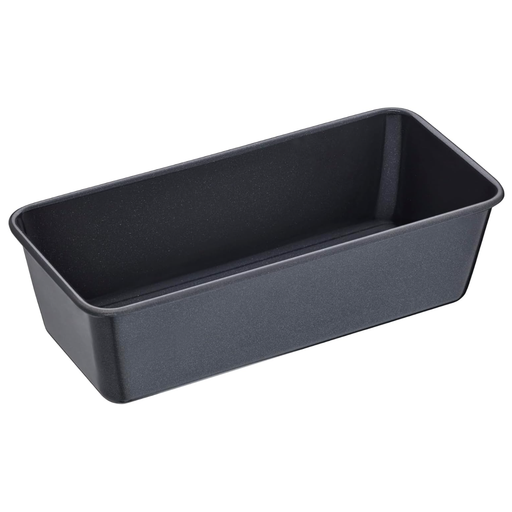
Why this product suits this profile: This springform tin, with a diameter of approximately 25 cm, features a leak-proof fastening mechanism, an enamelled base and a two-layer ceramic non-stick coating.
The care instructions are clear: heat-resistant up to 250 °C, but not dishwasher-safe. The scratch-resistant base is designed for cutting with suitable utensils.
25-cm springform tin; made in Germany; leak-proof fastening mechanism and enamelled base.
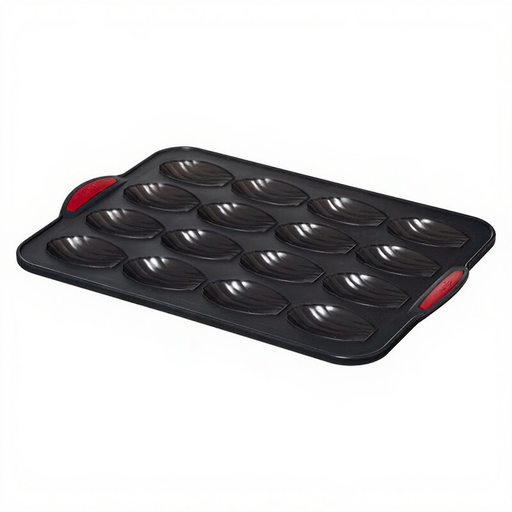
Why this product suits this profile: The Madeleine mould bakes 16 pieces per batch and has a stabilising frame. This makes it suitable for regular baking sessions and small portions.
The sturdy frame reduces deformation while filling and carrying the mould. The product information specifies food-safe silicone and dishwasher suitability.
16 cavities; dimensions of 35.9 × 24.3 cm; low weight of 0.31 kg and integrated mould frame.
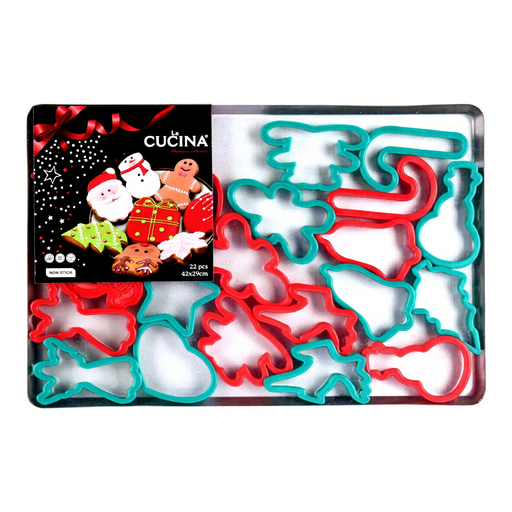
Why this product suits this profile: The 22-piece set contains 21 Christmas cookie cutters and a coated baking tray measuring 42 × 29 cm.
The included components and dimensions are clearly specified. This makes it possible to assess before buying whether the cutters and tray will fit your available storage space.
21 seasonal designs; stainless-steel cutters and a matching baking tray in one set.
We have put together a complete, regularly updated list of products that fully meet these strict selection criteria and the safety regulations applicable in the EU.
The service life of a baking tin depends greatly on its material and how it is handled. Allow metal tins to cool before removing your bake and avoid sudden temperature changes unless the manufacturer specifies otherwise. Silicone moulds should be allowed to dry completely after washing before being folded or put away.
Where possible, clean coated models with warm water, mild washing-up liquid and a soft sponge. With ceramic tins, take care not to place them directly on a hot hob. Before each use, check the tin for cracks, chips or damaged coatings.
Springform tins are practical for classic sponge cakes, cheesecakes and delicate gateaux because the rim can be opened. Tart tins or quiche tins are suitable for shallow fruit cakes, quiches and tarts. The quantity specified by the recipe, diameter and mould depth are the key factors.
Silicone baking moulds are flexible, lightweight and often easy to release. Metal tins are sturdy and transfer heat directly. There is therefore no universally correct answer: silicone can be practical for Madeleines and small portions, while metal offers handling advantages for stable cake or quiche bases.
First, follow the care and usage instructions. Depending on the mixture, lightly greasing the tin or using baking paper may be helpful. Allow the cake to cool briefly after baking, then loosen it with a suitable plastic or silicone tool. Tins with damaged coatings should no longer be used.