
Lieferung heute & morgen

Qualitätsgarantie

Willkommens-Angebote freischalten: KOSTENLOSE Lieferung | Bis zu 80 % RABATT | Kostenlose 30-Tage-JoyPlus-Testphase
App herunterladen
Whether it’s bread, cake, quiche, casserole or roasted vegetables, baking tins and oven dishes need to suit the recipe, your household and the size of your oven. Many poor purchases happen not because of the price, but because of unclear information about capacity, coating or cleaning.
This guide will help home bakers, families and cooking enthusiasts to compare relevant product features objectively before buying.
A cake tin with an external length of 30 cm doesn’t automatically give you 30 cm of usable baking space. The rim, handles and depth of the tin all affect the actual capacity. When choosing, you should therefore consider the internal dimensions, height and volume.
For a small household, a compact cake tin or baking dish with around 1 to 2 litres may be sufficient. For family meals, rectangular oven dishes with 4 litres or more are more practical.
A non-stick baking tin makes it easier to release cakes or bread. However, the coating remains sensitive to metal utensils, abrasive cleaners and sudden temperature changes. Even if a tin is labelled as dishwasher-safe, hand washing can protect the surface in the long run.
For coated models, buyers should therefore pay attention to the manufacturer’s care instructions. A silicone baking tin is flexible and makes releasing easier, but depending on the design, it may need a sturdy rim or a baking tray as support.
“Oven-safe” doesn’t always mean the same temperature range. A dish might be suitable up to 220 °C, 240 °C or 250 °C. If you bake bread with a high initial temperature, gratins or well-browned casseroles, you should check the stated maximum temperature against your recipe.
With glass, ceramic or cast iron, you should also avoid sudden changes from hot to cold. A hot oven dish should never be placed directly into cold water.
A bread tin or loaf tin is designed for loaves, sponge cakes and oblong pastries. For bread, the tin size should match the dough quantity, as overly full tins can overflow.
A springform tin makes it easier to release delicate cakes. For quiches and tarts, a quiche tin or tart tin with a low rim is suitable. A removable base can make transferring to a serving plate easier.
For savoury family meals, a baking dish, a roasting pan or a rectangular baking tray are all options. With large dishes, make sure the handles don’t catch on the oven door or the shelf runners.
The manufacturer’s capacity in litres helps with comparison. Examples from the product selection:
These values are intended as a guide. For the specific amount of dough or ingredients, the recipe remains the deciding factor.
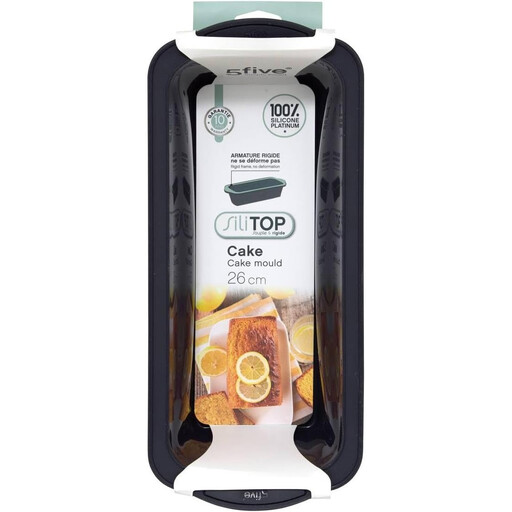
Why this product fits the profile: This loaf tin is suitable for bread, cakes and oblong bakes. The integrated steel frame supports stability, while the silicone remains flexible.
The combination of steel and silicone reduces the risk of the tin warping significantly when filled. The stated temperature range is from -20 °C to 220 °C.
1.59 litre capacity, dishwasher-safe and suitable for both oven and microwave.

Why this product fits the profile: According to the product description, this 35 cm loaf tin is designed for loaves of up to around 1,500 g and is aimed at regular bakers.
The product data states a heat resistance of up to 250 °C and an enamelled, cut-resistant base. According to the manufacturer, the tin is not dishwasher-safe.
Steel construction, KAIRAMIC coating and a stated 10-year guarantee on the non-stick coating.
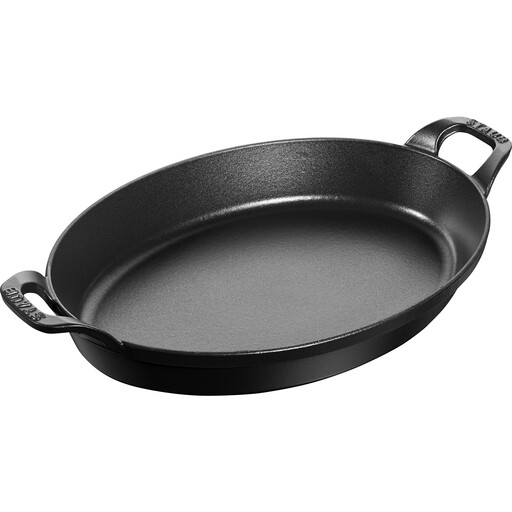
Why this product fits the profile: This cast iron dish is designed for casseroles, gratins and for searing followed by oven cooking. Two side handles make it easier to move.
The material is not comparable to a lightweight metal dish: the dish weighs around 3 kg and should be moved using both handles. This gives a realistic idea of its handling.
3.7 litre capacity, suitable for oven, grill, freezer and various hob types including induction.
We have put together a complete, regularly updated list of products that fully meet these strict selection criteria and the safety regulations in force in the EU.
To keep your baking tins and oven dishes in good condition for as long as possible, a few simple rules are worth following:
For oblong loaves and sponge cakes, a loaf tin or bread tin is suitable. The key factors are dough quantity, internal dimensions and tin depth. For sourdough, buyers should also check whether the material or coating is suitable according to the manufacturer.
Both materials have different properties. Silicone is flexible and can make releasing easier. Metal tins are shape-stable and, depending on the material, conduct heat directly to the dough or food. For a silicone baking tin, a sturdy frame is particularly practical when using runny batter.
For lasagne, potato bake or vegetable dishes, rectangular baking dishes with a capacity of around 4 to 5 litres are practical. Before buying, compare the internal dimensions, handle width, weight and the stated oven temperature.