
Lieferung heute & morgen

Qualitätsgarantie

Willkommens-Angebote freischalten: KOSTENLOSE Lieferung | Bis zu 80 % RABATT | Kostenlose 30-Tage-JoyPlus-Testphase
App herunterladen
Whether you are looking for a cake tin, cake mould or silicone baking mould, there is a huge choice available, and the differences often come down to the finer details. A tin may look high-quality in product photos yet prove impractical in everyday kitchen use. Clear information about the material, dimensions, temperature range, fastening mechanism and cleaning requirements is essential.
This buying guide helps home bakers, families and enthusiastic pâtissiers choose the right baking tins for cakes, gateaux, tarts, quiches, madeleines and creative desserts.
The term non-stick baking tin alone does not tell you how the surface needs to be cared for. Some tins are entirely dishwasher-safe, while with others only the base can be put in the dishwasher. Strong cleaning products, sharp kitchen utensils or high temperatures can damage the coating.
Always check the specific care instructions. Describing a baking tin as dishwasher-safe when only individual parts can go in the machine may create false expectations.
Silicone is flexible and can be stored in a space-saving way. However, a large silicone mould filled with runny batter can be difficult to carry. It should therefore be placed on a sturdy baking tray or rack before filling. Information about the material, temperature range and dimensions is more important than general claims about “professional” use.
A recipe for a 26 cm springform tin cannot simply be used in a small cake tin without adjustments. This affects the height of the bake, cooking time and amount of batter. For rectangular or deep tins, the internal dimensions and capacity are also important.
Look for a specific material description such as food-grade silicone or steel with a ceramic coating. If information about temperature resistance and care is missing, making a direct comparison is more difficult.
A springform tin with a removable side is suitable for delicate cakes, cheesecakes and cake bases. For a cake tin or quiche tin, low sides are practical, while a Bundt tin creates a distinctive shape and a larger surface area for the batter thanks to its central tube.
The following guidelines may help you choose:
The maximum temperature must be suitable for your own oven. Some of the steel tins described here are designed for temperatures up to 250 °C, while the relevant product specification gives the specific temperature range for silicone moulds. Baking tins must not be placed on hobs, open flames or induction hobs unless this is expressly stated.
When it comes to cleaning, hand-washing is often gentler on coated tins, even when individual parts are dishwasher-safe. Metal cutlery should not be used on coated surfaces. Depending on the model, silicone moulds can be cleaned in the dishwasher; this should be explicitly checked before purchase.
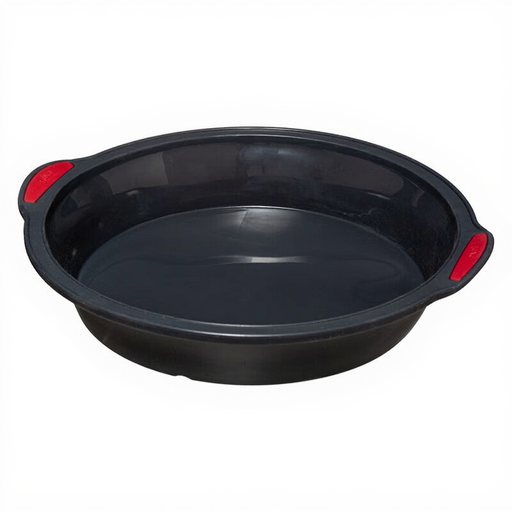
Why this product suits this profile: The round silicone mould is an uncomplicated starting point for classic cakes and takes up very little storage space. The available product information states the material and diameter; the temperature and care instructions should be checked in detail before purchase.
The flexible mould can be stored in a space-saving way. For safe transport, it should be placed on a baking tray.
Standard round size with flexible silicone material and low weight.

Why this product suits this profile: According to the product description, the 28 cm steel tart and quiche tin has a KAIRAMIC ceramic coating, a SafeClick mechanism and a removable base. It is heat-resistant up to 250 °C and made in Germany.
The care instructions are clear: hand-wash with warm water and mild detergent; the tin is not intended for use in the dishwasher.
28 cm diameter, removable base, SafeClick system and cut-resistant enamelled steel base according to the product description.
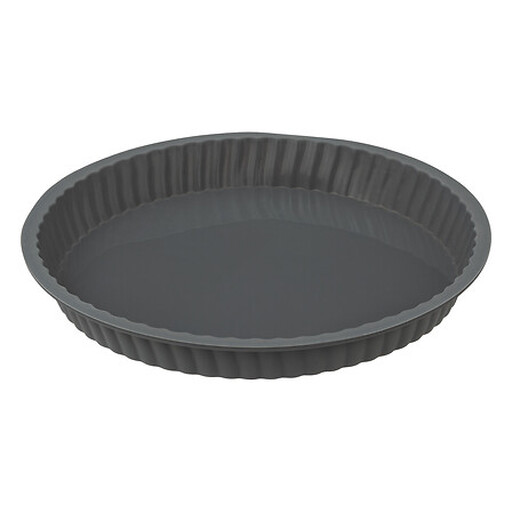
Why this product suits this profile: Measuring 31 x 31 x 4 cm, this silicone mould is designed for shallow tarts, quiches, flans and savoury pies. According to the product description, it is suitable for use in the oven, microwave and freezer.
The shallow design suits its intended use. The flexible material can be folded away for storage; a stable surface is advisable when filling it.
Generous square surface, flexible food-grade silicone and, according to the product description, a dishwasher-safe surface.
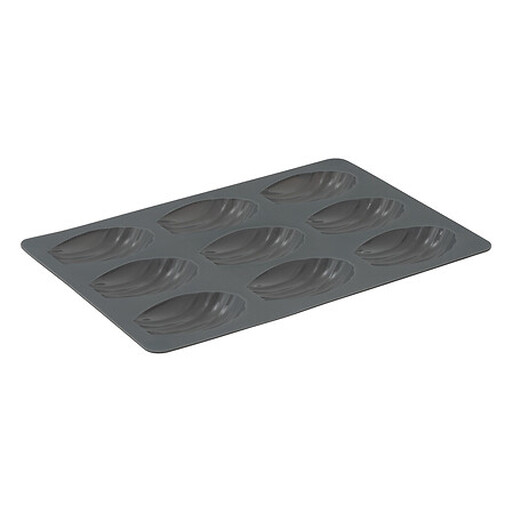
Why this product suits this profile: Measuring 36 x 21.5 x 2 cm, this madeleine mould has several shell-shaped cavities. It is suitable for madeleines as well as small chocolate, cornbread or decorative moulds.
The cavity design is clearly intended for a specific type of pastry, preventing a large universal tin from being used for small portions.
Lightweight silicone material, distinctive shell-shaped cavities and versatile use for small baked or frozen desserts.
We have put together a complete, regularly updated list of products that fully meet these strict selection criteria and the safety regulations applicable in the EU.
For many recipes, a round springform tin measuring between 24 and 26 cm is practical. The removable side makes it easier to take out cake bases and delicate cakes. For larger households, a 28 or 30 cm tin with a higher capacity may be a sensible choice. The key is to match the size of the tin to the quantity specified in the recipe.
Silicone baking moulds are lightweight, flexible and space-saving. Metal tins conduct heat differently and can support stronger browning around the edges for certain recipes. It is therefore not useful to make a blanket judgement. Choose according to the recipe, the desired stability of the shape, available storage space and the stated temperature limits.
Its lifespan depends on how it is used, cleaned and stored. Use heat-resistant kitchen utensils made from wood, plastic or silicone, avoid scratches and observe the maximum temperature. If the coating becomes visibly damaged, starts to peel or is heavily scratched, the tin should no longer be used.