
Lieferung heute & morgen

Qualitätsgarantie

Willkommens-Angebote freischalten: KOSTENLOSE Lieferung | Bis zu 80 % RABATT | Kostenlose 30-Tage-JoyPlus-Testphase
App herunterladen
The right baking tin doesn’t just affect how a cake looks. Material, rim height, coating and cleaning all influence whether a batter releases easily, a casserole cooks evenly, or a baking tray stays practical for everyday use. If you only focus on terms like “professional” or “extra robust”, you can easily overlook the technical specifications.
This buying guide from the Joybuy Product Recommendation Officer gives you a clear, factual breakdown of the key features and shows which baking tins suit different households and recipes.
A non-stick baking tin can make it easier to release cakes and quiches. However, that doesn’t automatically mean it’s suitable for metal utensils, abrasive sponges or the dishwasher. For several coated models, hand washing is recommended to keep the surface in good condition for longer.
That’s why you need specific details on:
A rectangular baking tin measuring 36 × 24 cm needs enough room on the oven rack. You also need to account for the rim height and any handles. For smaller households or compact ovens, a smaller oven dish measuring 17 × 11 cm can be more practical. Before you buy, you should consider the internal measurement, external measurement and capacity separately.
Aluminium conducts heat quickly, steel and carbon steel hold their shape well, ceramic retains heat, and silicone can be stored away compactly. Even so, different rules apply depending on the material. A ceramic dish may be suitable for the oven, but according to the product information it might not be safe to use directly on a hob. A heavy cast-iron tin, meanwhile, needs different handling to a thin baking tray.
The recipe quantity and household size are what matter when choosing:
“Dishwasher safe” should be clearly stated in the product details. For the Tefal Success Baking Pan, dishwasher use is specified; however, hand washing is recommended for a longer lifespan. Other models, including the 5five Rectangular Oven Dish and the PURECOOK Baking Tin Set, are described as hand wash only.
Before you buy, you should also check the oven, microwave, freezer and hob separately. A tin may be oven-safe without being suitable for induction hobs or open flames.
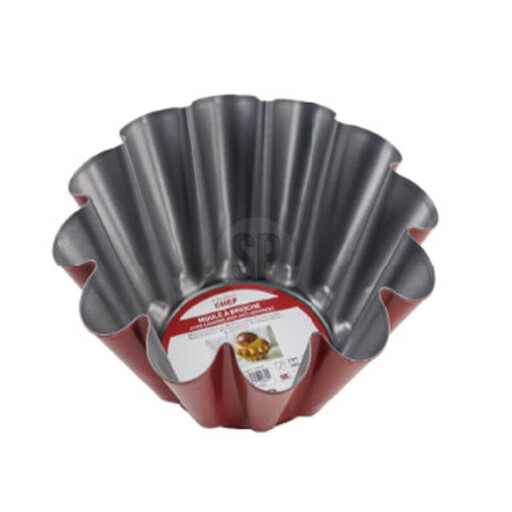
Why does it fit? The square tin measuring 230 × 230 × 90 mm is suitable for deep cakes, bread and smaller casseroles.
The product description clearly states steel, non-stick coating and hand washing. Sharp kitchen utensils should be avoided.
Robust steel body, deep 90 mm tin and coated surface for easier release.
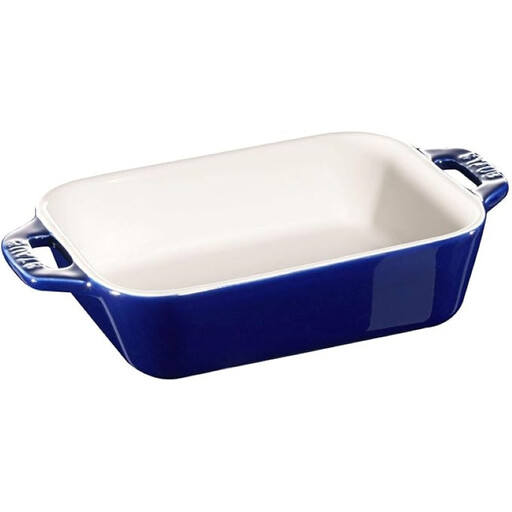
Why does it fit? The rectangular ceramic dish with a 2.4 litre capacity combines baking and serving.
The details indicate hand washing and that it is not suitable for direct hob heat. This prevents incorrect use.
Ceramic material, rectangular shape and 2.4 litre volume for casseroles and oven dishes.
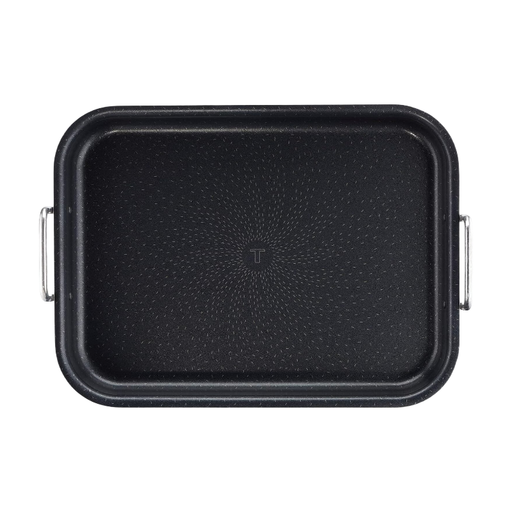
Why does it fit? The rectangular oven dish measures 37 × 27 × 4.5 cm and offers around 4.5 litres of capacity according to the product data.
The description mentions recycled aluminium, ProBaking non-stick coating, handles, and suitability for oven and dishwasher.
Large capacity, side handles and even heat distribution thanks to aluminium.
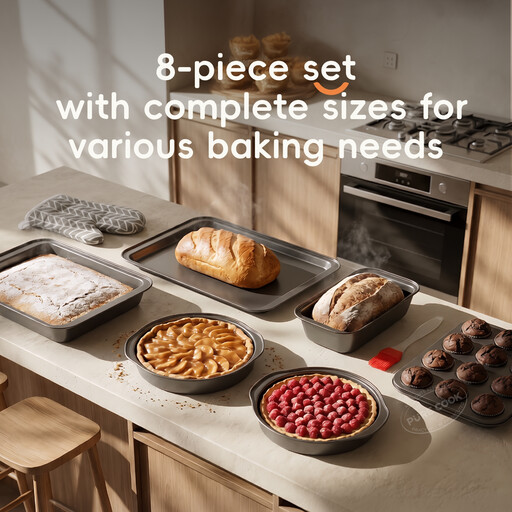
Why does it fit? Several square and rectangular tins cover cakes, brownies, bread and savoury bakes.
The set states clear limitations: oven use only, not for microwave, hob, open flame or grill; hand washing is required.
Eight pieces, carbon steel and stackable storage for different baking quantities.
A griddle pan isn’t a classic baking tin, but it can be used for vegetables, fish or meat with a ridged surface. The GRILL PAN ALUMINIUM measures 260 × 41 mm and, according to the product description, has deep sides. For induction hobs, a suitable induction interface disc is needed.
For small portions, the Mondex Roasting Tray at 17 × 11 × 7.5 cm is worth considering. If you want to make Japanese takoyaki, you’ll also find a cast-iron takoyaki pan with a wooden handle. Both products are more specialist solutions than universal cake tins.
For quiches and tarts, a tin with a removable base can be practical. The Le Creuset Rectangular Tart Pan measures 33 × 13 × 3 cm and, according to the product information, is heat resistant up to 240 °C. With coated surfaces, you should avoid abrasive cleaners and metal utensils.
In our current selection you’ll find baking trays and other models in different sizes, materials and applications.
A larger rectangular casserole dish with around 4 to 4.5 litres of capacity offers room for several portions. Pay attention to the external dimensions, rim height, handles and the stated oven temperature.
That depends on the individual model. A dishwasher-safe baking tin must be explicitly labelled as such. Even then, hand washing with a soft sponge can protect the coating in the long run. Metal utensils and abrasive cleaners should generally be avoided with coated tins.
The lifespan depends on the material, usage, temperature and cleaning. Steel and carbon steel tins can last a long time with careful care. Coated models should not be used further if you notice visible scratches or peeling. Ceramic tins should be protected from knocks and temperature shocks; silicone tins should be checked regularly for cracks and deformation.