
Lieferung heute & morgen

Qualitätsgarantie

Willkommens-Angebote freischalten: KOSTENLOSE Lieferung | Bis zu 80 % RABATT | Kostenlose 30-Tage-JoyPlus-Testphase
App herunterladen
Whether it’s cake, bread, quiche or small desserts, the right baking tin affects handling, baking results and cleaning effort. Many poor purchases happen not because of the price, but because of unclear information about material, coating or temperature range. Our selection shows what hobby bakers, families and frequent users should look for when buying.
A non-stick baking tin can make releasing your bakes easier. However, care instructions vary significantly. Some tins are dishwasher-safe, while others must only be washed by hand. Harsh cleaning agents, abrasive sponges and metal utensils can damage the coating.
So check before you buy:
A cake tin with a diameter of 24 or 26 cm can hold a different amount of batter depending on its height and internal design. For a loaf tin, the length, width, height and capacity are all relevant. For recipes, the volume should be as close as possible to the tin you’re using, so the batter doesn’t overflow or bake too shallowly.
“Oven-safe” doesn’t always describe the full range of use. What matters is the specific maximum temperature, as well as suitability for the microwave, freezer or hob. A silicone baking tin, for example, may be suitable for the oven and freezer, while a coated steel tin must not be used on the hob.
Steel and carbon steel are shape-stable and suitable for loaf tins, springform tins, bundt tins and sheet cake tins. A coating can make releasing easier, but requires gentle cleaning.
Silicone is flexible, lightweight and space-saving. A silicone baking tin can often be folded away and, depending on the manufacturer’s instructions, is suitable for the oven, microwave and freezer. For very soft tins, a sturdy baking tray underneath can be useful.
Stoneware retains heat and can go from the oven to the table. Le Creuset states that the product mentioned is oven-safe up to 260 °C. Sudden temperature changes should be avoided, as this can cause thermal shock.
Enamelled cast iron is heavy and retains heat for a long time. The Staub baking tin weighs approximately 1.91 kg according to the product information and is heat-resistant up to 240 °C. For small kitchens or frequent moving, the weight can be an important deciding factor.
Always compare the specifications directly with your recipes. Examples from the product selection:
Temperature ratings only apply to the described use. Hobs, open flames or grill functions are explicitly excluded for many baking tins.
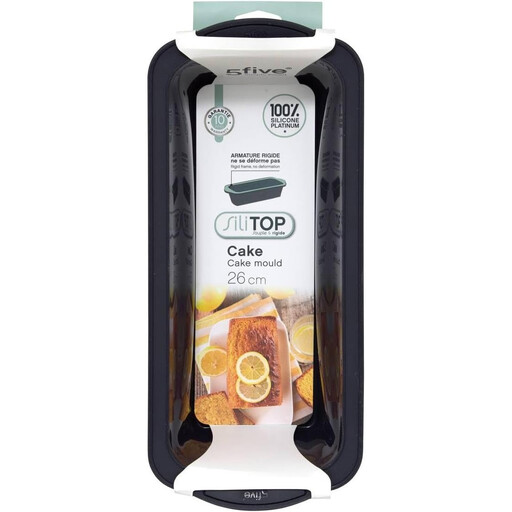
Why this product fits the profile: The combination of a steel frame and silicone offers flexible release with added stability. With a 1.59-litre capacity, this loaf tin is ideal for smaller households and classic loaf cakes.
The integrated frame reduces the warping of a soft silicone tin. Cleaning is possible in the dishwasher, according to the product information.
Steel-silicone construction, oven-safe up to 220 °C and freezer-safe down to −20 °C.
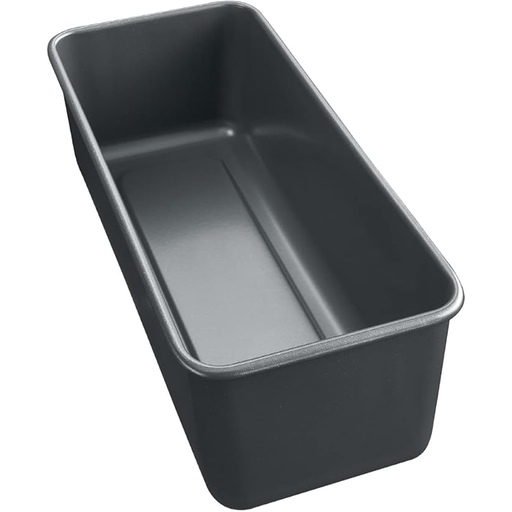
Why this product fits the profile: The steel tin with KAIRAMIC coating and enamelled base is aimed at users who value shape stability and defined care instructions.
The product information explicitly states hand washing, soft sponges and avoiding metal utensils. This makes the cleaning effort transparent before purchase.
30 cm length, 2.4-litre capacity, enamelled base and oven-safe up to 250 °C.
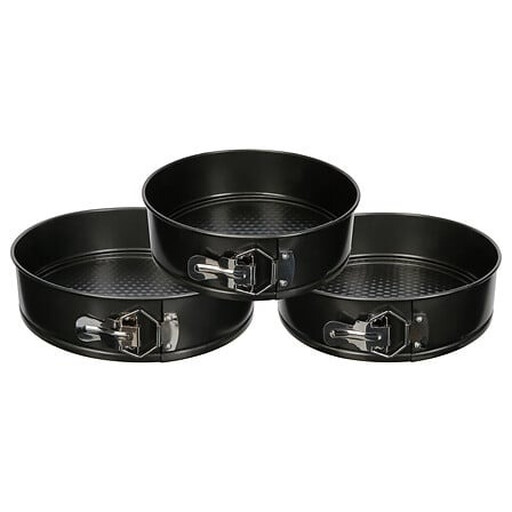
Why this product fits the profile: Three graduated springform tins allow for different cake and torte sizes. The stackable design is practical for families and regular baking days.
Instead of buying several individual tins with different measurements, this set covers 22, 24.5 and 26 cm. The sizes are clearly stated.
Three sizes, removable base, locking mechanism and stated heat resistance up to 280 °C.
We’ve put together a full, regularly updated list of products that fully meet these strict selection criteria and the safety regulations in force in the EU.
For classic cakes and tortes, a springform tin of 24 to 26 cm or a loaf tin is versatile. For a bundt cake, you need a tin with a central tube. The key is to match the capacity to the recipe you’re using.
Silicone baking tins are lightweight, flexible and often easy to store. Metal tins are generally more shape-stable and are particularly suitable for cakes with a firm edge or for precise cake bases. The right choice depends on the recipe, storage and desired cleaning method.
A fixed lifespan cannot be given universally. It depends on the quality of the coating, temperature, cleaning and the utensils used. If the tin is only used within the stated temperature range and cleaned by hand with a soft sponge, unnecessary wear can be reduced. If visible scratches, peeling or warping appear, the baking tin should no longer be used.