
Lieferung heute & morgen

Qualitätsgarantie

Willkommens-Angebote freischalten: KOSTENLOSE Lieferung | Bis zu 80 % RABATT | Kostenlose 30-Tage-JoyPlus-Testphase
App herunterladen
A baking tin needs to hold your batter securely, heat it evenly and be easy to clean after baking. In practice, however, a few common buying decisions can lead to unnecessary costs: a tin that's too small for your chosen recipe, a coating that can't handle the wrong utensils, or cleaning that turns out to be more hassle than expected.
This guide explains which specifications for baking tins are genuinely important. We're covering bread, toast, cakes, brownies and savoury oven dishes – from the compact toast tin to the roomy 1 kg bread tin.
The external dimensions of a loaf tin don't automatically tell you how much batter it can hold. Wall thickness, height and internal shape all affect the actual volume. A tin that's 30 cm long may suit very different quantities of batter depending on its width and height.
For bread recipes, you should therefore pay attention to the stated capacity. A 1 kg bread tin is designed for a different amount of dough than a tin for a 1.5 kg loaf. If you overfill the tin, the dough can spill over the edge as it rises. If you underfill it, the bread may turn out flatter than expected.
A non-stick baking tin can make releasing your bakes easier. However, its lifespan depends heavily on how you use it. Metal knives, forks or spatulas can damage the surface. Abrasive cleaners and heavy mechanical wear are also harmful.
Many of the tins featured here are stated by the manufacturer as not dishwasher safe. Hand washing with warm water, mild washing-up liquid and a soft sponge is therefore an important part of looking after your tin.
Sourdough, with its acidity, can place particular demands on the material. When buying a sourdough bread tin, you should look for explicit statements such as "sourdough-resistant" or "acid-resistant". If this information is missing, you can't assume it's suitable for regular sourdough baking.
Steel and carbon steel are commonly used for bread and cake tins. Alongside the material itself, the wall thickness and construction are also crucial. A thicker tin can be more rigid, but it's usually heavier and takes up more storage space.
Even heat distribution helps achieve a consistent bake. However, it doesn't replace the correct oven temperature, shelf position and baking time. With an oven-safe baking tin, you should check the maximum temperature and permitted uses. The specifications of the products in this selection range, for example, up to 220 °C or 250 °C.
The following questions can help you choose:
A tin with a lid is particularly good for square sandwich loaves. Without a lid, the dough can rise higher and develop a more rustic shape.
A non-stick coating can reduce the need for baking paper or extra grease, but it shouldn't be seen as a guarantee for every recipe. With very sticky doughs, a light greasing can be helpful. After baking, let the tin cool completely before cleaning it.
For coated products, soft kitchen utensils and hand washing are the safe choice, unless the manufacturer's care instructions say otherwise.
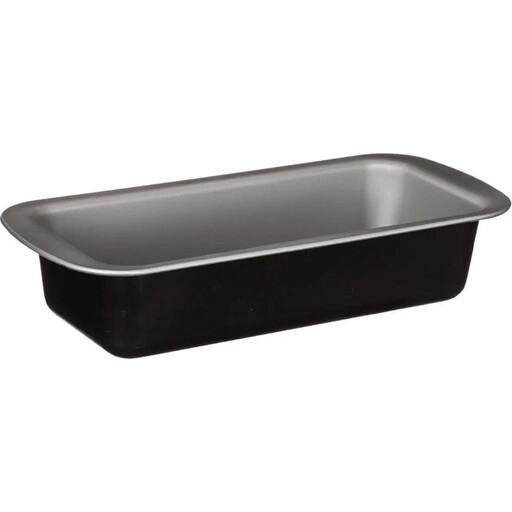
Why this product fits the profile: This 25 cm loaf tin is designed for simple cake and bread recipes and offers a clearly stated capacity of 1.3 litres.
Dimensions, material and care instructions are all clearly listed. The tin is oven-safe but not intended for microwave or dishwasher use.
25 cm length, 1.3 litre capacity and a low product weight of around 230 g.
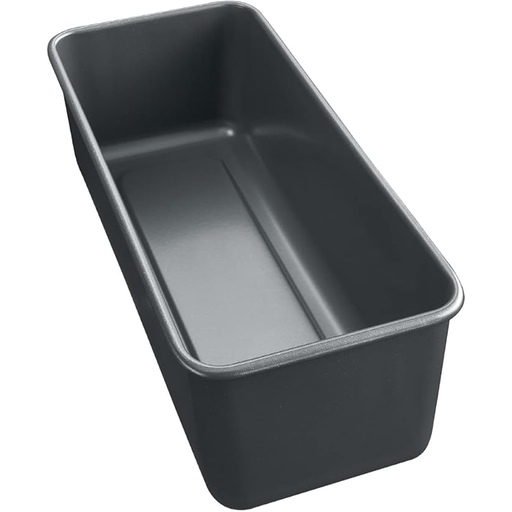
Why this product fits the profile: This steel tin with KAIRAMIC coating and an enamelled base is aimed at users who value acid resistance and shape stability.
The product specifications explicitly mention sourdough resistance, hand washing and a maximum oven temperature of 250 °C.
30 × 11 × 8 cm, enamelled base and a stated capacity of 2.4 litres.

Why this product fits the profile: The longer tin is designed for larger quantities of dough and, according to the product description, can also be used for sweet and savoury bakes.
The capacity for 1,500 g of bread is clearly stated. This makes it easier to match the tin to your planned dough quantity.
35 cm length, steel construction, non-stick coating, enamelled base and a temperature rating of up to 250 °C.

Why this product fits the profile: The lid helps achieve a uniform, square shape and is intended for toast, small loaves and certain cake variations.
The tin is explicitly labelled as a 450 g toast tin. This reduces the risk of choosing a large loaf tin for small toast portions.
Non-stick coating, lid and suitability for toast, mini loaves and cakes.
We've put together a complete, regularly updated list of products that fully meet these strict selection criteria and the safety regulations in force in the EU.
Models whose product specifications explicitly state sourdough-resistant or acid-resistant are suitable. A coated steel tin with an enamelled base may be designed for this purpose, depending on the model. You should also check the care instructions, temperature limits and suitability for hand washing.
That depends on the amount of dough you plan to use. For smaller loaves or toast, compact tins with a capacity of around 450 g are a good fit. For larger family loaves, models for 1 kg or 1.5 kg are suitable. The important thing is to match the stated capacity to your own recipe and not to fill the tin right to the brim.
Not necessarily. Several product specifications in this selection explicitly state hand washing only. Even if a tin has a non-stick coating, you should follow the care instructions and use soft sponges and mild washing-up liquid.