
Lieferung heute & morgen

Qualitätsgarantie

Willkommens-Angebote freischalten: KOSTENLOSE Lieferung | Bis zu 80 % RABATT | Kostenlose 30-Tage-JoyPlus-Testphase
App herunterladen
Whether you are baking a cake, muffins, madeleines, quiche or a dessert in a glass: the right baking tin affects ease of use, baking time and how easily your bake can be removed afterwards. A tin that looks versatile in the shop can still prove impractical in everyday use. This is especially true if the material, size or care instructions do not suit the way you bake.
This shopping guide from the Joybuy Product Recommendation Officer helps home bakers, families, beginners and small cafés and bakeries distinguish relevant product details from marketing claims.
A non-stick baking tin can make it easier to remove your bake, but it will usually still need a thin layer of fat. As a rule, coated metal tins should be washed by hand with a soft sponge. Metal utensils, abrasive cleaners and hard scouring pads can damage the surface.
With silicone baking moulds, the non-stick effect comes from the flexible material. However, for very runny batters, it is a good idea to place the mould on a sturdy baking tray or wire rack underneath so that it can be carried safely into the oven.
A deep cake tin with a large capacity will increase the baking time. If a recipe intended for a smaller springform tin is simply poured into a larger tin, the cake may turn out flatter or dry out more quickly. Conversely, a very deep centre of batter may already be browned on the outside while the middle is still not fully baked.
That is why you should pay attention to the internal dimensions, height and capacity. The external dimensions alone do not always indicate how much batter the tin can actually hold.
“Oven-safe” does not automatically cover every use. Check the maximum temperature as well as any restrictions relating to microwaves, hobs, naked flames or sudden temperature changes. For example, a stoneware dish may be suitable for use in the oven but should not be placed on a hob. With coated baking tins, it is also advisable to allow the tin to cool completely before removing the bake.
Silicone is lightweight, flexible and space-saving. A smooth surface makes it easier to remove your bake, while the mould may be suitable for use in the oven and freezer. The key consideration is that the manufacturer specifies food-safe use and the permitted temperature range.
Steel and carbon steel transfer heat directly to the batter and retain their shape even when holding heavier mixtures. A coating can make releasing the bake easier. With these tins, soft kitchen utensils and gentle cleaning are important.
Stoneware and ceramic are suitable for baked portions that can be served straight away. They retain heat, but are heavier and more sensitive to significant temperature changes. Ramekins are therefore ideal for soufflé, crème brûlée, small cakes, quiche or mousse.
Before buying, check whether the tin is dishwasher-safe. Some coated metal tins are recommended for hand washing, while certain silicone moulds can be placed in the dishwasher. Foldable material saves storage space, whereas reinforced construction improves stability when filling the tin.
With coated baking tins, allow them to cool completely, remove the bake carefully and do not use sharp or metal objects. This helps protect the surface during everyday use.
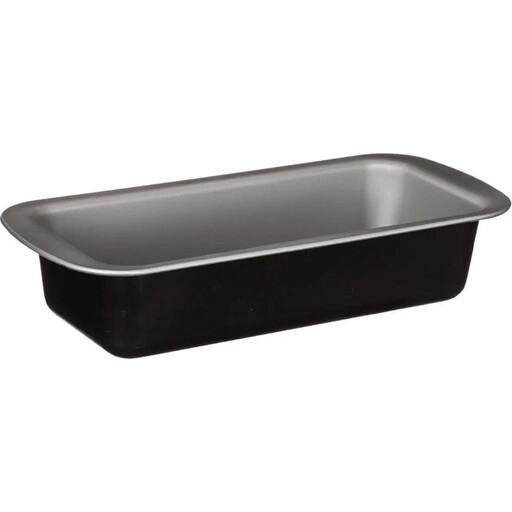
Why this product suits this profile: This 25 cm loaf tin is suitable for classic loaf cakes, bread and banana bread, while its metal construction keeps it easy to use.
The product details specify clear dimensions, a maximum capacity of 1.3 litres and the fact that the tin is not dishwasher-safe.
Oven-safe metal, a length of 25 cm and a weight of 230 g; hand washing helps protect the specified surface.
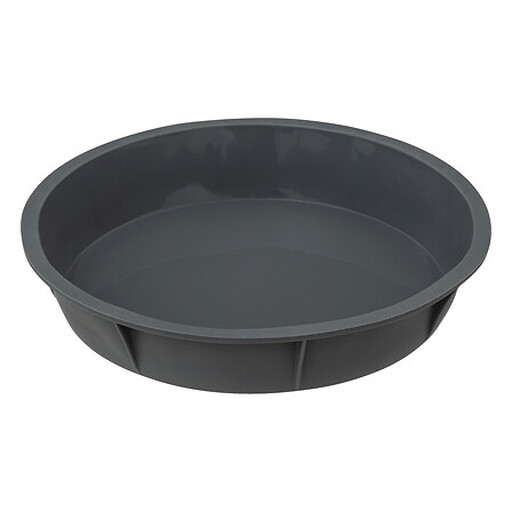
Why this product suits this profile: The deep, round Manqué mould, measuring 30 × 30 × 6 cm, is suitable for tall loaf cakes, tarts and quiches.
The soft silicone can be rolled or folded away to save space. For stability when filling, the mould should be placed on a baking tray.
Food-safe silicone, a weight of 100 g and, according to the product details, suitable for the oven and freezer; dishwasher-safe.
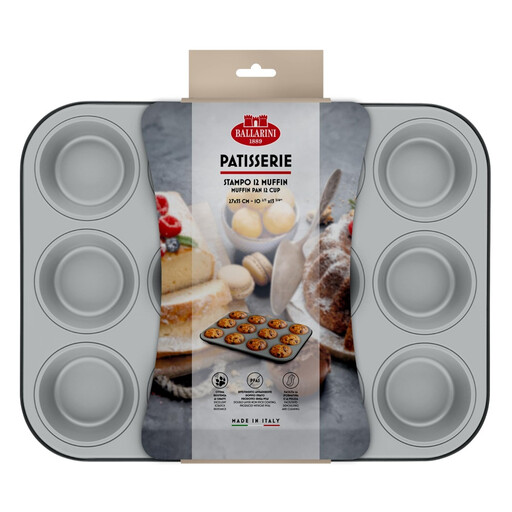
Why this product suits this profile: Twelve wells make it easy to prepare individual muffins or cupcakes for families, celebrations and small batches.
The number of wells, the dimensions of 27 × 35 cm and the maximum oven temperature of 230 °C are clearly specified.
Carbon steel with a two-layer, PFAS-free non-stick coating; hand washing and soft utensils are recommended.
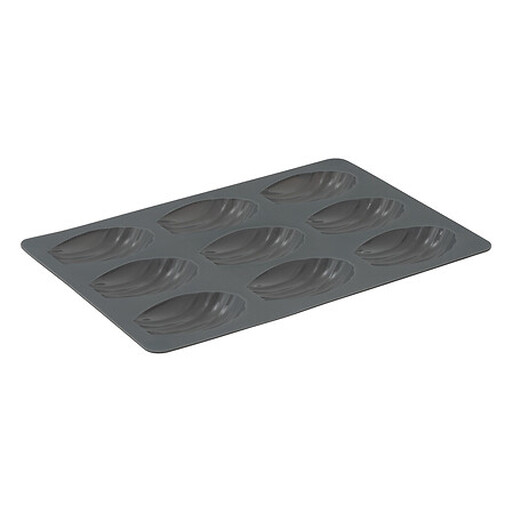
Why this product suits this profile: The shell-shaped wells are designed for madeleines and, according to the product description, can also be used for small chocolate or corn cakes.
The specialised shape prevents a standard muffin tin from being used for a recipe requiring a distinctive shell structure.
36 × 21.5 × 2 cm, a weight of 50 g and, according to the product details, suitable for the oven, freezer and dishwasher.
We have put together a complete, regularly updated list of products that fully meet these strict selection criteria and the safety regulations applicable in the EU.
For beginners, a loaf tin or a medium-sized springform tin offers plenty of versatility. If you regularly bake muffins, you can choose a muffin tin with twelve wells straight away. Clear dimensions, a specified oven temperature and easy-to-understand care instructions are essential.
Their lifespan depends on the material, frequency of use and care. Coated tins should not be handled with metal objects. Silicone moulds should be protected from sharp edges and dried completely after cleaning. If there are cracks, flaking coating or deformation, the tin should no longer be used.
A baking tin set is worthwhile if you regularly make different cakes and desserts and the tins are stackable. For example, a set of springform tins in several diameters offers more recipe flexibility than a single size. If you only bake occasionally, choosing one tin that suits your most frequently used recipe will usually save space and money.