
Lieferung heute & morgen

Qualitätsgarantie

Willkommens-Angebote freischalten: KOSTENLOSE Lieferung | Bis zu 80 % RABATT | Kostenlose 30-Tage-JoyPlus-Testphase
App herunterladen
Whether it’s a bread tin, loaf tin, cake tin or springform tin: the right baking tin affects baking time, browning, shape retention and how easily your bake releases. Many products boast “non-stick”, “professional quality” or particularly versatile uses. On their own, though, these terms don’t tell you much. What really matters are the material, dimensions, temperature limit and care instructions.
A baking tin with a non-stick coating can make releasing your bakes easier. However, the coating will only stay effective if it’s looked after properly. Metal knives, scouring pads and harsh cleaners can damage the surface. What’s more, not all coated tins are dishwasher-safe.
So look out for specific details:
Even with a non-stick coating, a lightly greased tin can be a good idea, especially for delicate batters, cheesecakes or very sugary recipes.
A cake tin with a 20 cm diameter holds a different amount of batter than a springform tin measuring 26 or 28 cm. If you use a recipe designed for a larger tin in a smaller one without adjusting it, the batter may overflow or the centre may not be fully baked.
With loaf tins, it’s not just the length that matters – capacity is important too. A tin designed for 1,000 g of bread won’t automatically suit a dough with 1,500 g of flour and water. So always check the dimensions and, if available, the capacity.
Not every ovenproof baking tin is suitable for the microwave, hob, induction or grill. Carbon steel and steel tins are generally intended for the oven. Some of the products mentioned must not be used on hobs or over an open flame.
Temperature ratings are also product-specific: for the models reviewed here, the stated limits range from 220 °C to 250 °C. A higher oven temperature can damage the tin or its coating.
Aluminium is relatively light and conducts heat well. The rectangular Tefal Success Baking Pan is made from recycled aluminium and is designed for cakes, brownies and traybakes.
Carbon steel holds its shape well and is often used for loaf tins, tart tins and quiche tins. With coated models, you should avoid sharp objects and abrasive cleaners. Steel constructions with reinforced material can be a practical option for regular use, but they are often heavier than aluminium.
Silicone with a stabilising frame combines flexibility with a firmer handling. The 5five Silitop loaf tin is made from steel and silicone. The integrated frame is designed to keep the tin stable during baking.
Compare the maximum oven temperature not just by material, but by the manufacturer’s specification. Care requirements vary significantly: some tins are dishwasher-safe, while others should only be cleaned with warm water, mild washing-up liquid and a soft sponge.
Before buying baking tins online, you should also check whether the tin is suitable only for the oven or also for the microwave. According to the product details, the Silitop loaf tin is suitable for both oven and microwave and is temperature-resistant from -20 °C to 220 °C. The freezer temperature is particularly relevant if you plan to chill desserts or prepared doughs in the tin.
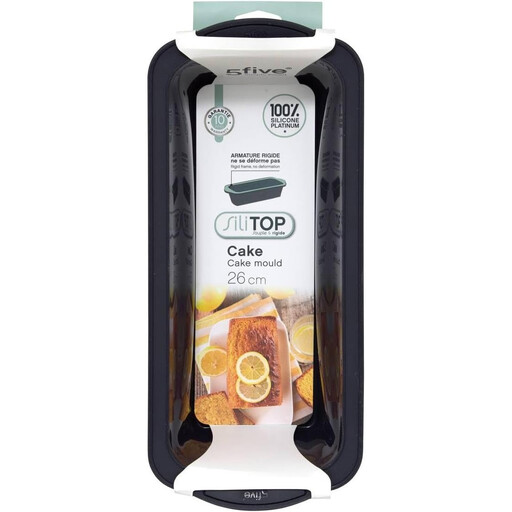
Why this product fits the profile: The combination of steel and silicone makes it ideal for baking beginners who want a flexible tin with extra frame stability. Bread, sponge cakes and other loaf recipes are all possible.
The integrated rigid frame is designed to prevent warping during use. The temperature limit of 220 °C is clearly stated.
Suitable for oven and microwave; described as dishwasher-safe in the product details, with a 1.59-litre capacity.

Why this product fits the profile: This loaf tin is designed for loaves up to 1,500 g and is aimed at households that bake bread and cakes regularly.
The tin is intended for oven use up to 250 °C and is not suitable for hobs. Hand washing protects the coating from unnecessary wear.
Steel construction with KAIRAMIC coating and enamelled base; dimensions 35 × 10.01 × 8.51 cm.
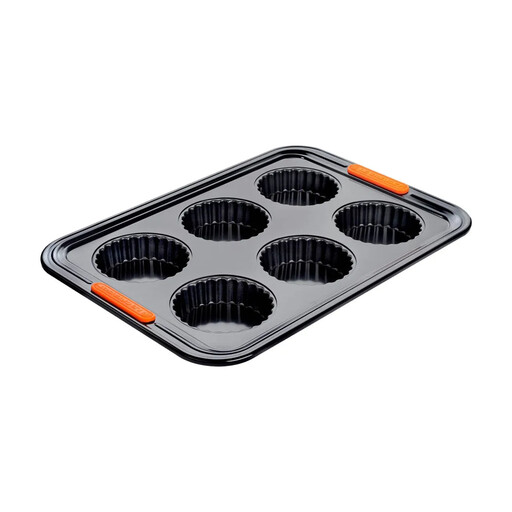
Why this product fits the profile: The tin with six indentations is ideal for individual tartlets, mini quiches and small sweet or savoury portions.
The maximum oven temperature of 240 °C is stated. As the tin is not dishwasher-safe, hand washing prevents unintended cleaning methods.
Six fluted cups, carbon steel and reinforced rim with heat-resistant silicone inserts.
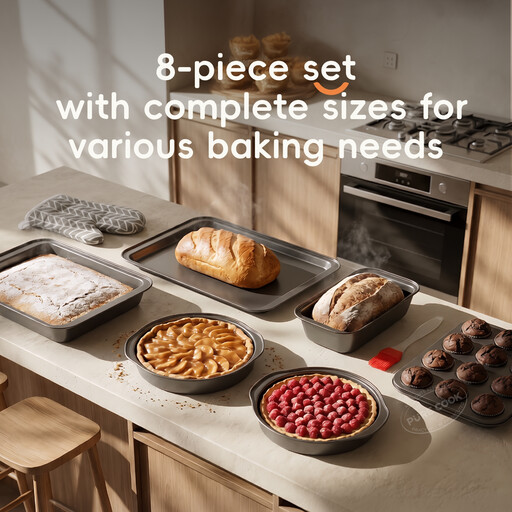
Why this product fits the profile: This set is aimed at heavy users, baking courses and households that need different sizes for cakes, brownies, pizza or savoury dishes.
The product description lists the tins included and explicitly rules out use in the microwave, over an open flame, on induction hobs and on charcoal grills.
Eight-piece set made from carbon steel with stackable tins; hand wash only.
We’ve put together a full, regularly updated list of products that fully meet these strict selection criteria and the safety regulations in force in the EU.
A loaf tin is suitable for many breads and sponge cakes. What matters are the dimensions and the intended amount of dough. For larger loaves, look for models with a capacity of around 1,500 g; smaller tins are better suited to recipes for roughly 1,000 g of bread.
That depends on the individual model. Some tins, such as the 5five Silitop loaf tin, are described as dishwasher-safe. Other products, including several coated steel tins and quiche tins, should be hand-washed only. Always follow the manufacturer’s instructions.
There’s no general rule for lifespan. It depends on the material, coating, temperature, frequency of use and cleaning. If you stick to the temperature limit and avoid sharp or abrasive tools, you’ll reduce typical damage to the surface and the tin itself.