
Lieferung heute & morgen

Qualitätsgarantie

Willkommens-Angebote freischalten: KOSTENLOSE Lieferung | Bis zu 80 % RABATT | Kostenlose 30-Tage-JoyPlus-Testphase
App herunterladen
The right baking tin does more than just determine how your bake looks. The material, dimensions, coating and cleaning method all affect whether a cake releases cleanly, whether muffins bake evenly, and whether the tin remains reliable after several uses. This applies equally to home bakers, families, beginners and small dessert businesses.
A non-stick baking tin can make releasing your bakes easier. However, the coating will only stay effective if you avoid using metal utensils, scouring pads or harsh cleaning agents. You should also not automatically assume it is “dishwasher safe”. For several coated tins in the range, hand washing with warm water and a soft sponge is recommended.
A cake tin with unusual dimensions can be useful for specific recipes, but it might not fit your oven space or the quantity of mixture you’re using. For springform tins, diameters like 22 cm, 24.5 cm and 26 cm are practical because they cover different cake volumes. For standard muffins, twelve wells with a diameter of around 6.5 cm is a common guideline.
A silicone baking mould is easy to store and often simple to unmould. However, it can warp when being filled if it doesn’t have enough support. Before placing it in the oven, a soft mould should sit on a sturdy baking tray. With metal tins, look out for sharp edges, a secure clasp and an even interior surface.
Carbon steel conducts heat evenly and is generally lighter than cast iron. This makes it a great choice for cake tins, loaf tins and baking tin sets. You should still check the maximum temperature from the individual product details. An example is the 5Five set of three springform tins, which is oven-safe up to 280 °C.
Silicone is flexible and saves space. It is particularly suitable for muffins, madeleines, small cakes or frozen desserts. A sturdy tray underneath improves handling when transporting to the oven. With ceramic and porcelain, avoid sudden temperature changes as these can cause cracking.
Before buying, check the instructions for oven, microwave, hob, open flame and dishwasher. Several metal tins in the range are intended for oven use only. Coated products should be allowed to cool completely before you remove the bake. Plastic lids on ramekins should not go into a hot oven unless the product description explicitly allows it.
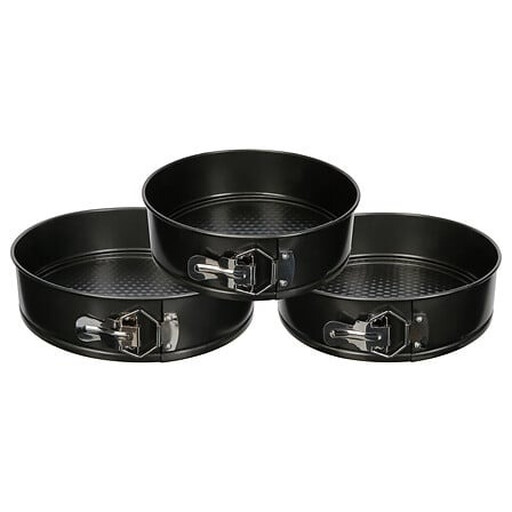
Why this product fits the profile: Three graduated sizes cover different cake quantities and can be stacked inside one another.
The different diameters reduce the risk of buying a tin for just one recipe. The spring mechanism helps with releasing the bake.
Set with 22 cm, 24.5 cm and 26 cm; stackable design; oven-safe up to 280 °C according to the product details.
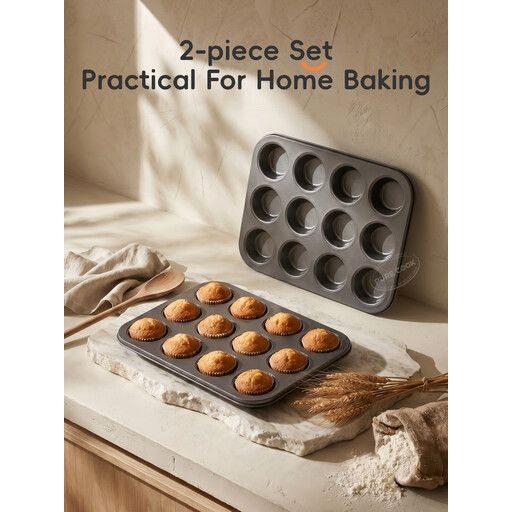
Why this product fits the profile: Two tins, each with twelve wells, allow for portioned baking for families, parties or small orders.
The clearly stated number of wells and the format make planning easier. The care instructions explicitly rule out metal pads and harsh cleaning agents.
Carbon steel; two pieces with twelve wells each; stackable; clean with warm water and a soft sponge.
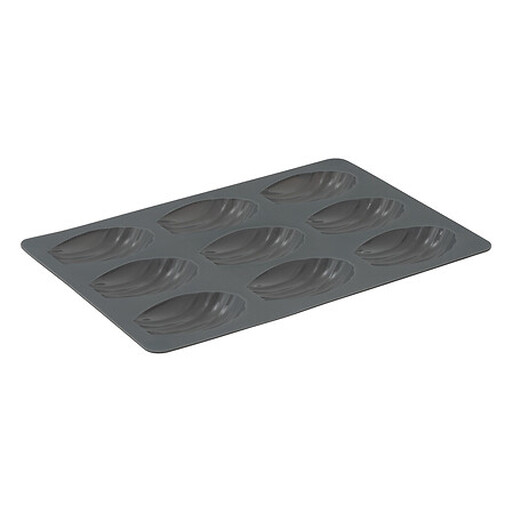
Why this product fits the profile: The shell shape is designed for madeleines and, according to the product description, can also be used for chocolate or small cornbreads.
The flexible silicone makes it easier to release small, detailed bakes. The stated size of 36 × 21.5 × 2 cm helps you assess oven compatibility.
Food-grade silicone; lightweight at 50 g; suitable for oven, freezer and, according to the product details, dishwasher.
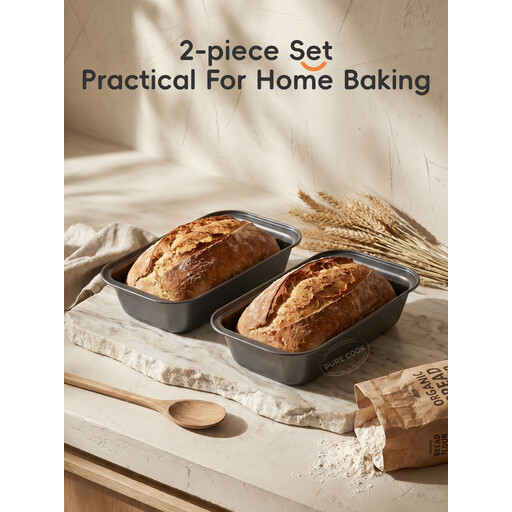
Why this product fits the profile: Two rectangular tins support parallel baking of toast, sandwich loaves or smaller cakes.
The product details state clear usage limits: oven only, not hob, microwave or open flame. This allows you to check suitability before buying.
Set of two carbon steel loaf tins; dimensions according to details 13.2 × 25.5 cm; hand wash with a soft sponge.
We have put together a full, regularly updated list of products that fully meet these strict selection criteria and the safety regulations in force in the EU.
For getting started, a springform tin with a removable base is practical because it can be used for many types of cake. A set with several diameters offers extra flexibility. If you bake muffins regularly, you could also choose a twelve-well muffin tin.
The lifespan depends on the material, coating, temperature and care. Metal tins should not be scratched with sharp objects. Silicone moulds remain flexible with proper use; they should be filled on a firm surface and cleaned according to the manufacturer’s instructions.
This depends on the model. Some silicone or ceramic products are described as dishwasher safe in the product details. For coated steel and carbon steel tins, hand washing is often recommended to protect the surface. Always follow the specific care instructions for the product you buy.