
Lieferung heute & morgen

Qualitätsgarantie

Willkommens-Angebote freischalten: KOSTENLOSE Lieferung | Bis zu 80 % RABATT | Kostenlose 30-Tage-JoyPlus-Testphase
App herunterladen
A new baking tin might seem straightforward at first glance. In practice, however, the material, dimensions and care instructions determine whether bread, cakes or brownies bake evenly and release cleanly. Home bakers, families and beginners should therefore look beyond just the price or flashy non-stick advertising.
As Joybuy Product Recommendation Officer, I objectively assess the most important product details and show which baking tins suit different usage scenarios.
“Non-stick” only describes the surface property. It does not automatically indicate how scratch-resistant or durable a tin is. With a non-stick baking tin, buyers should also check:
A carbon steel baking tin can conduct heat relatively evenly and usually remains dimensionally stable. However, the coating typically requires gentle cleaning. Silicone is flexible and makes releasing easier, but with soft or runny batters it needs a sturdy rim or a baking tray for support.
A loaf tin with a capacity of around 1.5 litres is not automatically suitable for every bread or cake recipe. Too much batter can overflow, while a tin that is too large leads to flat bakes. Alongside length, the internal width, height and volume are crucial.
With a loaf tin or bread baking tin, you should therefore match the recipe quantity to the product dimensions. For families, larger or multiple tins can be useful. For smaller households, compact sizes or a baking tin set with several variations are often sufficient.
Not every oven-safe baking tin is dishwasher-safe. Coated steel and carbon steel tins are often recommended for hand washing to protect the surface. Even with silicone baking tins, it is worth checking the care instructions, as greasy residue can cling to folds or the rim.
For a longer lifespan, soft sponges, warm water and avoiding metal or abrasive cleaners are advisable. Before releasing, the baked goods should cool completely, if the manufacturer specifies this.
Steel and carbon steel are dimensionally stable and suitable for classic cakes, bread and savoury bakes. Carbon steel is often described in product specifications as offering good heat conduction. Cast iron is heavier and retains heat longer, while silicone scores points for its flexibility when releasing.
Not only the material matters, but also the stability of the rim. An integrated steel frame can prevent a silicone baking tin from warping when being transported to the oven.
Pay attention to the maximum temperature stated by the manufacturer. The 5five Silitop Silicone Loaf Tin, for example, is specified for the oven up to 220 °C and the freezer down to -20 °C. According to the product description, this model is also suitable for the microwave and dishwasher.
Other tins are expressly intended only for the oven. The PURECOOK Carbon-Steel Set must not, according to the description, be used in the microwave, on the hob, on induction hobs, over open flames or on a charcoal grill. Such restrictions are crucial for safe use.
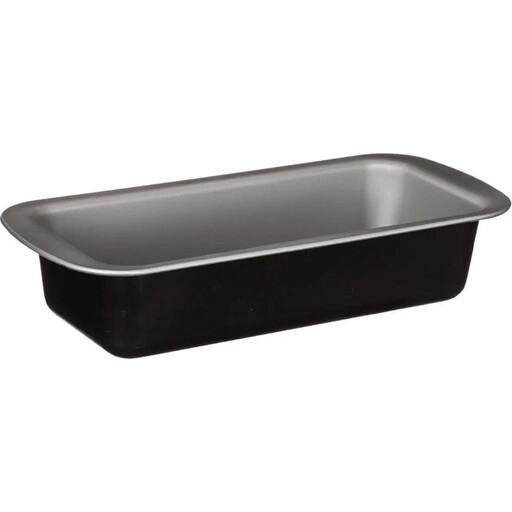
Why this product fits the profile: The 25 cm loaf tin is designed for classic cakes and smaller bread portions, making it a manageable basic starter.
The specifications clearly state: oven-safe, not microwave-safe and not dishwasher-safe. This helps prevent misuse before purchase.
Metal construction, 25 cm length, 1.3 litre maximum capacity and simple hand washing.
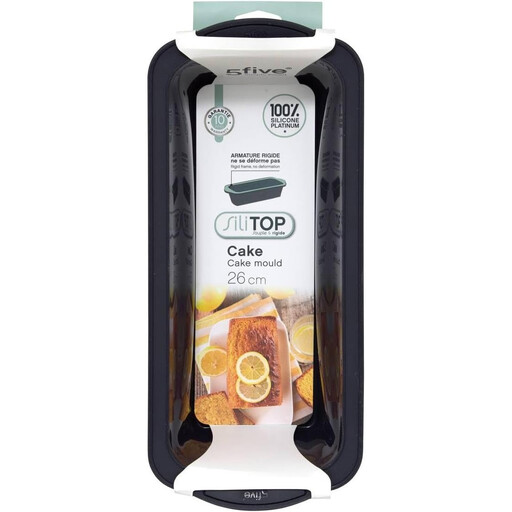
Why this product fits the profile: The combination of steel and silicone merges a more stable frame with a flexible baking surface.
The integrated rigid frame is designed to reduce warping during use. Temperature specifications and care instructions are clearly stated.
1.59 litre capacity, oven use up to 220 °C, freezer use down to -20 °C and dishwasher suitability according to product specifications.
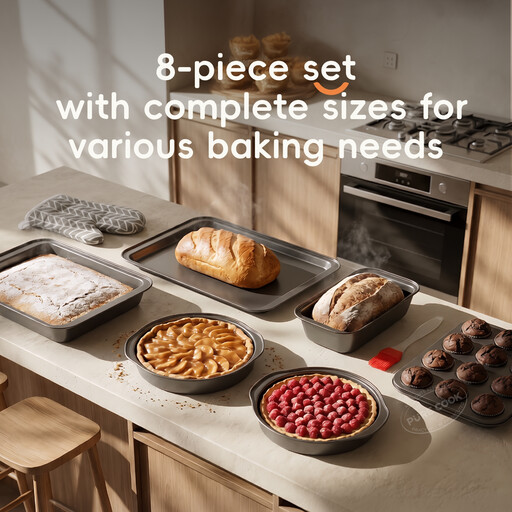
Why this product fits the profile: Multiple square tins and different dimensions cover cakes, brownies, pizza, toast and savoury bakes.
Usage is clearly restricted to the oven. Hand washing, soft sponges and avoiding metal utensils protect the coating.
Eight-piece set made of carbon steel with multiple shapes; suitable for sweet and savoury baking recipes in the oven.
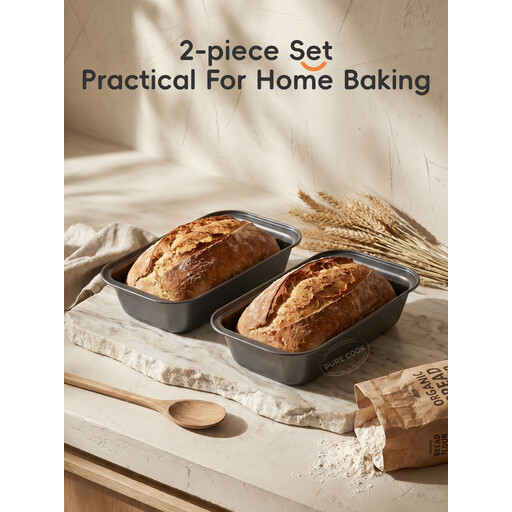
Why this product fits the profile: Two square bread baking tins measuring 13.2 × 25.5 cm are aimed at households that regularly bake toast, wholemeal bread or sandwich loaves.
The product specifications limit use to the oven and recommend hand washing. This rules out the hob, microwave and dishwasher as incorrect uses.
Two tins made of reinforced carbon steel, non-stick surface and stated temperature resistance up to 220 °C.
We have compiled a complete, regularly updated list of products that fully meet these strict selection criteria and the safety regulations in force in the EU.
The lifespan of a baking tin depends heavily on how it is treated. Allow the tin to cool after baking before cleaning it or removing the baked goods. With coated tins, metal knives, forks and abrasive sponges are unsuitable. Silicone tins should be placed on a sturdy baking tray before filling if the rim is flexible.
Lightly grease a tin despite its non-stick coating, according to the recipe or manufacturer's instructions. This can make releasing easier with certain batters. Also check regularly whether the coating is peeling, there are deep scratches or the tin has lost its original stability.
A loaf tin is versatile and suitable for sponge cakes, pound cakes, toast and many bread doughs. If you bake bread more often, you can choose a special bread baking tin or a set with two identical tins. For brownies and flat cakes, square cake tins or a baking tray are more practical.
Silicone baking tins are flexible and can make releasing easier. Metal and carbon steel tins, on the other hand, are dimensionally stable and conduct heat differently. A blanket judgement is not useful. What matters are the recipe, tin size, stability, temperature range and desired cleaning method.
Wait until the tin has cooled, then clean it with warm water and a soft sponge. Whether the dishwasher is allowed depends on the specific model. With coated steel and carbon steel tins, hand washing is often recommended. The specific manufacturer's instructions take precedence.