
Lieferung heute & morgen

Qualitätsgarantie

Willkommens-Angebote freischalten: KOSTENLOSE Lieferung | Bis zu 80 % RABATT | Kostenlose 30-Tage-JoyPlus-Testphase
App herunterladen
Whether you need a cake tin, springform tin, muffin tin or bread tin, baking tins differ not only in shape, but also in material, temperature range, cleaning requirements and storage needs. If you choose based solely on terms such as “non-stick” or “professional”, you may end up with a tin that is not suitable for your oven or preferred recipes.
This guide explains which details really matter when buying baking tins and which models suit different usage profiles.
A non-stick baking tin can make it easier to remove baked goods. However, the coating will only remain intact if the tin is used correctly. Metal knives, abrasive sponges, sudden temperature changes and excessively high oven temperatures can damage the surface. Many coated tins are also not dishwasher-safe.
Before buying, check the following:
Diameter and external dimensions are not the same thing. Handles, high sides or a wide tin can restrict the available space on the oven rack. With a cake tin measuring 26 cm in diameter, you should also take the height and dimensions of your oven into account.
The amount of batter is also important: if a small tin is filled too full, the batter may overflow. If the tin is too large for the recipe quantity, the cake may be flatter and bake through more quickly.
A silicone baking mould is lightweight and space-saving, but can be unstable when being carried to the oven. A baking tray or sturdy rack is recommended as a base, particularly for runny cake batter. The manufacturer’s instructions on temperature, microwave use and dishwasher use should also be followed.
Carbon steel and steel heat up comparatively quickly and give the tin stability. They are suitable for springform tins, Bundt tins, bread tins and muffin tins, among other uses. A coating can make releasing baked goods easier, but requires gentle cleaning.
Stoneware retains heat and can be moved from the oven straight to the table. According to the product information, Le Creuset stoneware baking tins are designed for a temperature range of -23 °C to 260 °C. The tins are suitable for the oven, freezer, microwave and dishwasher, but must not be used on a hob or over direct heat.
Silicone is flexible, lightweight and often stackable or rollable. This is practical in smaller kitchens. To ensure consistent shape retention, the silicone mould should be placed on a tray when being filled.
An ovenproof baking tin is not automatically suitable for every kitchen appliance. Check whether it is intended solely for use in the oven or whether it can also be used in the microwave, freezer or under the grill.
Examples from the product information:
These values only apply when the products are used in accordance with the manufacturer’s instructions. Hobs, naked flames and induction hobs are expressly excluded for several of the tins mentioned.
The right tin depends on the recipe and the number of people you are baking for:
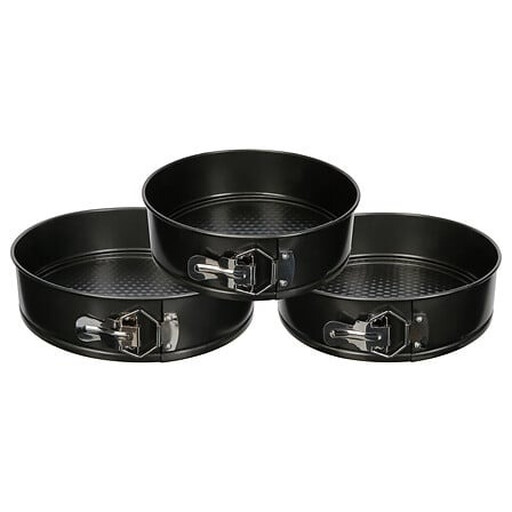
Why this product suits this profile: Three sizes – 22 cm, 24.5 cm and 26 cm – cover different recipe quantities and can be nested inside one another.
The graduated sizes reduce the risk of needing to buy a separate tin for every recipe quantity. The spring mechanism helps release delicate cakes.
Set of three steel tins with non-stick coating, removable bases and a stackable design.
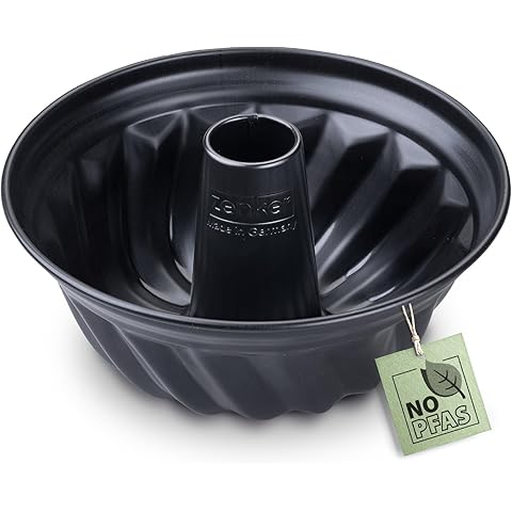
Why this product suits this profile: According to the product information, the 22 cm steel Bundt tin has an enamelled base and is ovenproof up to 250 °C.
The specific details on diameter, height, capacity and temperature make it easier to choose a tin for classic sponge and ring cakes.
Steel construction, central opening and stated capacity of 2.8 litres; hand washing is recommended.
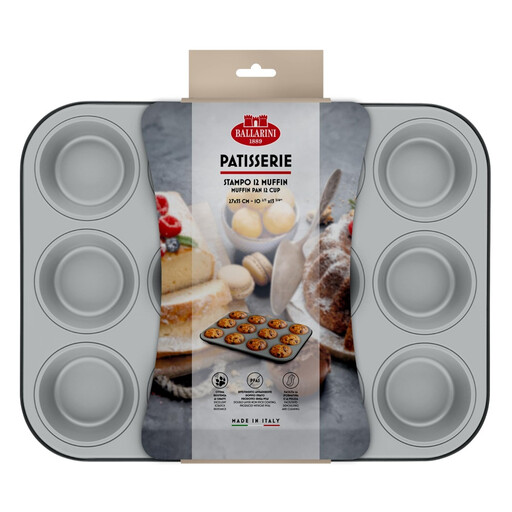
Why this product suits this profile: Twelve wells are ideal for families, regular baking and individual muffins or cupcakes.
The number of wells, external dimensions of 27 x 35 cm and temperature limit of 230 °C are clearly stated. This makes it easier to check that the tin is compatible with your oven and recipes.
Carbon steel with a two-layer, PFAS-free non-stick coating; hand washing and soft cleaning utensils are recommended.
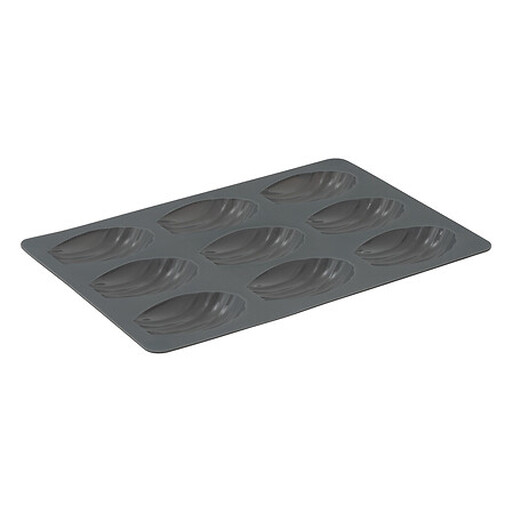
Why this product suits this profile: The flexible silicone mould with shell-shaped wells is lightweight and can be stored compactly when you regularly make small desserts.
Its low weight and flexible construction make storage easier. When filling it, place the mould on a baking tray to prevent it from tipping over.
Food-grade silicone, dimensions of 36 x 21.5 x 2 cm and, according to the product information, suitable for the oven, freezer and dishwasher.
We have put together a complete, regularly updated list of products that fully meet these strict selection criteria and the safety regulations applicable in the EU.
The service life of a baking tin depends largely on its material, coating and care. The following basic rules generally apply to coated steel tins:
For silicone moulds, it is sensible to store them flat or rolled, provided this is recommended by the manufacturer. Stoneware should not be moved directly from the freezer onto a powerful heat source if the product information does not explicitly permit such a temperature change.
A springform tin or a baking tin set with several sizes is practical for many beginners. The removable sides make releasing cakes easier, while different diameters accommodate different recipe quantities. For muffins or cupcakes, a muffin tin with twelve wells is a useful addition.
Not necessarily. Silicone baking moulds are flexible, lightweight and space-saving. Metal tins, on the other hand, offer greater stability and are often chosen for evenly shaped cakes, bread and delicate batters. The right choice depends on the recipe, storage space, temperature range and preferred cleaning method.
Price alone says little about suitability. Compare the material, size, coating, temperature range, contents and care instructions. A baking tin set can be economical if you regularly use several sizes. For occasional speciality recipes, however, a single tart tin, Bundt tin or madeleine baking mould is often sufficient.