
Lieferung heute & morgen

Qualitätsgarantie

Willkommens-Angebote freischalten: KOSTENLOSE Lieferung | Bis zu 80 % RABATT | Kostenlose 30-Tage-JoyPlus-Testphase
App herunterladen
If you’re looking to buy baking tins and kitchen utensils, you’ll find a huge selection of individual items, baking tin sets and kitchen utensil sets. The product images often look similar, but it’s the material, dimensions and care instructions that determine whether a tin will stay practical in everyday use. For home bakers, families, beginners and small dessert shops, it’s worth taking a close look at the technical details rather than relying on marketing claims alone.
A cake tin may be suitable for the oven without being designed for every temperature or cooking method. This is especially relevant for coated tins, where the maximum oven temperature matters. A tin that’s fine for the oven isn’t automatically safe for a hob, gas burner or under the grill.
Look out for:
A non-stick baking tin can make it easier to release cakes, brownies or bread. However, it shouldn’t be used with metal utensils, abrasive scourers or harsh cleaning products. For many items in the range, hand washing with warm water and a soft sponge is recommended.
Even if a silicone baking tin is often dishwasher-safe, you should always check the specific product description. Claims like “dishwasher-safe” or “hand wash only” don’t apply to every tin across the board.
A large tin isn’t automatically more versatile. Before you buy, check the internal dimensions of your oven and the amount of batter you’ll need. For smaller households, stackable baking tin sets can be more practical than several individual tins of different sizes. With loaf tins, the internal dimensions and height affect the final slice size and how much you can bake at once.
Carbon steel and standard steel are common materials for cake tins, loaf tins and baking trays. Carbon steel is often described in product details as offering even heat distribution and being relatively lightweight. A coating can make releasing easier, but it does require careful maintenance.
Silicone is flexible and, depending on the design, suitable for cakes, small desserts, chocolate or ice cubes. For reliable use, look for an explicitly stated food-grade suitability, the temperature range and how stable the tin is when placed in the oven. A flexible tin is easier to unmould, but with runny batter it often needs a sturdy baking tray underneath for support.
The right tin depends on your recipe and how many people you’re cooking for:
With kitchen utensils, the material and construction are key. Silicone kitchen tools can be suitable for non-stick pans and pots, provided the heads are soft enough and the stated heat resistance is respected. Stainless steel handles are sturdy but can get hot with prolonged heat exposure. For wooden and bamboo utensils, check the care instructions, moisture resistance and whether they’re dishwasher-safe.
The selection below matches specific products to typical requirements. Details on temperature, material and care are based on the respective product descriptions.
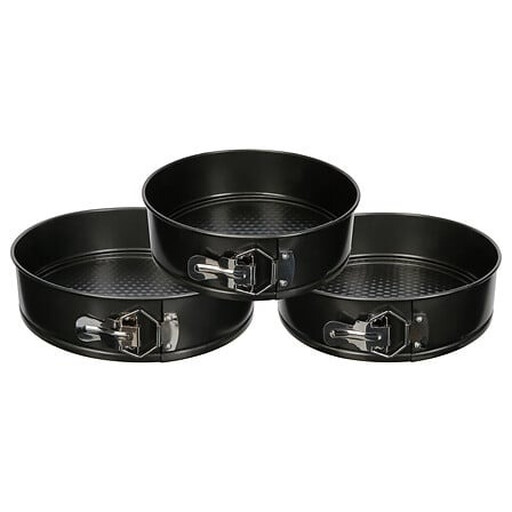
Why this product fits the profile: Three sizes – 22 cm, 24.5 cm and 26 cm – cover different cake quantities and can be stacked inside each other.
The removable bases and clamping mechanism reduce the need for sharp tools when releasing. According to the product description, the temperature rating is up to 280 °C.
Three diameters, stackable design and steel with non-stick coating.
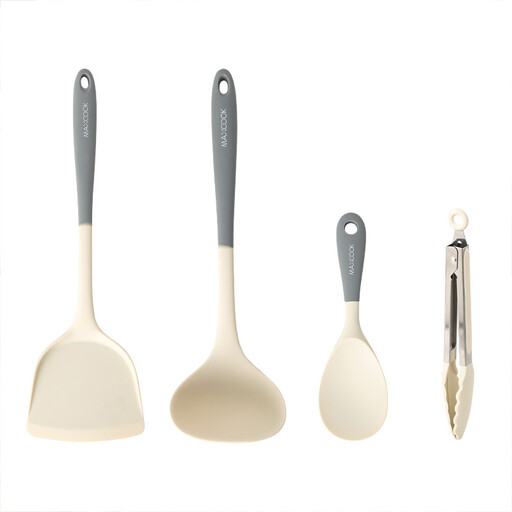
Why this product fits the profile: The set combines several kitchen tools for baking and cooking with silicone heads and stainless steel handles.
The product details state a heat resistance of up to 230 °C and suitability for non-stick cookware. The stated temperature range should still be respected.
Spatula, spoon and tongs in one set; one-piece construction according to the product description.
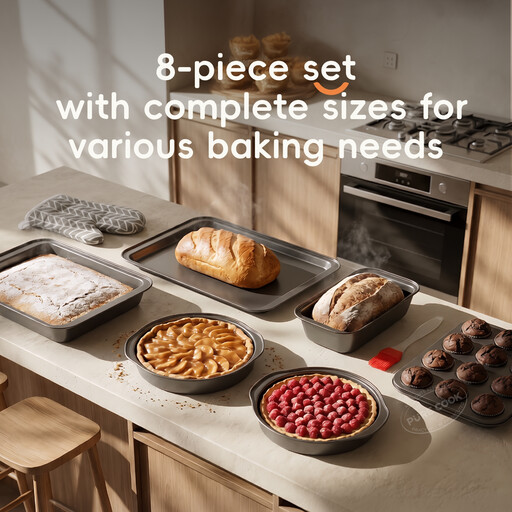
Why this product fits the profile: The combination of several rectangular tins and trays suits households, baking courses and small production batches.
The product description clearly states what it’s not suitable for: microwaves, hobs, open flames or charcoal grills. Hand washing is also recommended.
Eight-piece selection, carbon steel and stackable storage according to the product details.
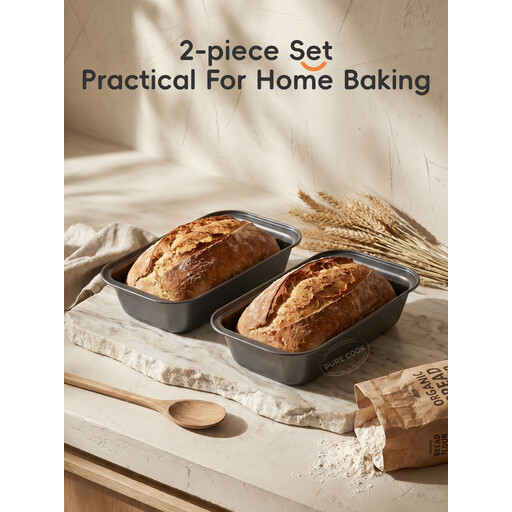
Why this product fits the profile: Two rectangular tins measuring 13.2 × 25.5 cm are ideal for toast, wholemeal bread and other baked goods.
According to the product description, the tin is intended for oven use only and not for hobs, microwaves or open flames. Hand washing protects the coating.
Two matching loaf tins and a stated coating temperature of up to 220 °C.
Before using baking tins and kitchen utensils for the first time, clean them according to the manufacturer’s instructions. Coated tins will last longer if you:
For kitchen utensils, the material’s temperature limits also apply. The manufacturer’s instructions should always take priority over general advice.
We’ve put together a full, regularly updated list of products that fully meet these strict selection criteria and the safety regulations in force in the EU.
A springform tin with a removable base is practical for many cake recipes. A set with several sizes offers extra flexibility, but you’ll need more storage space. For beginners, clear dimensions, a straightforward temperature rating and simple care are more important than having lots of accessories.
The lifespan depends on usage, temperature and cleaning. Scratches, excessive overheating and abrasive cleaners can damage the coating. Hand washing, soft kitchen tools and letting the tin cool completely before cleaning all help to keep it in good condition.
No. What matters are the specific manufacturer’s instructions on temperature range, oven type and material suitability. A silicone baking tin should only be used within the stated temperature range. With runny batter, it’s also a good idea to use a sturdy base so the tin can be moved safely.