
Lieferung heute & morgen

Qualitätsgarantie

Willkommens-Angebote freischalten: KOSTENLOSE Lieferung | Bis zu 80 % RABATT | Kostenlose 30-Tage-JoyPlus-Testphase
App herunterladen
Whether you are making bread, cake, quiche, gratin or dessert, baking tins and oven dishes need to suit the recipe, household size and appliances you have available. Attractive looks alone say little about how practical a dish will be for everyday use. Clear information about the material, capacity, temperature range and cleaning requirements is what really matters.
The term ovenproof dish is only useful if a maximum temperature is also stated. For example, a ceramic dish may be suitable for use in the oven but not necessarily on a hob or other direct heat source. Grill functions and exposure to major temperature changes should also be clearly covered in the product details.
The external dimensions are not the only thing that matters when choosing a baking tin. Tall sides, handles and a narrow shape can affect the amount of usable space. For bread and cakes, the internal capacity is important, while the diameter and height also matter for a quiche tin. An oven dish should have a capacity that matches the number of portions you want to prepare.
A dishwasher-safe baking tin can be cleaned in the dishwasher, but decorative finishes, unprotected edges and delicate coatings may suffer over time. Abrasive sponges and metal utensils are often unsuitable for non-stick tins. Ceramic dishes should also not be placed straight from the freezer into a very hot oven unless the manufacturer expressly permits this change.
A ceramic oven dish, or a stoneware model, distributes heat relatively evenly and can often be used to serve food at the table. Statements such as “ovenproof up to 260 °C” must always refer to the specific product. Stoneware is not automatically suitable for use on a hob.
Cast iron retains heat for longer and, depending on the design, can be used on various types of hob, including induction. However, these dishes are generally heavier. With a steel or carbon steel baking tin, a non-stick coating can make it easier to release baked goods. It is particularly important to follow the care instructions for the coating.
Look out for three specific details:
A dish that the manufacturer states can be used from -23 °C to 260 °C offers more flexibility for preparation, storage and reheating. Even so, it should be allowed to cool before cleaning. Hot ceramic or cast iron must not come into direct contact with cold water.
Different recipes call for different types of dish:
For a family household, a capacity of around 2 to 4 litres may be practical. For individual desserts or side dishes, 200 to 300 millilitres per portion is often sufficient. Also check that the dish fits inside your oven and can be handled safely when full.
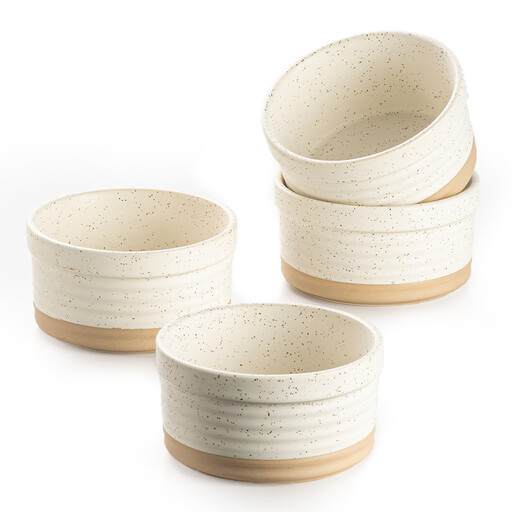
Why this product suits this profile: Four small ceramic dishes, each with an 8 fluid ounce capacity, are ideal for individual desserts, dips, quiches and soufflés. The set offers an accessible introduction to preparing small oven-baked dishes.
The product details state the capacity and suitability for the oven, freezer and dishwasher. Guidance on avoiding extreme temperature changes should still be followed.
Four individual portions, a scratch-resistant glaze, and stated suitability for the microwave and dishwasher.
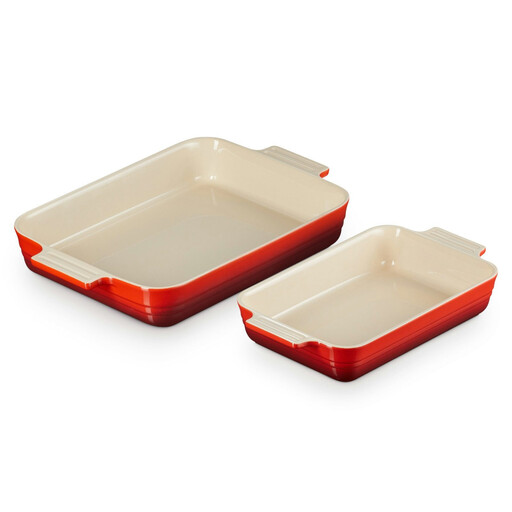
Why this product suits this profile: The two rectangular stoneware dishes accommodate different portion sizes and are suitable for gratins, baked dishes, desserts and side dishes.
The stated temperature range of -23 °C to 260 °C, together with the guidance on using the dishes in the oven, microwave, freezer and dishwasher, makes planning their use more straightforward.
Two sizes, a scratch-resistant stoneware surface and side handles, according to the product description.
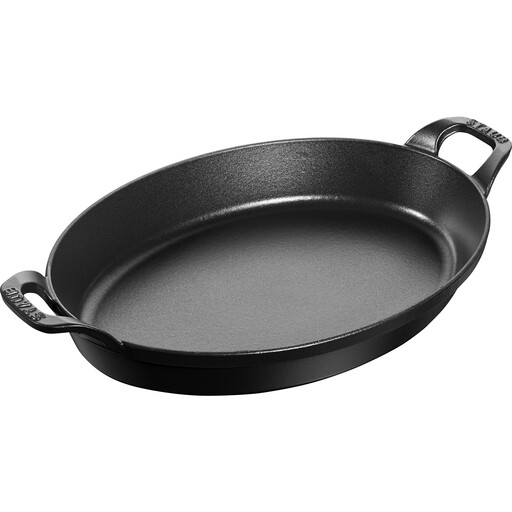
Why this product suits this profile: With its oval shape and 3.7-litre capacity, this dish is aimed at households that prepare baked dishes and want to brown food on the hob first.
Unlike many dishes designed solely for oven use, this model is stated to be suitable for various types of hob, including induction, as well as for the oven and grill.
Cast iron with a 3.7-litre capacity, two side handles and a stated temperature range of -20 °C to 240 °C.
We have put together a complete, regularly updated list of products that fully meet these strict selection criteria and the safety regulations applicable in the EU.
For bread and loaf cakes, a long cake tin with sufficient internal capacity is a practical choice. According to the product details, a stoneware dish such as the Le Creuset Baking Pan 23 cm has a capacity of 1.4 litres and is suitable for bread, cake and meatloaf. The key consideration is ensuring that the amount of dough matches the size of the tin.
Many models are dishwasher-safe, but not all of them are. Check the specific product description before making your choice. Glazes, decorative finishes and the manufacturer’s instructions may affect the recommended cleaning method. Even a dish described as dishwasher-safe should be protected from sudden temperature changes.
For several portions, rectangular or oval dishes with a capacity of around 2 to 4 litres are often a good choice. An oven dish set with several sizes can be useful if you prepare both side dishes and family meals. Alongside the capacity, check the internal dimensions and the width of your oven’s shelf runners.