
Lieferung heute & morgen

Qualitätsgarantie

Willkommens-Angebote freischalten: KOSTENLOSE Lieferung | Bis zu 80 % RABATT | Kostenlose 30-Tage-JoyPlus-Testphase
App herunterladen
Whether you are baking a cake, muffins or a tart, or making a dessert in a glass: baking tins affect ease of use, baking results and cleaning effort. Many purchasing decisions go wrong not because of the recipe, but because of details such as a lack of stability, a delicate coating or unsuitable dimensions.
This buying guide from the Joybuy Product Recommendation Officer helps you assess common marketing claims objectively and choose a tin that suits your everyday baking needs.
A non-stick baking tin can make it easier to remove your bake, but it still requires suitable care. Metal utensils, abrasive scourers and sudden temperature changes can damage the surface. Some tins are also expressly unsuitable for dishwashers despite having a non-stick coating.
Silicone baking tins are often promoted as being easy to release. The material is flexible and can deform under the weight of heavy mixtures. A stable base, such as a baking tray, is therefore advisable when using soft silicone tins.
With a cake tin or tart tin, the external dimensions, rim height and actual diameter can differ. For the recipe, the internal surface area or capacity is what matters most. A tin with 12 wells, for example, is suitable for small portions but does not replace a traditional springform or loaf tin.
Before buying, compare the dimensions with your existing oven, baking tray and storage space.
A tin described as oven-safe up to 230 or 240 °C cannot automatically be used on the hob, under the grill or over an open flame. Ovenproof dishes made from stoneware or ceramic also need protection from thermal shock. Placing a cold dish straight from the freezer into a hot oven can cause it to crack.
Check the manufacturer’s information separately for use in the oven, microwave, freezer and dishwasher. A madeleine tin or cannelé tin may be designed for baking, while a ramekin can also be used for baking and serving individual desserts.
For coated tins, the permitted maximum temperature and care instructions are particularly important. For example, the Ballarini PATISSERIE Muffin Pan is listed as having a PFAS-free, two-layer coating and being oven-safe up to 230 °C. The product information recommends hand washing.
The right tin depends on the recipe and the number of people:

Why this product suits the profile: Six individual silicone moulds measuring 8 × 7.5 × 3.1 cm are suitable for small cakes, cupcakes, jellies and frozen desserts. The format is ideal for households that want to try out a range of individual portion recipes.
The individual moulds can be stacked and, according to the product information, are designed for temperatures from −40 to 230 °C and for use in the oven, microwave and freezer.
Flexible silicone, six moulds and, according to the product description, dishwasher-safe.
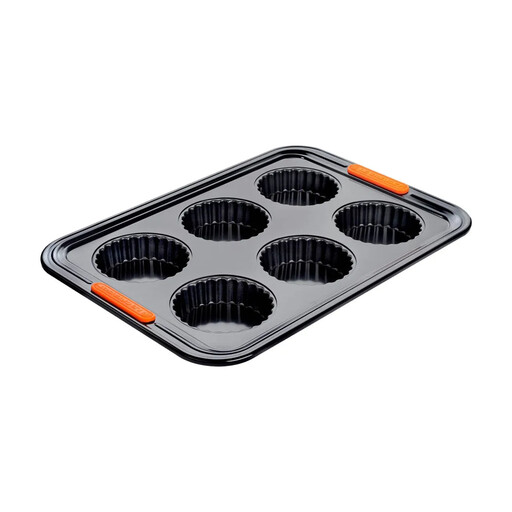
Why this product suits the profile: This carbon-steel tin has six fluted wells for individual tarts, quiches and mini pies. A reinforced rim with silicone inserts makes it easier to grip while wearing oven gloves.
The product information specifies a maximum oven temperature of 240 °C and expressly advises hand washing and avoiding metal utensils. This makes the care requirements clear.
Six wells, 38.7 × 26.9 × 3.35 cm, reinforced rim and coated carbon steel.
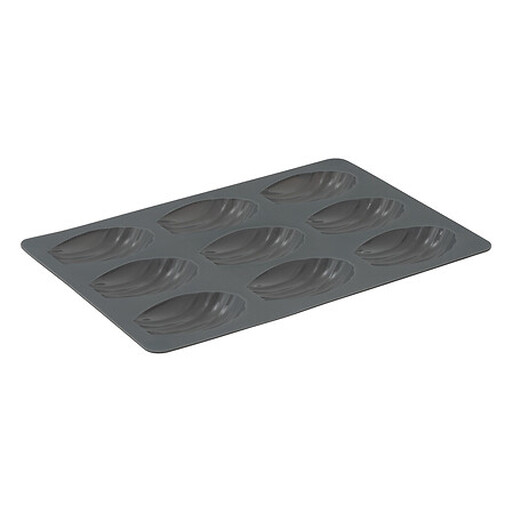
Why this product suits the profile: Measuring 36 × 21.5 × 2 cm, this madeleine tin has shell-shaped wells and is designed for French petits fours, chocolate and small savoury snacks.
The clearly defined well geometry is designed for madeleines. The flexible silicone mould can be stored in a space-saving way; check the temperature and care instructions before use.
Shell shape, light weight of 50 g and versatile use in the oven, freezer and for other applications according to the product description.
We have put together a complete, regularly updated list of products that fully meet these strict selection criteria and the safety regulations applicable in the EU.
Before using a tin for the first time, read the manufacturer’s temperature and cleaning instructions. New tins should be washed with warm water and mild washing-up liquid. For coated versions, the soft side of a sponge is usually sufficient. Silicone baking tins can absorb odours or become discoloured when used with strongly pigmented ingredients, so thorough cleaning straight after baking is advisable.
Ceramic and stoneware tins must not be placed on hobs or over direct heat. Hot tins should be placed on a stable, heat-resistant surface. If you notice cracks, chips or damaged coatings, stop using the product for food preparation.
For twelve evenly sized portions, a muffin tray with 12 wells is a practical choice. The Ballarini PATISSERIE Muffin Pan measures 27 × 35 cm and, according to the product information, is oven-safe up to 230 °C. For maximum flexibility, individual silicone moulds may be more suitable, as they can also be used for frozen desserts.
Both materials have different properties. Silicone is flexible, lightweight and usually makes releasing bakes easy, but large or heavy mixtures require a firm base. Carbon-steel metal tins retain their shape and conduct heat directly, but coated versions require gentle cleaning. The right choice therefore depends on your recipe, storage space and cleaning habits.
There is no fixed lifespan that applies in every case. It depends on the material, frequency of use and care. Coated cake tins can remain functional for longer if you avoid metal utensils and abrasive cleaning products. Silicone moulds should be checked regularly for cracks, deformation and sticky areas. With ceramic and stoneware, chips or cracks are important warning signs.