
Lieferung heute & morgen

Qualitätsgarantie

Willkommens-Angebote freischalten: KOSTENLOSE Lieferung | Bis zu 80 % RABATT | Kostenlose 30-Tage-JoyPlus-Testphase
App herunterladen
Choosing the right baking tin affects more than just the appearance of your bake. The material, size, coating and cleaning method all influence how evenly the mixture bakes and whether you can remove your cake or loaf without damaging it. If you choose baking tins based solely on colour or an impressive marketing claim, you may overlook important details.
A non-stick baking tin can make it easier to remove your bake. However, that does not automatically mean it is dishwasher-safe or resistant to metal utensils. Several coated cake tins in the range are designed to be washed by hand using warm water, mild washing-up liquid and a soft sponge. Abrasive cleaners, wire scourers and sharp objects can damage the surface.
Before buying, check the following:
With springform tins, ring tins and bread tins, diameter is not the only factor that matters. The height, capacity and shape of the interior determine how much mixture the tin can hold. A 20 or 22 cm springform tin is suitable for different recipe quantities from a 26 cm tin. For bread tins, it is also important that the capacity matches the recipe and amount of dough.
Pay attention to the internal and external dimensions, the height and – where provided – the capacity in litres. This helps prevent the mixture from overflowing or the bake from turning out too flat.
A temperature limit of 230, 240, 250 or 280 °C may sound impressive at first. However, when choosing a tin, it is more important that the limit suits your recipes and oven. Baking tins are generally designed for use in the oven and not on hobs, over direct heat or under the grill, unless the manufacturer expressly permits it.
With coated tins, you should also observe the temperature limit and check the tin for scratches or damaged areas before every use.
Carbon steel and steel are dimensionally stable and are commonly used for springform tins, bread tins, muffin tins and ring tins. Thick-walled designs may feel more stable when handled and help distribute heat evenly. An enamelled base may be more resistant to cutting with certain models, but you should still follow the relevant care instructions.
Silicone baking moulds are flexible and save space. They are usually easier to turn out, but larger or softer mixtures require a stable base, such as a baking tray. With silicone moulds, check the stated temperature range and whether they are suitable for the oven, microwave, freezer or dishwasher individually.
The lifespan of a baking tin depends not only on the material, but also on how it is used. Allow the tin to cool after baking before cleaning it. Avoid sudden changes in temperature unless the manufacturer confirms that they are safe. With non-stick surfaces, it is best to avoid sharp knives and metal utensils. Following these instructions reduces the risk of premature damage.
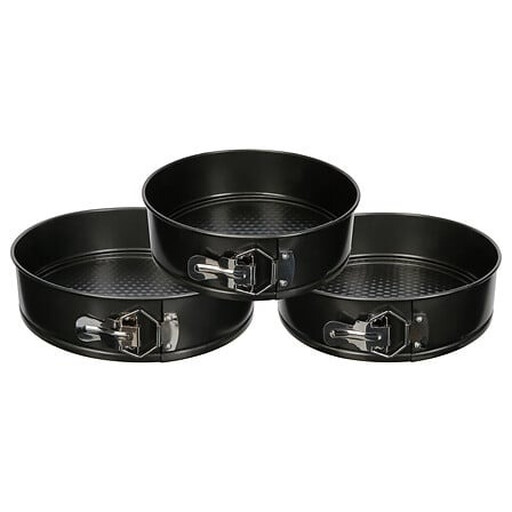
Why this product suits this profile: Three sizes – 22, 24.5 and 26 cm – cover different cake quantities and offer a flexible introduction to baking.
The graduated diameters mean you do not have to use one tin for every recipe quantity. The tins are stackable and rated for temperatures of up to 280 °C.
Three springform tins, removable bases, hinged mechanism and space-saving storage.
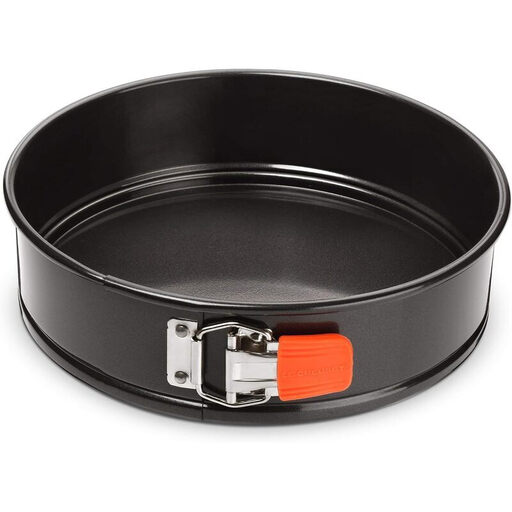
Why this product suits this profile: The 20 cm springform tin is designed for people who specifically bake smaller cakes, gateaux or cheesecakes and value clearly defined product specifications.
The manufacturer specifies a temperature limit of 240 °C, a sturdy carbon steel construction and hand washing as the care requirement. This makes the key usage limits clear.
Removable base, side clip, 20 cm diameter and silicone inserts around the rim for additional stability.

Why this product suits this profile: The loaf tin is designed for loaves of bread weighing up to around 1 kg and, according to the product details, can also be used for cakes.
The dimensions of approximately 30 × 10 × 8.5 cm and the stated suitability for 250 °C make it easier to match the tin to your recipes. It should be washed by hand.
Coated steel, enamelled base, acid-resistant construction and a 10-year guarantee on the non-stick coating according to the product description.
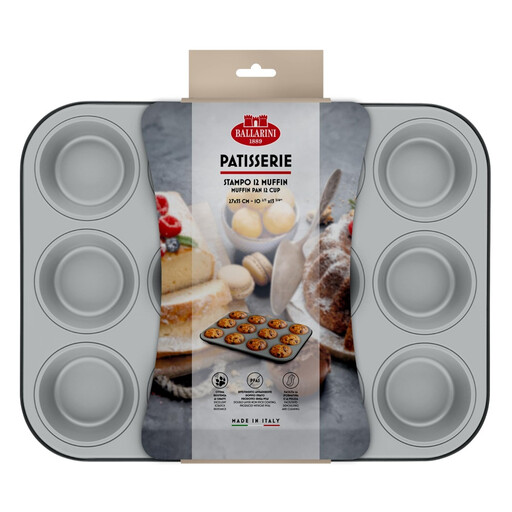
Why this product suits this profile: Twelve cups are ideal for families, school events or baking muffins and cupcakes at the same time.
The product details specify 27 × 35 cm, twelve cups and a temperature limit of 230 °C. The two-layer, PFAS-free coating is paired with hand washing.
Carbon steel, twelve round cups, coated surface and suitability for both sweet and savoury muffins.
We have put together a complete, regularly updated list of products that fully meet these strict selection criteria and the safety regulations applicable in the EU.
Springform tins, loaf tins and ring tins are commonly used for cakes. Bread works best in a suitable bread tin with sufficient height and a capacity that matches the amount of dough. A loaf tin may be suitable for both purposes, provided the manufacturer states that it is.
Silicone baking moulds are flexible, lightweight and space-saving. Metal tins made from steel or carbon steel are dimensionally stable and particularly suitable for cakes, bread and muffins. The right choice depends on the recipe, the level of stability you want and your preferred care routine. This does not mean that one material is universally better than the other.
The service life depends on the material thickness, coating quality, temperature and care. Do not use sharp utensils, do not exceed the temperature limit and clean the tin according to the manufacturer's instructions. Once the coating is visibly damaged, the tin should no longer be used for food preparation.