
Lieferung heute & morgen

Qualitätsgarantie

Willkommens-Angebote freischalten: KOSTENLOSE Lieferung | Bis zu 80 % RABATT | Kostenlose 30-Tage-JoyPlus-Testphase
App herunterladen
Baking tins are part of the basic equipment in many kitchens. Even so, choosing the right one does not always produce the desired result: the cake sticks firmly, the tin does not fit in the oven or the coating becomes damaged after a short time. Product names containing terms such as “Premium”, “Easy Release” or “professional” also say little on their own about how practical they are for everyday use.
A cake tin with a diameter of 26 cm takes up more space in the cupboard and oven than expected. With baking trays and muffin tins, the external dimensions are also important. For example, a 12-hole muffin tin may measure 27 × 35 cm and therefore may not fit in every small oven.
Before buying, you should therefore compare the external dimensions, internal dimensions and height. With a tart tin, it is also important to check whether the rim is high enough for quiche, fruit toppings or a liquid filling.
A non-stick baking tin can make it easier to remove baked goods, but it remains sensitive to metal knives, abrasive sponges and high temperatures outside the approved range. According to the product description, many tins are not dishwasher-safe.
If you want to enjoy using your tin for a long time, follow the care instructions and use silicone, wooden or heat-resistant plastic utensils when removing baked goods.
Metal tins conduct heat differently from silicone baking moulds. Carbon steel heats up comparatively directly and is suitable for cakes, tarts and muffins. Silicone is flexible and space-saving, but with liquid batter it often requires a sturdy baking tray underneath.
Ceramic dishes and ramekins are suitable for individual desserts, soufflés or crème brûlée. They retain heat, but are more sensitive to knocks and sudden temperature changes. “Oven-safe” also does not automatically mean suitable for a hob, microwave or open grill.
The maximum temperature must match the intended use. According to the product description, the PURECOOK pumpkin mould is designed for oven use up to 230 °C and must not be used on hobs, open flames, induction hobs or charcoal grills. The Ballarini muffin tin is also designed for temperatures up to 230 °C. The Le Creuset tartlet mould specifies a temperature limit of 240 °C, while the stackable stoneware dish is suitable for temperatures up to 260 °C.
These figures are not a recommendation to use the maximum temperature continuously. What matters is whether the tin is suitable for your recipe and your oven.
Choose your baking tin according to the recipe:
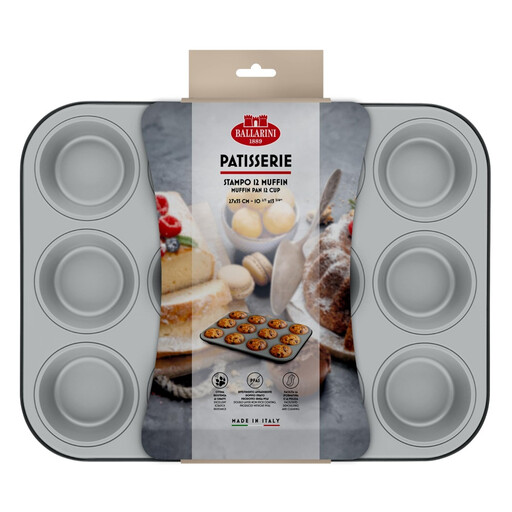
Why this product suits this profile: The twelve cups are designed for families, baking beginners and regular muffin or cupcake recipes. Before buying, compare the external dimensions of 27 × 35 cm with the size of your oven.
The product description clearly states the number of cups, the material, the temperature limit of 230 °C and the recommended hand-washing method. This makes it easier to assess how the tin can be used and cared for before buying.
Carbon steel with a two-layer, PFAS-free non-stick coating; twelve identical baking cups for sweet and savoury muffins.
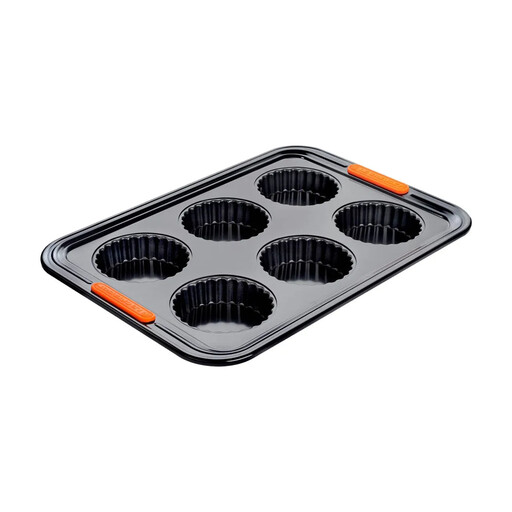
Why this product suits this profile: The six fluted cups are designed for individual tarts, mini quiches and sweet or savoury bakes. The reinforced rim with silicone elements helps you remove the tin safely while wearing oven gloves.
The temperature limit of 240 °C, along with the instructions to hand-wash the tin and avoid metal utensils, is clearly stated. This prevents the coating from being mistaken for an unrestricted-use surface.
Six individual cups, carbon steel, fluted shaping and a reinforced rim with heat-resistant silicone inserts.
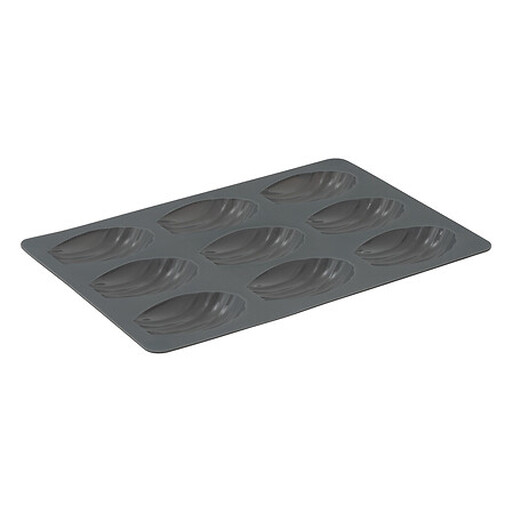
Why this product suits this profile: This Madeleine mould is aimed at people who want to prepare shell-shaped small cakes, as well as small chocolate or dessert portions. Silicone can be stored compactly to save space.
The flexible mould can be moved from the freezer to its intended application. Nevertheless, check the stated temperature range and the mould’s stability when filling it before use.
Shell-shaped cups, stated dimensions of 36 × 21,5 × 2 cm and a flexible silicone construction for space-saving storage.
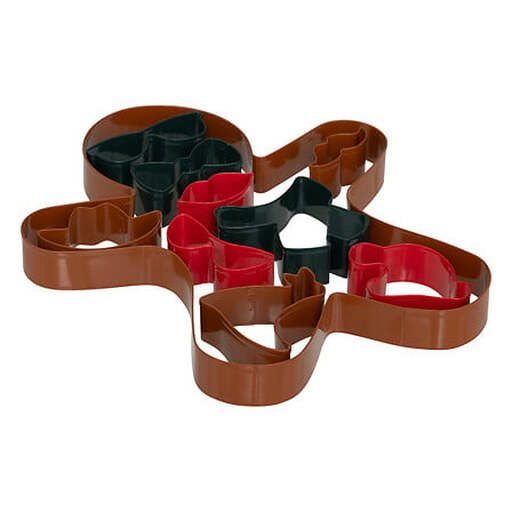
Why this product suits this profile: Ten stainless-steel Christmas biscuit cutters support baking together as a family and creating seasonal recipes. They are designed for different types of dough and creative craft projects.
The set specifies the material, number of pieces and packaging dimensions. This allows buyers to check whether the selection suits the Christmas biscuits they want to make and the storage space available.
Stainless-steel construction, ten different Christmas designs and compact set dimensions of 25,3 × 20,8 × 2,5 cm.
We have put together a complete, regularly updated list of products that fully meet these strict selection criteria and the safety regulations applicable in the EU.
A simple cake tin or muffin tin with clearly stated dimensions is usually easy to understand. A coating can make it easier to remove the bake, but requires gentle cleaning and suitable kitchen utensils. For liquid batters, a sturdy metal tin is often easier to handle than a very flexible silicone baking mould.
No. Always check the stated temperature range and approved heat source. Some silicone moulds are designed for use in the oven, microwave and freezer, while other specifications may differ. When placing the mould in or removing it from the oven, it should also be supported on a firm baking tray.
There is no universal lifespan. It depends on how often the tin is used, the temperature, cleaning and how the surface is handled. Avoid overheating, sharp objects and abrasive cleaners. If the coating is visibly damaged, the tin should no longer be used for food preparation.