
Lieferung heute & morgen

Qualitätsgarantie

Willkommens-Angebote freischalten: KOSTENLOSE Lieferung | Bis zu 80 % RABATT | Kostenlose 30-Tage-JoyPlus-Testphase
App herunterladen
Whether you are making a classic sponge cake, crusty bread or a family-sized bake, choosing the right baking tin affects ease of use, baking results and cleaning. However, many products make general claims such as “long-lasting”, “high quality” or “non-stick” without providing important details. If you want to buy baking tins, pay particular attention to clear information about the material, dimensions, temperature limit and care requirements.
The stated size does not always correspond to the usable internal surface. A 26 cm cake tin may be considerably larger on the outside, for example because of its rim, handles or reinforced construction. This matters if the tin needs to fit precisely on a baking tray or be used in a smaller oven.
The height also deserves attention: shallow tart tins are suitable for tarts and quiches, while deep cake tins hold more mixture. In a ring cake tin, the central tube creates a different distribution of the mixture than in a round springform tin.
A non-stick baking tin can make it easier to remove your bake. However, coatings vary in terms of temperature limits, susceptibility to scratches and cleaning requirements. Some tins are not dishwasher-safe, even though their surfaces are described as easy to care for.
Metal utensils, scouring pads and harsh cleaning products can damage the coating. If you buy a non-stick cake tin, check the specific care instructions and preferably use wooden, plastic or silicone utensils.
“Oven-safe” does not automatically mean that a tin is suitable for every heat source. A baking tin may be suitable for a conventional oven but not for a hob, naked flame or microwave. With glass and stoneware, it is also important to avoid thermal shock: a very hot dish should not be placed directly on a cold, wet surface.
When choosing a tin, it is not just the diameter that matters, but also its capacity. A tin holding around 1.3 litres is suitable for smaller households or compact cakes. Larger models with a capacity of around 2.8 to 2.9 litres are designed for family portions and celebration bakes.
With a baking tin set, the sizes should be sensibly graduated. For example, three springform tins with different diameters can cover different recipe quantities and be stacked inside one another to save space.
Check the following before buying:
This information is more objective than general marketing claims and helps you assess the product’s realistic service life.
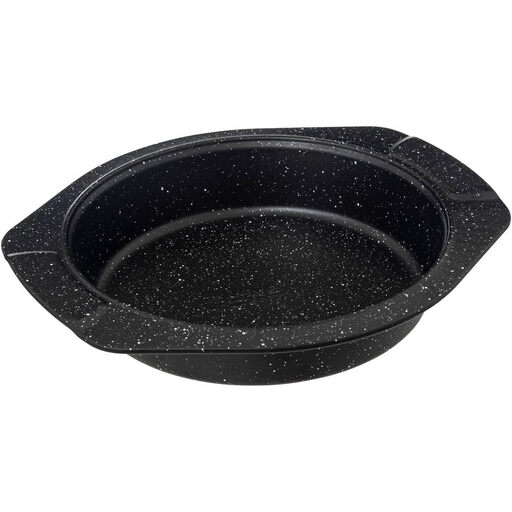
Why this product suits this profile: The round steel tin has a diameter of 26 cm and a capacity of 1.9 litres, making it suitable for typical household cake recipes. Handles make it easier to place in and remove from the oven.
The information on external dimensions, capacity and dishwasher suitability makes the choice more straightforward. The tin is not dishwasher-safe.
Steel construction, PTFE coating and a stated capacity of 1.9 litres.
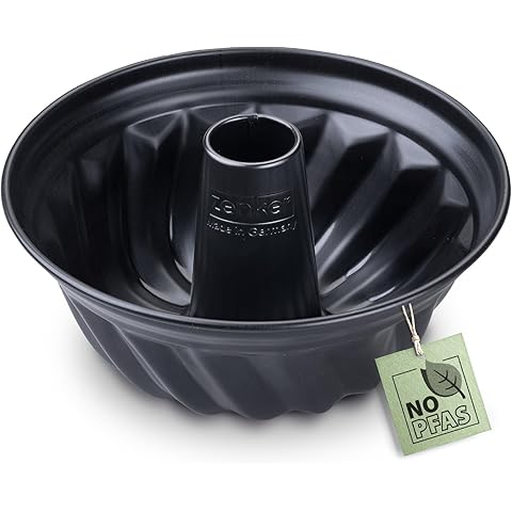
Why this product suits this profile: The steel ring cake tin features a KAIRAMIC non-stick coating, an enamelled base, a high rim and a capacity of 2.8 litres.
The maximum oven temperature of 250 °C and the hand-wash requirement are clearly stated. The enamelled base is cut-resistant; however, metal utensils should still be avoided.
Extra-strong steel, even browning thanks to the central tube and a stated 10-year guarantee on the non-stick coating.
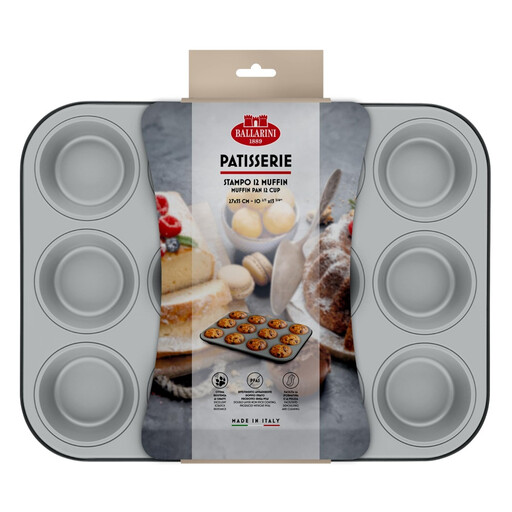
Why this product suits this profile: The muffin tin has twelve cavities and measures 27 × 35 cm. It is designed for sweet and savoury muffins as well as cupcakes.
The coating is specified as two-layer and PFAS-free. The tin can be used in the oven up to 230 °C, but is not dishwasher-safe.
Twelve individual baking cavities, carbon steel construction and a clearly stated temperature limit.
We have put together a complete, regularly updated list of products that fully meet these strict selection criteria and the safety regulations applicable in the EU.
Many domestic ovens can accommodate round tins measuring approximately 22 to 26 cm in diameter, as well as standard muffin tins. However, the external dimensions, including the rim and handles, are crucial. For smaller ovens, measure the available width and depth of the shelf.
Its service life depends on use, temperature and care. Hand washing, soft sponges and suitable kitchen utensils help protect the surface. If you notice visible scratches, flaking coating or deformation, the tin should no longer be used.
Yes, provided you follow the relevant manufacturer’s instructions. Glass and stoneware dishes are often dishwasher- and microwave-safe, but not every model offers these features. Avoid sudden temperature changes and place hot dishes only on heat-resistant surfaces.