
Lieferung heute & morgen

Qualitätsgarantie

Willkommens-Angebote freischalten: KOSTENLOSE Lieferung | Bis zu 80 % RABATT | Kostenlose 30-Tage-JoyPlus-Testphase
App herunterladen
Whether you’re baking a cake, bread, quiche or savoury casserole, the right tin affects handling, baking time and how easily your bake can be removed. However, if you want to buy baking tins, you shouldn’t be guided solely by a non-stick coating or an attractive set price. The actual dimensions, permitted temperature and cleaning requirements are what really matter.
A non-stick baking tin can make it easier to remove your bake. However, it will only remain effective if it isn’t damaged by knives, metal turners or abrasive scourers. “Non-stick” also doesn’t automatically mean that greasing is unnecessary. With delicate mixtures, a thin layer of fat or baking paper may still be a sensible choice.
Always check the care instructions. Several of the tins featured here are explicitly intended for hand washing. Don’t assume that a supposedly convenient dishwasher-safe design is suitable if this isn’t stated in the product details.
A cake tin with an external diameter of 24 cm doesn’t necessarily provide 24 cm of usable baking space. The thickness of the rim, base and shape profile can all affect its capacity. With a springform tin, the height is another important factor. For recipes, the capacity in litres or the specific amount of mixture is often more informative than the diameter alone.
You should also check whether the tin fits in your oven. With large baking trays and rectangular tins, the width, depth and position of the oven racks are all relevant.
An ovenproof baking tin cannot automatically be used on the hob, an induction plate or over an open flame. Many coated metal tins are intended exclusively for use in the oven. Depending on the model, the maximum temperature may be 220 °C, 230 °C, 240 °C, 250 °C or 280 °C, for example.
Moving a tin from very hot to very cold conditions can also put stress on the material and coating. Allow the baking tin to cool before removing your bake, and always follow the manufacturer’s instructions.
Steel and carbon steel are common materials for many baking tins for cakes and bread. They are relatively robust and distribute heat evenly, provided the material is sufficiently thick. Thin tins can warp more easily at high temperatures. A thicker construction is often heavier, but may stand more securely on the oven rack.
Coated models should only be used with wooden, silicone or plastic utensils. An enamelled base may be designed to resist cutting with certain tins, while the remaining areas still need to be protected from scratches.
Before buying, check whether the tin is dishwasher-safe. With some models, only the base may be placed in the dishwasher, while the rim and fastening mechanism must be washed by hand. For coated baking tins, warm water, mild washing-up liquid and a soft sponge are a gentle combination that helps protect the material.
Stackable tins save space. With springform tins, make sure the fastening mechanism and base are completely dry after cleaning before storing them in the kitchen cupboard.
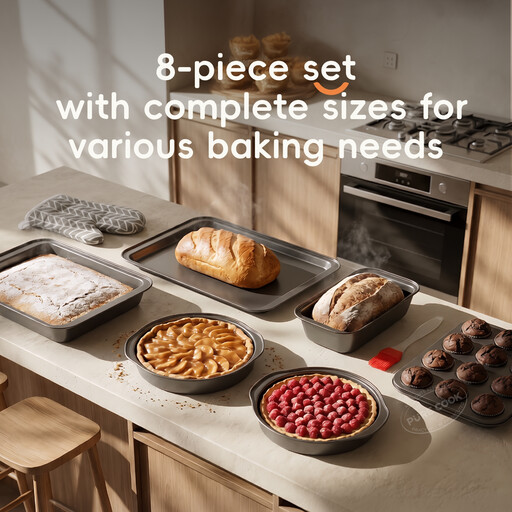
Why this product suits this profile: The set contains several square tins and accessories for cakes, brownies, pizza and savoury bakes. This allows baking beginners to try different sizes without having to buy each tin separately.
The different dimensions make the contents of the set clear. According to the product details, the tins are intended for oven use only and must be cleaned by hand.
Carbon steel, non-stick coating and a stackable design; suitable for sweet and savoury recipes.
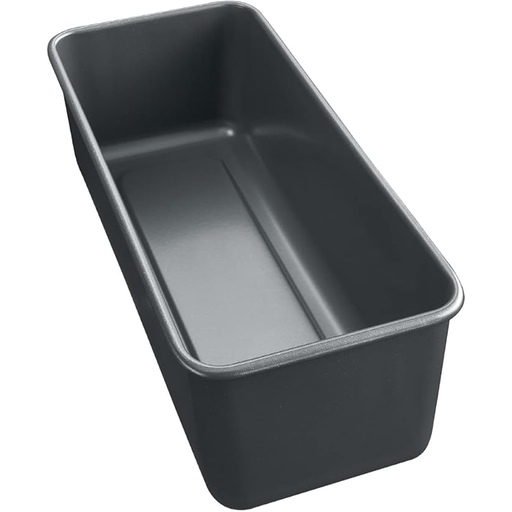
Why this product suits this profile: According to the product description, this steel tin measures 30 × 11 × 8 cm, has a capacity of 2.4 l and is rated for temperatures up to 250 °C. It is suitable for sponge cakes and certain bread recipes.
The technical details clearly state the temperature limit, capacity and hand-wash requirement. This helps prevent unsuitable purchases caused by unclear size or care claims.
Double ceramic coating according to the product details, an enamelled base and a 10-year guarantee on the non-stick coating according to the manufacturer.
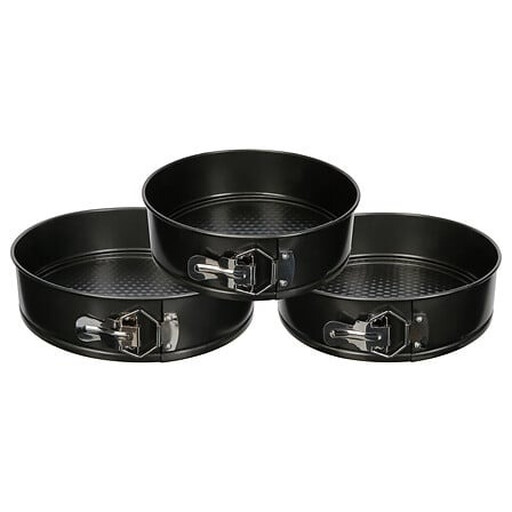
Why this product suits this profile: The three sizes—22 cm, 24.5 cm and 26 cm—cover different quantities of cake. The tins can be stored inside one another and are rated for oven temperatures of up to 280 °C.
Instead of an unclear one-size-fits-all design, buyers receive three clearly specified diameters. The coating still requires gentle cleaning and suitable kitchen utensils.
Three stackable springform tins with removable bases and fastening mechanisms.
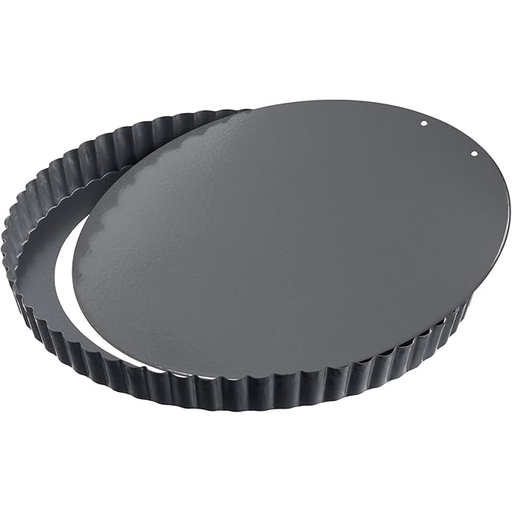
Why this product suits this profile: This tart and quiche tin is designed for users who regularly prepare shallow sweet or savoury bakes and want to remove the base directly for serving.
The removable enamelled base is clearly listed as a specific feature. The tin is designed for temperatures of up to 250 °C, but is not suitable for use on the hob or over an open flame.
32 cm diameter, steel construction and a cut-resistant enamelled base according to the product description.
We’ve put together a complete, regularly updated list of products that fully meet these strict selection criteria and the safety regulations applicable in the EU.
A loaf tin is versatile enough for sponge cakes, banana bread and compact loaves. For larger round cakes, a springform tin is a good choice, while a Bundt tin creates a distinctive shape thanks to its central opening. When baking bread, you should also check the capacity, internal dimensions and suitability for the quantity of dough you want to use.
There is no standard lifespan that applies in every case. It depends on the material thickness, frequency of use and care. Don’t use metal utensils, avoid abrasive cleaning products and stay within the stated maximum temperature. A damaged or peeling coating should no longer be used.
This depends on the model. Some tins are fully dishwasher-safe, while with others this applies only to the base. Many coated metal tins are recommended for hand washing. The relevant product details are decisive—not simply the presence of a non-stick coating.