
Lieferung heute & morgen

Qualitätsgarantie

Willkommens-Angebote freischalten: KOSTENLOSE Lieferung | Bis zu 80 % RABATT | Kostenlose 30-Tage-JoyPlus-Testphase
App herunterladen
A baking tray is part of the basic equipment in many German kitchens. Even so, unclear product information, unsuitable dimensions or a delicate coating can quickly lead to disappointing purchases. Before buying, home bakers, families and owners of small baking studios should therefore check whether the tray is genuinely suitable for their oven, the recipe and the level of care they are prepared to provide.
A serving tray or decorative tray is often chosen according to similar criteria. Material, load capacity, handles and cleaning requirements determine whether the item remains practical for everyday use or serves merely as decoration.
A baking tray with large overall dimensions will not automatically fit every oven. The oven’s internal dimensions, shelf height and actual baking surface are what matter. With deep trays, the height of the sides also reduces the usable space.
You should therefore measure the following before buying:
In a small oven, a compact roasting tray may be more practical than a large standard baking tray.
A coating can make it easier to remove cakes, bakes or roasted vegetables. However, it is not automatically resistant to damage. Metal spatulas, scouring sponges and harsh cleaning products can damage the surface. In addition, “dishwasher-safe” does not mean that frequent washing will have no effect on the coating’s service life.
Look for specific information on:
A baking tray with handles can be convenient when removing it from the oven, but it requires additional space in the oven and during storage. Metal handles may also become hot. Always use suitable oven gloves when handling hot cookware and follow the manufacturer’s instructions.
Decorative trays have different requirements. A metal tray with carrying handles is suitable for drinks or accessories, but it is not automatically oven-safe. A wooden tray should be protected from moisture and usually cleaned with a cloth only.
Aluminium distributes heat relatively quickly and evenly. It is lightweight, making even larger baking dishes easy to handle. A non-stick coating can make food easier to remove, but it requires gentle cleaning.
Carbon steel is sturdy and lighter than cast iron. A carbon-steel baking tin set gives you several sizes for cakes, brownies, toast or savoury dishes. However, check whether the tins are intended exclusively for oven use. According to the product information, the PURECOOK set is not suitable for microwaves, naked flames, induction hobs or charcoal grills and should be washed by hand.
Cast iron retains heat and is robust, but it is heavier. A cast-iron Takoyaki pan, for example, is designed for preparing Takoyaki on the hob and should not be confused with a flat baking tray.
Metal, wood and aluminium serving trays should primarily be assessed according to their load capacity, surface and care requirements. The MyGift metal tray is intended for serving and decorative presentation. According to the description, the product is not designated as a baking or oven dish.
For cakes and pastries, you need a tin whose diameter or internal dimensions match the recipe. A round model with a diameter of 26 cm is suitable for corresponding cake recipes, while a rectangular tray measuring 37 × 27 cm provides more space for lasagne, gratins or larger portions.
Higher sides reduce the risk of liquid spilling over. A deep roasting tray can be practical for brownies, vegetables or smaller roasts. The Mondex Roasting Tray measures 17 × 11 × 7,5 cm, making it suitable for small portions and compact dishes.
A coated baking tray should ideally be cleaned with soft sponges and mild washing-up liquid. Allow the tray to cool before washing it with water. For delicate surfaces, use kitchen utensils made from wood, silicone or plastic.
Uncoated materials may require different care. Cast iron is often washed by hand and dried thoroughly. Wooden handles should not be soaked. The stated temperature limit is decisive for each product; general assumptions do not replace the operating instructions.
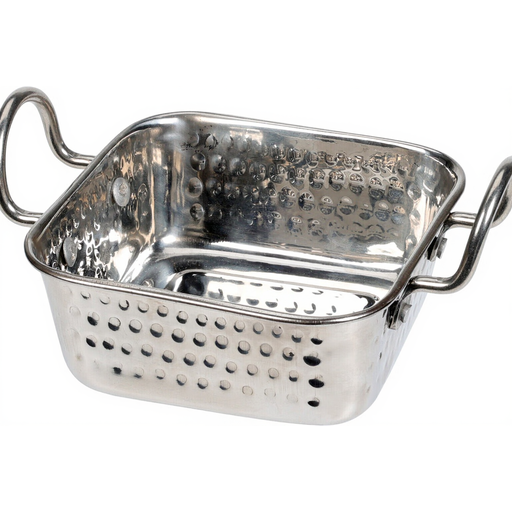
Why this product suits this profile: Measuring 17 × 11 × 7,5 cm, this compact metal tray is designed for small portions, side dishes, brownies or individual households, and can be stored in a space-saving way.
The clearly stated dimensions prevent you from buying a supposedly universal tray for larger family portions.
Lightweight at 0,162 kg, compact dimensions and a metal construction for small baking and roasting portions.
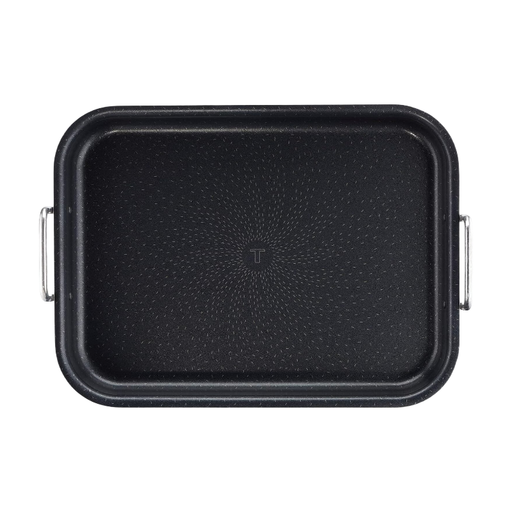
Why this product suits this profile: Made from recycled aluminium, this rectangular oven dish offers a 37 × 27 × 4,5 cm cooking surface and, according to the product information, is suitable for ovens, freezers and dishwashers.
The information on dimensions, coating, handles and areas of use makes it easier to compare the dish with your own oven and recipes.
ProBaking non-stick coating, side handles and Hot-Spot indicator according to the manufacturer’s information.
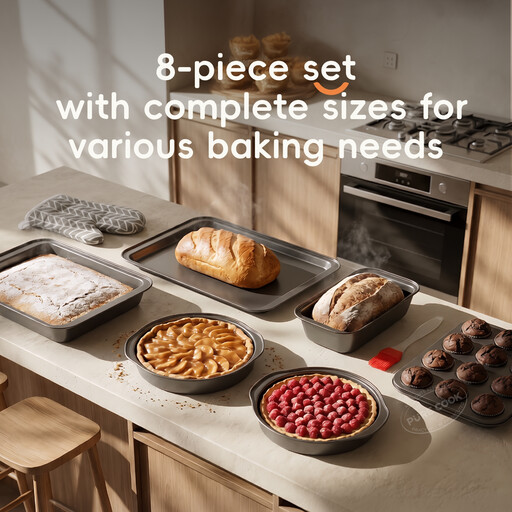
Why this product suits this profile: This 8-piece set covers several sizes for sweet and savoury recipes, making it suitable for households, baking classes or small baking studios handling different quantities.
The limitations are clearly stated: not suitable for hobs, naked flames or microwaves, and must be washed by hand.
Several rectangular and round tins, a stackable design and carbon steel with a non-stick surface according to the product description.
We have put together a complete, regularly updated list of products that fully meet these strict selection criteria and the safety regulations applicable in the EU.
The right category depends on how you intend to use it:
Measure the usable internal width and depth of your oven. Take the side rails, door and any handles into account. The tray’s overall dimensions should be smaller than the available shelf space.
Its service life depends on the material, temperature, use and care. Coated models should not be treated with metal utensils or abrasive cleaners. With proper cleaning, uncoated tins can be used for many years, but they should be checked for warping, rust or damaged surfaces.
Only if the manufacturer expressly states that it is. Even then, gentle hand washing may help preserve the surface for longer. Also check the permitted temperature and do not use abrasive sponges or harsh cleaning products.