
Lieferung heute & morgen

Qualitätsgarantie

Willkommens-Angebote freischalten: KOSTENLOSE Lieferung | Bis zu 80 % RABATT | Kostenlose 30-Tage-JoyPlus-Testphase
App herunterladen
Whether it’s cake, bread, brownies, lasagne or gratin: baking trays are a staple in many British households. At the same time, unclear size specifications, unsuitable materials and exaggerated non-stick claims can quickly lead to a bad purchase. That’s why the Joybuy product recommendation team filters by clear criteria such as dimensions, material, temperature range, cleaning and intended use.
A rectangular baking tray measuring 36 × 24 cm won’t automatically fit every baking sheet or small oven. What really matters are the internal dimensions, the depth and, where applicable, the rim. Deep tins are ideal for bread or casseroles, while shallow ones are more practical for brownies, traybakes and vegetable dishes.
A non-stick baking tray can make releasing your bakes easier, but it usually still needs a little grease or baking paper. Metal utensils and abrasive sponges can damage the surface. What’s more, a non-stick coating doesn’t guarantee it’s dishwasher-safe. Always check the manufacturer’s cleaning instructions before you buy.
A baking tray for the oven isn’t necessarily suitable for use on the hob. Ceramic and stoneware tins can be damaged by thermal shock if moved quickly from very hot to cold. Even metal trays have restrictions depending on their construction when it comes to open flames, induction hobs or microwaves.
A cake tin should match your recipe and the amount of batter. For bread, a narrow, deep bread tin with sufficient wall height makes sense. A baking dish should offer enough volume for lasagne, potato gratins or vegetables. A baking sheet with a low rim is ideal for flat bakes and oven dishes that need a larger surface area.
Before you buy, check:
Temperature specifications should always come directly from the product description or instructions. For the Le Creuset Baking Pan 23 cm, for example, a range of -23 °C to 260 °C is stated; according to the product information, the tin is suitable for the oven, freezer, microwave and dishwasher. Using it on the hob or over direct heat is expressly not recommended.
For coated metal tins, hand washing is often recommended, even if individual models are dishwasher-safe. Soft sponges, thorough drying and avoiding metal utensils can help protect the surface.
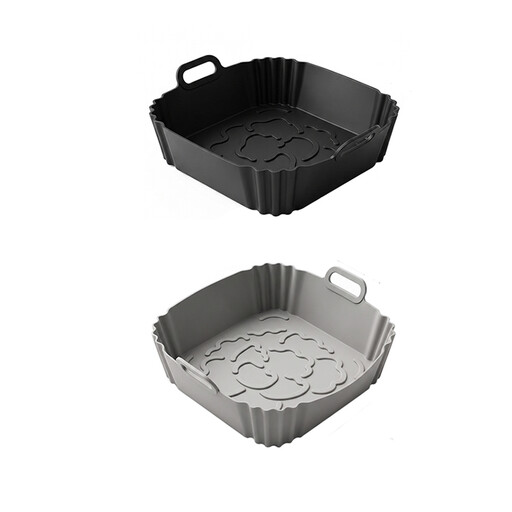
Why this product fits the profile: Two square silicone tins measuring 21.5 × 21.5 cm offer a straightforward entry point for smaller cakes, brownies and portion-sized oven dishes.
The clearly stated dimensions make planning easier. Because silicone is flexible, place the tin on a sturdy baking sheet before filling it.
Two tins in a set; space-saving, flexible material.
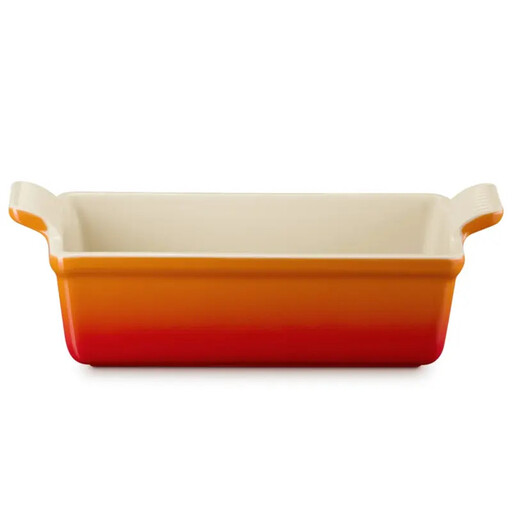
Why this product fits the profile: This stoneware model with a 1.4-litre capacity is designed for bread, cake, lasagne and meatloaf, and can also be used for serving according to the product information.
The temperature range of -23 °C to 260 °C is clearly stated. The warning against direct heat makes the usage limits unambiguous.
Stoneware; 1.4-litre capacity; dishwasher-, microwave- and freezer-safe according to the product information.
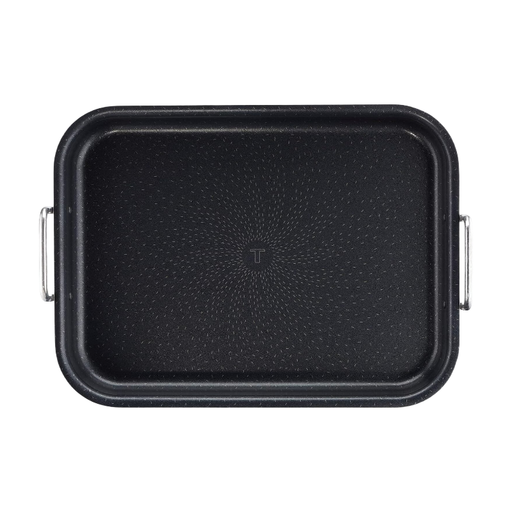
Why this product fits the profile: This rectangular dish with approximately 4.5 litres of capacity is suitable for lasagne, gratins, vegetable dishes and larger desserts, according to the product description.
The handles make it easier to lift out with oven gloves. The product information provides specific dimensions, capacity and care instructions.
Recycled aluminium; ProBaking non-stick coating; heat-resistant handles; dishwasher- and freezer-safe according to the product information.
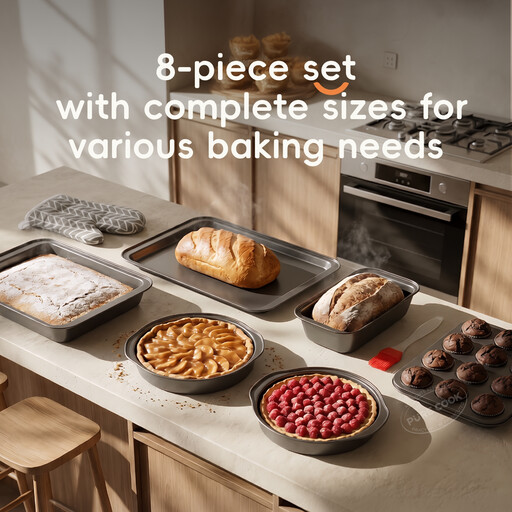
Why this product fits the profile: This set covers several square, round and rectangular formats and is aimed at households that prepare a variety of cakes, toast, brownies and savoury bakes.
The usage limits are clearly stated: oven only, not for microwave, hob, open flame or grill. Hand washing is required.
Eight-piece set; carbon steel; space-saving stackable design; various formats for sweet and savoury recipes.
We’ve put together a complete, regularly updated list of products that fully meet these strict selection criteria and the safety regulations in force in the EU.
For lasagne and gratins, a baking dish with sufficient volume and sturdy handles is practical. Ceramic, stoneware or coated aluminium are all options. Pay attention to the internal dimensions, the maximum oven temperature and whether the dish can go straight from the fridge into a hot oven.
The lifespan depends on use, cleaning and storage. Avoid metal utensils, don’t cut directly in the tin and steer clear of abrasive cleaning products. Even a tin labelled as dishwasher-safe can retain its surface quality longer with regular hand washing.
A baking tray set is worth it especially if you regularly make different recipes and have enough storage space. For occasional cake bakers, a single rectangular tin or a baking sheet may be more economical. What really matters are the actual sizes included, the material, care instructions and compatibility with your oven.