
Lieferung heute & morgen

Qualitätsgarantie

Willkommens-Angebote freischalten: KOSTENLOSE Lieferung | Bis zu 80 % RABATT | Kostenlose 30-Tage-JoyPlus-Testphase
App herunterladen
Baking tins are part of the basic equipment in many British households. But there is a wide choice of cake tins, bread tins, loaf tins, tart tins, quiche tins, springform tins and muffin tins. If you focus solely on a low price or eye-catching coating, you may later have to deal with warping, difficulty removing your bake or time-consuming cleaning.
This buying guide explains which features really matter when choosing a baking tin and which design best suits your baking routine.
A non-stick baking tin can make it easier to remove cakes or quiches. However, this alone says nothing about whether it is dishwasher-safe or how sensitive the surface is. Some tins must only be cleaned by hand with a soft sponge. Metal knives, forks and abrasive cleaners can damage the coating.
Always check the specific care instructions. A dishwasher-safe baking tin saves time, while a hand-wash-only design can also last for many years if treated with care.
A tin with a diameter of 26 or 30 cm is not automatically suitable for every recipe. Height, internal dimensions and capacity are also important. For sponge cakes, bread and bakes, a capacity that is too small can cause the mixture to overflow. In a very large tin, on the other hand, the mixture spreads more thinly and the baking time changes.
Compare the dimensions with your usual recipes. With a loaf tin, length, width and height are particularly important; with a tart tin, the rim height matters as well as the diameter.
A temperature rating such as 220, 240 or 250 °C refers to the maximum oven temperature specified by the manufacturer. It does not mean that the tin is suitable for hobs, naked flames or the grill. Moving a tin directly from the freezer into a hot oven is also only advisable when the material is expressly designed for this purpose.
An ovenproof baking tin should only be used in accordance with the product instructions. With glass and stoneware, it is also important to allow the item to cool slowly to avoid sudden temperature changes.
A steel baking tin is dimensionally stable and transfers heat to the mixture relatively directly. It is suitable for cakes, bread and savoury oven dishes. With coated steel tins, you should use wooden, plastic or silicone utensils.
A silicone baking tin is flexible and can make it easier to remove your bake. With soft-sided moulds, a stabilising frame is useful to prevent the tin from tipping when it is placed in the oven. The material should be approved for the oven and freezer temperatures you intend to use.
Glass and enamelled stoneware are often suitable both for baking and serving. They are heavier than metal and more sensitive to sudden temperature changes. In return, the products listed here may offer a broad temperature range as well as microwave and dishwasher compatibility.
Check the specific information about the coating and care requirements:
Even with a coated tin, it is often advisable to grease it lightly. This is not a guarantee against sticking, but depending on the recipe, it can make removing the bake easier.
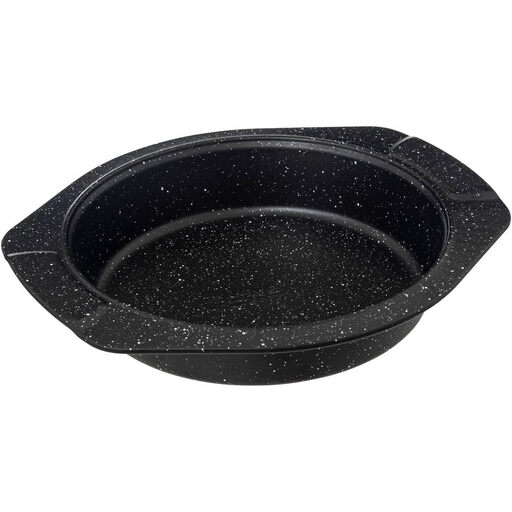
Why this product suits this profile: With a 26 cm diameter and 1.9 l usable capacity, this steel tin is designed for classic everyday cake recipes.
The product details clearly specify the material, capacity and care requirements. The tin is not listed as dishwasher- or microwave-safe, so it should be washed by hand.
Steel body, oven suitability, integrated handles and a coated surface.
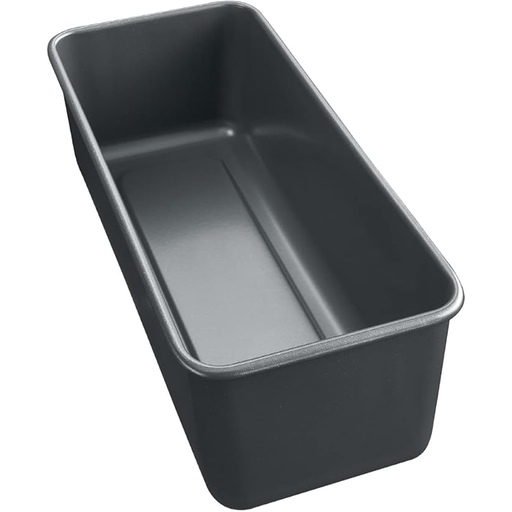
Why this product suits this profile: This 30 cm steel loaf tin is designed for households that regularly bake bread and cakes or prepare meatloaf.
According to the product description, the enamelled base is cut-resistant and the tin is ovenproof up to 250 °C. Hand washing is specified for care.
2.4 l capacity, steel construction, non-stick coating and temperature suitability up to 250 °C.
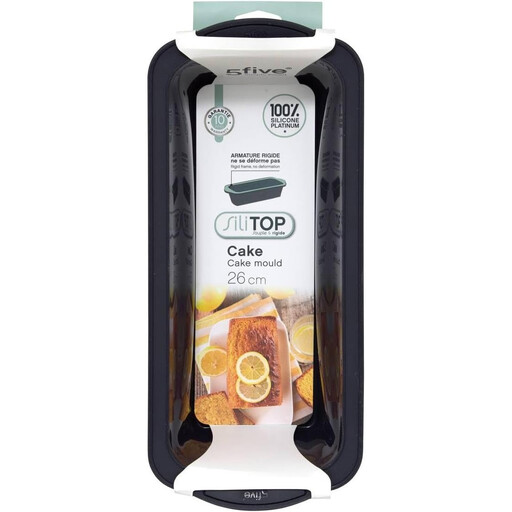
Why this product suits this profile: The combination of steel and silicone combines flexibility with an integrated stabilising frame.
The rigid frame helps prevent warping during transport and filling. According to the product details, the tin is dishwasher-safe and suitable for temperatures from -20 to 220 °C.
1.59 l capacity, microwave and oven suitability, plus dishwasher cleaning.
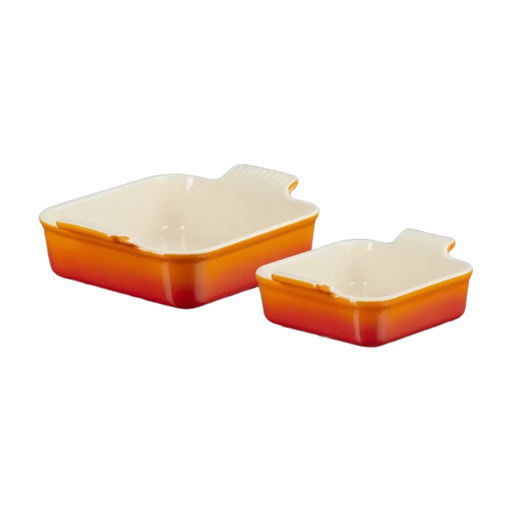
Why this product suits this profile: Two square stoneware dishes measuring 13 and 20 cm are suitable for individual portions and smaller family meals.
The product details specify a temperature range from -18 to 260 °C and suitability for the oven, microwave, freezer and dishwasher.
Enamelled stoneware, two sizes, side handles, plus dishwasher and freezer suitability.
We have put together a complete, regularly updated list of products that fully meet these strict selection criteria and the safety regulations applicable in the EU.
Regardless of the material, a few simple rules can help:
For beginner bakers, a versatile loaf tin or classic cake tin with clearly stated dimensions is a practical choice. A coated steel tin can make it easier to remove your bake. If you need particularly easy cleaning, look specifically for a dishwasher-safe baking tin.
Service life depends on the material, coating, frequency of use and care. Steel and stoneware tins can last for many years when used correctly. With coated tins, avoid scratches, overheating and metal utensils. A damaged coating or a crack is a reason to stop using the tin.
No single material is suitable for every recipe. Silicone is flexible and often makes removal easy; a sturdy frame can improve handling. Steel provides a firm shape and is suitable for bread, cakes and savoury dishes. The key considerations are the type of recipe, temperature range, shape stability and cleaning instructions.