
Lieferung heute & morgen

Qualitätsgarantie

Willkommens-Angebote freischalten: KOSTENLOSE Lieferung | Bis zu 80 % RABATT | Kostenlose 30-Tage-JoyPlus-Testphase
App herunterladen
A new baking tin may seem straightforward at first glance. In practice, however, the material, dimensions and care instructions determine whether your cake releases cleanly, the tin remains stable and fits your oven. If you choose based solely on colour, price or the promise of a “non-stick” coating, you may overlook important details.
A non-stick baking tin can make releasing your bake easier. However, it is important to check whether it is dishwasher-safe and which utensils may be used. Several coated steel tins in the range are intended for hand washing. Metal knives or scouring pads can damage the surface.
Before buying, check the following:
A cake tin with a diameter of 26 cm holds considerably more batter than one measuring 22 cm. If a recipe for a smaller cake tin is baked unchanged in a larger tin, the cake may turn out flatter and require a shorter baking time. With a smaller tin, on the other hand, there is a risk that the batter will rise over the rim.
Pay attention to the diameter, height and capacity. These details are more important than descriptions such as “family size” or “extra tall”.
An oven-safe baking tin cannot necessarily be used on a hob, gas flame or grill. Many steel, silicone and stoneware tins are intended exclusively for use in the oven. Microwave and freezer suitability must also be stated separately.
With stoneware in particular, you should also avoid sudden temperature changes: a hot tin should not be placed directly on a cold or damp surface.
Steel and carbon steel are dimensionally stable and transfer heat comparatively directly. They are suitable for cakes, bread and muffins. A coating can make releasing your bake easier, but usually requires gentle cleaning. Carbon steel tins are often lighter than cast iron, but generally must not be used on the hob.
Silicone baking moulds are flexible, lightweight and space-saving. They can be used for cakes, tarts, madeleines or muffins. For large or soft moulds, a sturdy baking tray underneath is recommended. Always check the specific temperature limit in the product information.
Stoneware retains heat and, depending on the manufacturer, may be approved for use in the oven, freezer, microwave and dishwasher. At the same time, the material is heavier and more sensitive to sudden temperature changes. A glaze can make cleaning easier and protect the surface against stains.
Compare the maximum temperature with your recipes. Examples from the selection:
These values apply only to the relevant use in accordance with the manufacturer’s instructions. Hobs, naked flames and grills are excluded for many baking tins. With coated models, the surface should be protected from sharp and metal objects.
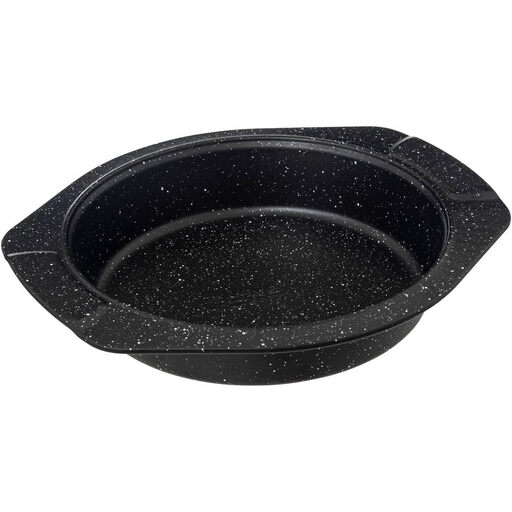
Why this product suits this profile: This 26 cm steel cake tin is a popular size for many household recipes and features handles for easy handling.
The specifications clearly state the material, internal dimensions, capacity and that dishwasher cleaning is not recommended.
Steel body, 1.9 l usable capacity and a 26 cm diameter; suitable for use in the oven.
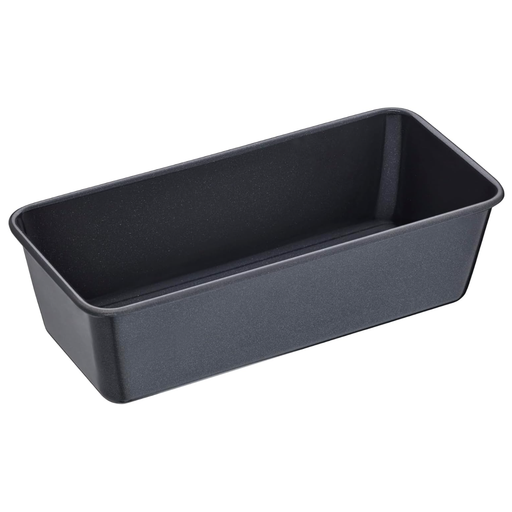
Why this product suits this profile: Made in Germany, this springform combines a 25 cm size with a removable rim and a leak-proof fastening mechanism.
The care instructions rule out dishwasher use and specifically advise protecting the coating from sharp metal utensils.
Two-layer KAIRAMIC coating, scratch-resistant enamel base and heat resistance up to 250 °C.
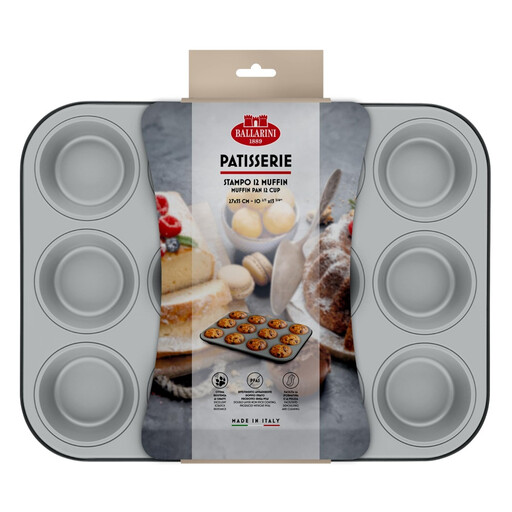
Why this product suits this profile: Twelve wells are ideal for families, children’s birthday parties or baking muffins and cupcakes regularly.
The product details clearly state the 12 wells, maximum temperature of 230 °C and recommended hand washing.
Carbon steel, two-layer PFAS-free non-stick coating and a format measuring 27 × 35 cm.
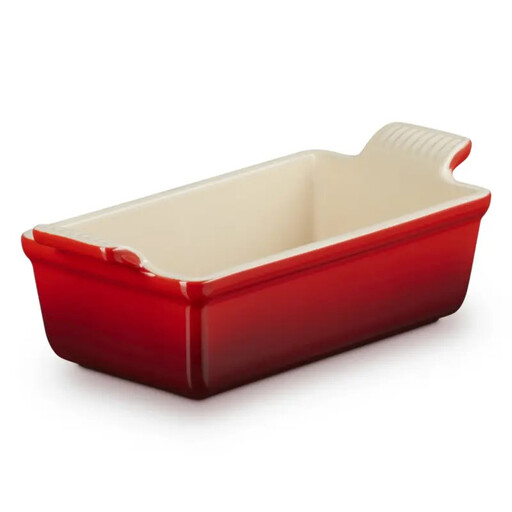
Why this product suits this profile: This 23 cm stoneware loaf tin is designed for bread, loaf cakes, quiche and casseroles.
Approval for use in the oven, freezer, microwave and dishwasher is listed separately; use on a hob is excluded.
Stoneware with a 2.8 l capacity and a temperature range from -23 °C to 260 °C.
We have put together a complete, regularly updated list of products that fully meet these strict selection criteria and the safety regulations applicable in the EU.
The service life of a baking tin depends greatly on its material and how it is treated. Allow coated tins to cool after baking before cleaning them. Use warm water, mild washing-up liquid and a soft sponge if the manufacturer recommends hand washing.
Silicone baking moulds should be placed on a baking tray for extra stability. Stoneware must not be exposed to sudden changes in temperature. Coated steel tins should not be used on hobs or over naked flames. visibly damaged or flaking coatings should no longer be used.
A springform tin is versatile enough for cakes, gateaux and quiches. For muffins, a muffin tin with several wells is a practical choice. If you often bake bread and loaf cakes, you can choose an elongated loaf tin. A baking tin set with several diameters covers different recipe quantities.
That depends on how you intend to use them. Silicone is flexible, lightweight and space-saving. Steel and carbon steel are dimensionally stable and well suited to recipes that require a firm side wall. The key considerations are the temperature rating, stability, cleaning requirements and the shape of bakeware you want to create.
First, follow the care and usage instructions. With coated tins, wooden or silicone utensils can help protect the surface. Depending on the recipe, you may also need to grease the tin or line it with baking paper. Allow the cake to cool sufficiently before releasing it, and open the fastening on springform tins carefully.