
Lieferung heute & morgen

Qualitätsgarantie

Willkommens-Angebote freischalten: KOSTENLOSE Lieferung | Bis zu 80 % RABATT | Kostenlose 30-Tage-JoyPlus-Testphase
App herunterladen
Whether you are making cakes, bread, muffins, desserts or bakes, the right baking tin affects ease of use, results and cleaning. Many unsuitable purchases are not caused by the price, but by unclear material specifications, unsuitable dimensions or contradictory care instructions. This guide explains what home bakers, families and beginners should look for when choosing baking tins.
A non-stick baking tin can make it easier to remove cakes and muffins. However, it is important to know whether it is dishwasher-safe and which utensils may be used. Metal knives, forks and abrasive sponges are often unsuitable for coated tins. Some models may only be cleaned by hand.
If you bake regularly, you should therefore look beyond the coating and also check:
A silicone baking tin is easy to store and can make it easier to remove delicate bakes. However, it may become misshapen when filled if there is no sturdy support underneath. For runny batters, we recommend placing a baking tray or stable oven rack underneath the tin.
When buying silicone tins, shoppers should also check whether there is information about food-grade silicone and use in the oven, freezer and dishwasher. Not every flexible tin is automatically suitable for all temperature ranges.
A cake tin with a diameter of 26 cm cannot automatically be replaced by one of any other size. Even a difference of a few centimetres changes the height of the batter and therefore the baking time. Before buying, compare the internal dimensions, external dimensions and height. With baking tin sets, it is also important to check whether the tins can be stacked inside one another and will fit in the cupboard you have available.
Carbon steel conducts heat relatively directly and is widely used for cake, bread and muffin tins. A carbon steel baking tin is generally sturdy and lighter than cast iron. Coated versions should be cleaned with a soft sponge once they have cooled. According to the product information, the Ballarini carbon steel muffin tin is oven-safe up to 230 °C and has a two-layer, PFAS-free non-stick coating. It is not dishwasher-safe.
Silicone is lightweight, flexible and space-saving. A silicone tin can be practical for delicate bakes such as Madeleines. If the batter is runny, the tin should be placed on a sturdy baking tray.
Glass is suitable for bakes, gratins and certain cake recipes. Glass dishes also allow you to see how brown the sides are becoming. Information about temperature limits and handling rapid temperature changes is particularly important.
Enameled stoneware retains heat and can be taken straight from the oven to the table. When moving between the freezer and oven, observe the stated temperature limits and guidance on thermal shock.
An oven-safe baking tin is not necessarily suitable for hob rings, naked flames or microwaves. Shoppers should read the product description carefully. Some carbon steel tins are intended for oven use only. Plastic lids supplied with ramekins should generally not be put in the oven.
Clear information such as the following is useful:
Choose the type of tin according to how you actually intend to use it:
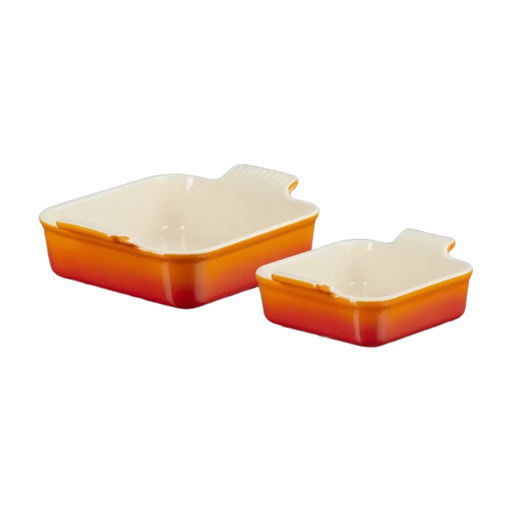
Why this product suits this profile: The two square dishes, measuring 13 cm and 20 cm, cover individual portions and smaller family dishes. According to the product information, the enamelled stoneware is suitable for use in the oven, microwave, freezer and dishwasher.
The high sides and practical handles reduce the risk of spilling small bakes or desserts when taking them out of the oven. The temperature range from -18 °C to 260 °C is clearly stated.
Two sizes, dishwasher-safe and supplied with a ten-year warranty according to the product data.
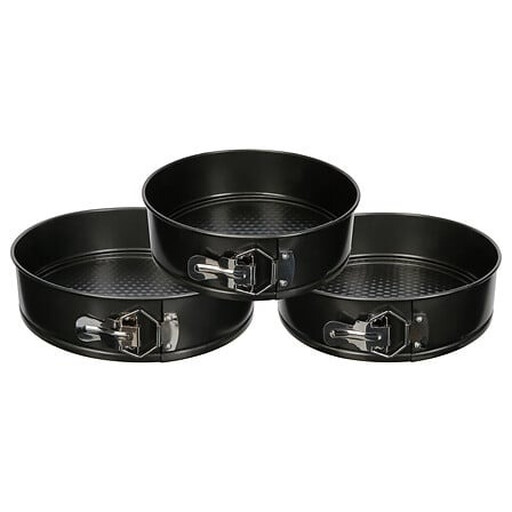
Why this product suits this profile: Three diameters of 22 cm, 24,5 cm and 26 cm accommodate different recipe quantities, so you do not need to buy several individual tins.
The different sizes make it easier to match the tin to the recipe. The removable base and springform clasp help you release delicate cakes.
Stackable set of 3, steel construction and stated oven use up to 280 °C.
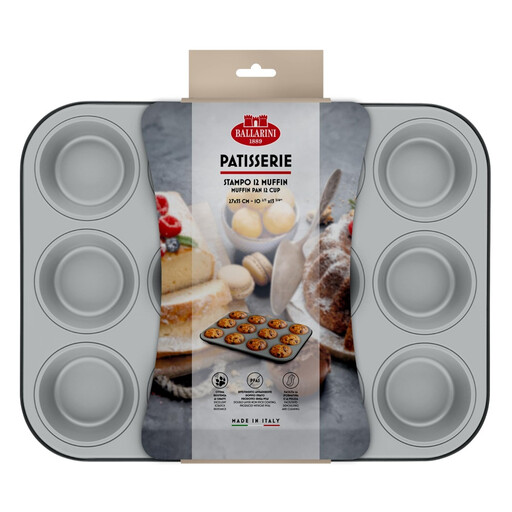
Why this product suits this profile: Twelve cups are ideal for family-sized batches, cupcakes or savoury muffins. Before buying, check that the 27 × 35 cm size fits inside your oven.
The product data expressly specifies hand washing and rules out dishwasher use. This allows you to plan for its care realistically before buying.
Twelve individual baking cups, carbon steel and stated heat resistance up to 230 °C.
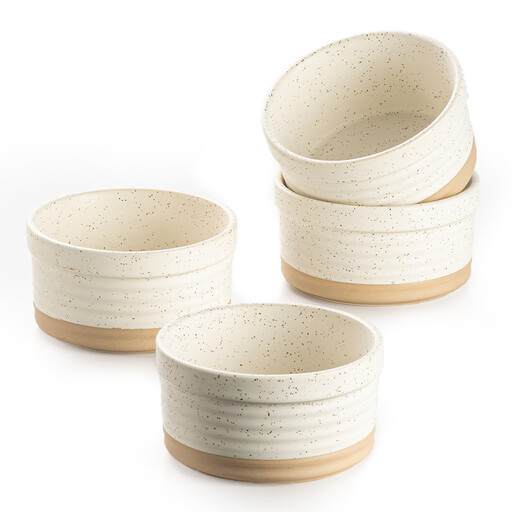
Why this product suits this profile: The small porcelain ramekins are designed for individual desserts, soufflés, quiches and crème brûlée and, according to the product information, can be used in the oven, freezer and dishwasher.
The 8 oz capacity is clearly stated, preventing uncertainty about portion size. Guidance on sudden temperature changes should be followed.
Four porcelain ramekins with scratch-resistant glaze, suitable for the oven, freezer and dishwasher according to the product description.
Even a high-quality baking tin will last longer when handled appropriately. Coated tins should cool completely before cakes are removed. For carbon steel, use soft sponges and mild cleaning products. Glass and stoneware should not be exposed to sudden changes in temperature.
Before first use, we generally recommend washing the tin with warm water and washing-up liquid. The specific manufacturer’s instructions take precedence. Even with a dishwasher-safe baking tin, check whether this applies equally to the tin and its accessories. Plastic lids may have different temperature limits from the accompanying ramekins.
We have put together a complete, regularly updated list of products that fully meet these strict selection criteria and the safety regulations applicable in the EU.
For beginners, a springform tin or a baking tin set with several sizes is often a practical choice. A springform clasp and removable base make cakes easier to release. Clear information about cleaning and the maximum oven temperature is also important.
That depends on the model. Many silicone tins are designed for this, but the product information should state it explicitly. With flexible tins, we also recommend using a baking tray as support, particularly when working with runny batter.
Their lifespan depends on the material, coating, temperature and care. Uncoated glass or stoneware can last for many years when used correctly. With coated baking tins, scratches, overheating and harsh cleaning can affect their performance. Regularly checking for warping, cracks or damaged coatings will help you decide when replacement is advisable.