
Lieferung heute & morgen

Qualitätsgarantie

Willkommens-Angebote freischalten: KOSTENLOSE Lieferung | Bis zu 80 % RABATT | Kostenlose 30-Tage-JoyPlus-Testphase
App herunterladen
Choosing the right baking tin affects more than just the appearance of a cake. Size, material, coating and fastening mechanism all influence how evenly the batter bakes and whether the finished bake can be removed without breaking. At the same time, many listings promote features such as “non-stick”, “heat-resistant” or “easy to clean” without clearly highlighting important limitations.
This guide helps home bakers, families and beginners compare cake tins objectively and choose a suitable tin online.
A 20 cm springform tin is not simply a smaller version of a 26 cm springform tin. The diameter changes the height of the batter, the baking time and the amount of batter required. Recipes for a 26 cm springform tin cannot be used in a 20 cm springform tin without adjustment. For family-sized cakes, 26 or 28 cm is often suitable, while 20 cm can be practical for smaller households and compact cake bases.
Height is also important. A shallow round baking tin is suitable for tart bases or thin cakes, while a deeper tin is better for sponge mixtures, layer cakes or chiffon cakes.
A non-stick baking tin can make it easier to release your bake. However, its lifespan depends on how it is looked after. Metal spatulas, knives and abrasive scourers can damage the coating. A tin is not automatically dishwasher-safe simply because it has a non-stick coating.
So check the specific cleaning instructions. With some models, only the base is dishwasher-safe, while the ring should be washed by hand.
A baking tin with a removable base makes it easier to transfer delicate tarts and quiches. With very runny batters, however, a springform tin can still leak where the base and sides meet. For cheesecakes or fillings with a high water content, look for a sturdy fastening mechanism and, ideally, a design described as leak-proof. With particularly runny mixtures, baking paper or a suitable liner may also be helpful.
As well as the diameter, compare the height and volume. A 30 cm springform tin with a capacity of around 4 litres requires considerably more batter than a small cake tin.
Steel baking tins conduct heat relatively consistently and retain their shape under normal use. Sufficient material thickness can reduce the risk of bending. Carbon steel, as used in the Le Creuset model, is described as heavier steel offering even heat distribution.
A silicone baking tin is flexible and can be stored compactly. It can be used for cakes, chilled desserts and certain quiches. When filling it, placing it on a sturdy baking tray or oven rack is recommended, as soft silicone is more difficult to transport safely.
Before buying, check:
The temperature specification is always product-specific. According to the product details, the models selected here can withstand temperatures of up to 240 °C, 250 °C or 280 °C, for example. The tin must not be used on a hob, over an open flame or as a substitute for cookware if this is expressly prohibited.
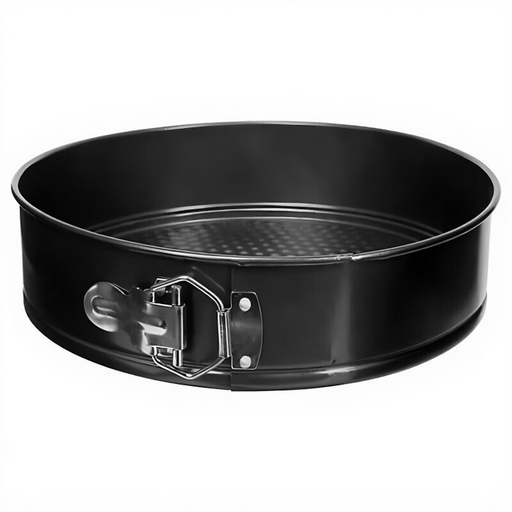
Why this product suits the profile: The 26 cm round springform tin accommodates many classic cake recipes and is suitable for anyone starting to bake cakes regularly.
The secure fastening mechanism and removable base address two common weaknesses of basic cake tins: difficult release and unstable sides.
26 cm diameter, steel construction, non-stick coating and sides measuring 6.8 cm high according to the product details.
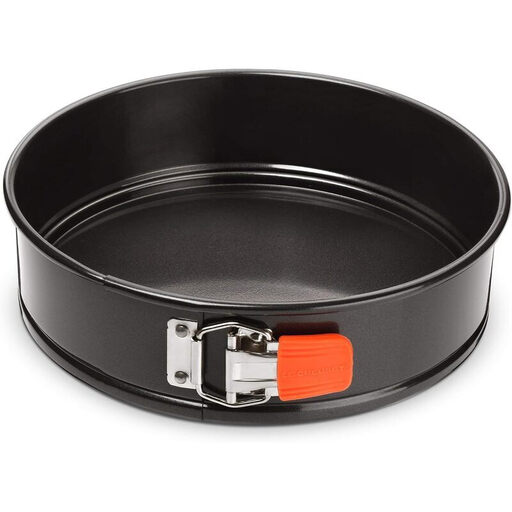
Why this product suits the profile: This model is aimed at people looking for a compact tin with a carbon steel construction, side clip and removable base.
The product details specify a sturdy design to help prevent bending, a locking clip and hand washing rather than a blanket claim of dishwasher safety.
20 cm diameter, carbon steel, removable base and oven-safe up to 240 °C according to the product details; hand washing is recommended.
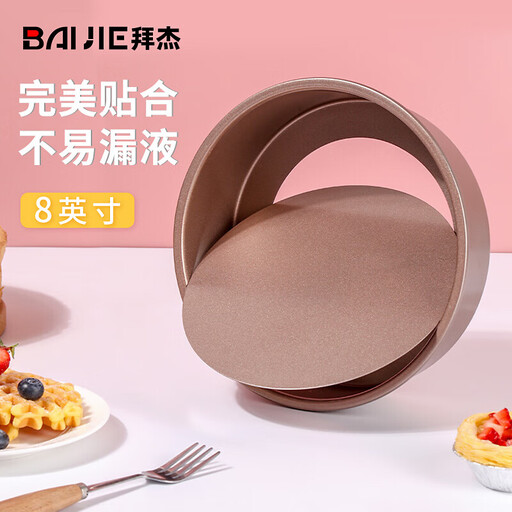
Why this product suits the profile: The specialised tube design is made for chiffon cakes and appeals to baking enthusiasts who prepare light, tall bakes as well as classic cakes.
The two-part construction with active base is designed for controlled release, setting it apart from shallow standard tins.
8-inch format, tube base for chiffon cakes and a base that, according to the product description, is pushed upwards to release the bake.
We have put together a complete, regularly updated list of products that fully meet these strict selection criteria and the safety regulations applicable in the EU.
For classic cheesecakes, gateaux and sponge cakes, a springform tin with a sturdy fastening mechanism is usually versatile. A 28 cm or 30 cm springform tin is suitable for larger quantities. A baking tin set with several diameters can be useful if you often bake different recipe quantities and have enough storage space.
A Bundt tin requires the characteristic central tube. This allows the batter to be heated from both the inside and outside. For shallow sweet or savoury mixtures, on the other hand, a tart tin or quiche tin with a low rim and, where applicable, a removable base is a better choice.
Small round tins are also available for compact portions, for example 15 or 20 cm. Always check that the quantities in your recipe match the size of the tin. If the diameter differs, the baking time and batter height may change.
A 20 cm springform tin is often suitable for smaller cakes and gateaux bases. The important thing is to adjust the recipe to the smaller diameter. For regular family-sized portions, a 26 cm springform tin is generally more practical.
There is no single answer. Its lifespan depends on the material thickness, frequency of use, temperature and care. Hand washing, soft sponges and kitchen utensils without sharp edges can help protect the coating. Before buying, check the manufacturer’s details regarding the guarantee or coating lifespan separately.
That depends on how you plan to use them. Silicone is flexible, lightweight and space-saving. Steel or carbon steel offers a shape-retaining construction and is often used for springform tins, tart tins and Bundt tins. If you often want to release delicate cakes from the tin, you should also look for a removable base or a suitable fastening mechanism.