
Lieferung heute & morgen

Qualitätsgarantie

Willkommens-Angebote freischalten: KOSTENLOSE Lieferung | Bis zu 80 % RABATT | Kostenlose 30-Tage-JoyPlus-Testphase
App herunterladen
Choosing a child's first vehicle is an exciting milestone. A balance bike is often the top choice for training their sense of balance and coordination. However, the market can be overwhelming and full of promises. As your Joybuy Product Recommendation Officer, I'll help you identify the crucial features and avoid common purchasing traps, ensuring your investment brings lasting joy.
Many well-intentioned purchases quickly prove to be impractical or even unsafe. Based on market observations, there are three common pitfalls that lead to frustration for both parents and children:
A good kids' balance bike is more than just a toy; it's a first bike without pedals that significantly eases the transition to a regular bicycle later on.
To avoid a bad purchase, you should focus on a few essential technical specifications. These determine the safety, durability, and riding fun for your child.
The most important measurement is not age, but your child's inseam (crotch-to-floor length). Measure this from the floor to the crotch while the child is standing straight with their legs slightly apart.
The material affects weight, durability, and maintenance. Each has its specific advantages and disadvantages.
Regardless of the material, the workmanship is crucial. Look for rounded edges, flush-mounted screws, and a sturdy construction.
The choice of tyres directly impacts the ride feel and where the bike can be used.
Here are some models tailored to different needs and age groups that specifically avoid the pitfalls mentioned.
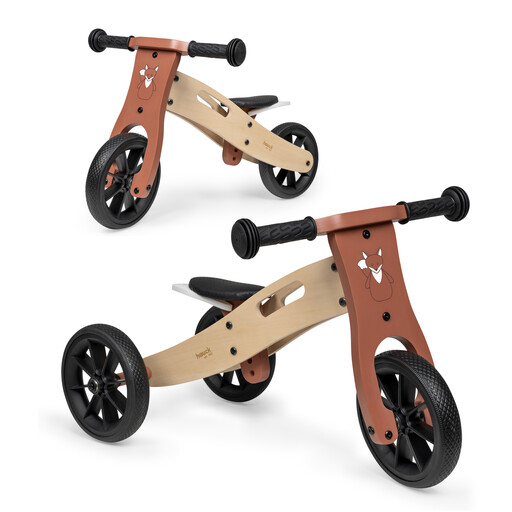
Why This Fits Their Persona: Ideal for toddlers taking their first steps towards mobility. This model converts from a stable tricycle to a classic balance bike, accompanying the child's development from the very beginning.
The 2-in-1 function and height-adjustable saddle bypass the "one-size-fits-all" trap. The vehicle grows with the child, remaining relevant and usable for a long time.
Convertible from a toddler tricycle to a balance bike; frame made from sustainable FSC-certified wood; steering limiter for added safety.
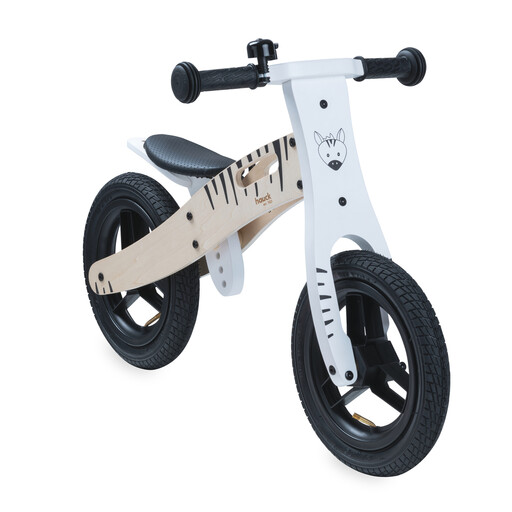
Why This Fits Their Persona: Perfect for families who spend a lot of time outdoors. This classic balance bicycle is designed for use on pavements, in parks, and on forest trails, offering superior comfort.
The 12-inch pneumatic tyres solve the problem of uncomfortable hard plastic tyres. They absorb shocks and ensure a smooth ride, which significantly increases the child's enjoyment.
High riding comfort thanks to pneumatic tyres; 4-level height-adjustable saddle for long-term use; sustainable wooden balance bike (FSC-certified).
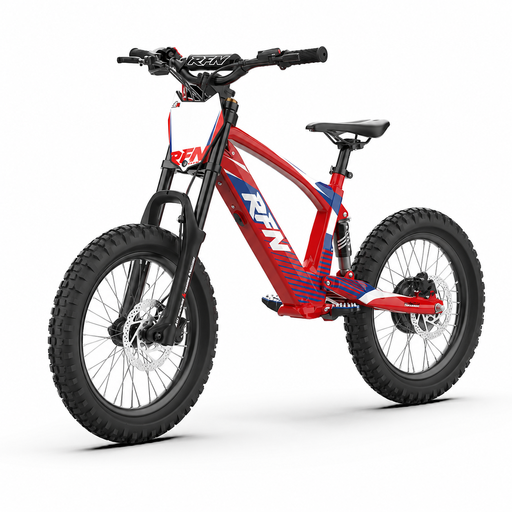
Why This Fits Their Persona: For older, more experienced kids who are ready to take the next step. This electric kids' motorcycle is not a classic balance bike, but a high-performance vehicle for off-road adventures.
This is a specialised vehicle that requires a deliberate choice. It avoids the trap of over-hyped features by offering professional-grade components like hydraulic disc brakes and a robust aluminium frame.
Powerful 500W motor with three speed settings; off-road capable suspension and tyres; front and rear hydraulic brakes for maximum safety.
We have compiled a complete, up-to-date list of products that fully meet these strict selection criteria and German safety regulations.
For the youngest riders (up to approx. 3 years), a handbrake is often unnecessary or even overwhelming. They instinctively use their feet to brake, which is the safest method at this age. A handbrake becomes relevant when the child can balance confidently, reaches higher speeds, and has the motor skills and hand strength to operate it effectively.
The adjustment is crucial for safety and comfort. Have the child sit on the saddle. Their feet should be completely flat on the ground with their knees slightly bent. This position gives the child the necessary control to push off powerfully and stop safely at any time. Check the height regularly, as children grow quickly.
A balance bike for ages 2 and up is a common guideline, but the child's individual development is more important than their age. As soon as a child can walk confidently and shows interest in vehicles, a small, lightweight model (often from 18 months) can be suitable. The crucial factor is that the minimum saddle height matches the child's inseam.