
Lieferung heute & morgen

Qualitätsgarantie

Willkommens-Angebote freischalten: KOSTENLOSE Lieferung | Bis zu 80 % RABATT | Kostenlose 30-Tage-JoyPlus-Testphase
App herunterladen
Choosing the first bike without pedals is a key step in a child's motor skill development. A good balance bike fosters a sense of balance and is the perfect preparation for riding a pedal bike later on. However, the market can be overwhelming, and many products don't deliver on their promises. As your Joybuy Product Recommendation Officer, I'll help you navigate common purchasing pitfalls and make an informed decision.
Many parents invest in a balance bike only to find it sitting unused in a corner after just a few months. This is often due to avoidable mistakes made during the selection process. Pay close attention to these three common problems:
To avoid a bad investment, you should base your purchasing decision on objective criteria. The following three aspects are central to the safety, comfort, and longevity of a child's balance bike.
The frame material directly influences the overall weight of the balance bike. A lightweight model is easier for children to handle and encourages independent use.
A learning balance bike should be light enough for your child to pick it up without help.
The tyres are the only point of contact with the ground and are therefore crucial for safety and ride feel. The most common size is the 12-inch balance bike, suitable for most children between 2 and 5 years old. There are two main types of tyres:
The most important feature for a long service life is adaptability. A balance bike for ages 2 and up must have a height-adjustable saddle and, ideally, adjustable handlebars as well.
How to determine the right size: Measure your child's inside leg length (inseam) from the floor to their crotch. The minimum adjustable saddle height of the balance bike should be slightly less than this measurement. This allows the child to sit securely on the saddle with both feet flat on the ground, while their knees are slightly bent. This provides the necessary security and control when running and pushing off.
Based on these criteria, we have put together a few models from our range to suit different needs and age groups.

Why this model is a great fit: This ride-on toy is specially designed for children from 12 months. Its low centre of gravity and stable construction make it particularly tip-resistant, giving the little ones the security they need for their first adventures on wheels. It is an ideal ride-on toy for toddlers.
It is precisely tailored to the ergonomics and motor skills of one-year-olds, thus avoiding the pitfall of a bike that is too large or heavy. The ergonomic seat makes it easy to get on and off.
The low centre of gravity ensures high stability against tipping. The protective side grips on the handlebars offer additional support and safety for small hands.

Why this model is a great fit: This classic 12-inch balance bike is a reliable companion for children from 2 to 6 years old. It's a typical first bike for kids that focuses on the essentials: training balance and having fun.
Thanks to the adjustable saddle and handlebars, it grows with the child, avoiding the pitfall of a short lifespan. The puncture-proof tyres save on maintenance and frustration from flat tyres.
The combination of a lightweight design, high adjustability, and maintenance-free tyres makes it a practical and durable everyday companion for boys and girls.
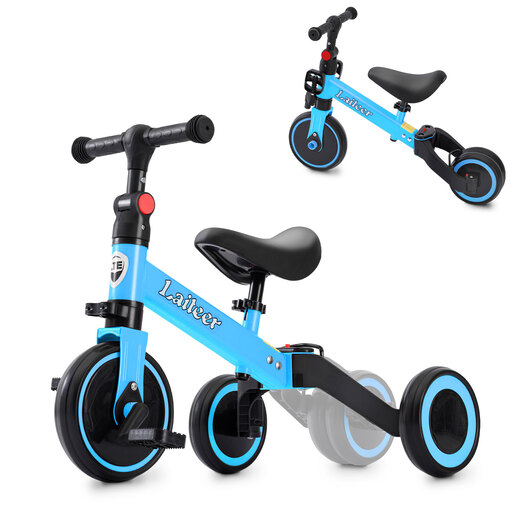
Why this model is a great fit: This convertible model combines a tricycle for the first attempts at pedalling with a balance bike for practising balance. It accompanies the child through various developmental stages and offers high utility value over several years.
Thanks to its 2-in-1 functionality, it adapts to the child's abilities. It's never the "wrong" vehicle, as it grows with them and can be converted. This avoids the need to buy a new device after a short time.
The pedals are removable and the entire bike is foldable, which makes transport and storage easier. The investment pays off due to its long and flexible service life, from tricycle to balance bike.
We have compiled a complete, up-to-date list of products that fully meet these strict selection criteria and German safety regulations.
A balance bike is generally recommended from the age of about 18 months to 2 years. However, the child's individual development is the deciding factor. They should be able to walk and stand confidently. For younger children from 1 year old, four-wheeled ride-on vehicles are suitable for gaining initial experience with moving on wheels.
The correct saddle height is crucial for safety and control. Adjust the saddle so that your child can sit on it with both feet flat on the ground. Their knees should be slightly bent. This position allows the child to push off powerfully and stop safely at any time.
In Germany, there is no legal requirement to wear a helmet when using a balance bike. Nevertheless, it is strongly recommended that your child wears a suitable and certified children's helmet from the very first ride. Falls are part of the learning process, and a helmet protects the head from injury.