
Lieferung heute & morgen

Qualitätsgarantie

Willkommens-Angebote freischalten: KOSTENLOSE Lieferung | Bis zu 80 % RABATT | Kostenlose 30-Tage-JoyPlus-Testphase
App herunterladen
Buying a balance bike is a significant step in a child's development. It's often their first bike without pedals, laying the foundation for balance, coordination, and future cycling safety. However, the market can be overwhelming, and many products promise more than they deliver. As a Joybuy Product Recommendation Officer, my mission is to provide you with objective criteria to make an informed decision and steer clear of common purchasing pitfalls.
Many well-intentioned purchases end in frustration—for both parent and child. Certain flaws in a kids' balance bike can lead to it being rarely used or quickly becoming unusable. Pay special attention to these three points:
To ensure the balance bike brings long-lasting joy and optimally supports motor skill development, you should carefully examine three technical parameters.
The correct fit is essential for safety and ergonomics. A training bike must be able to grow with the child.
A balance bike for 2-year-olds typically requires a lower starting height than a balance bike for 3-year-olds. Models with a wide adjustment range offer a significantly longer period of use.
The weight of the balance bike should be as low as possible without compromising stability. A rule of thumb is that the bike should not weigh more than 30% of the child's body weight.
A lightweight bike promotes control and boosts the child's confidence.
The choice of tires directly impacts riding comfort and maintenance.
For most urban use cases, a high-quality EVA tire represents a good compromise between comfort and maintenance-free convenience.
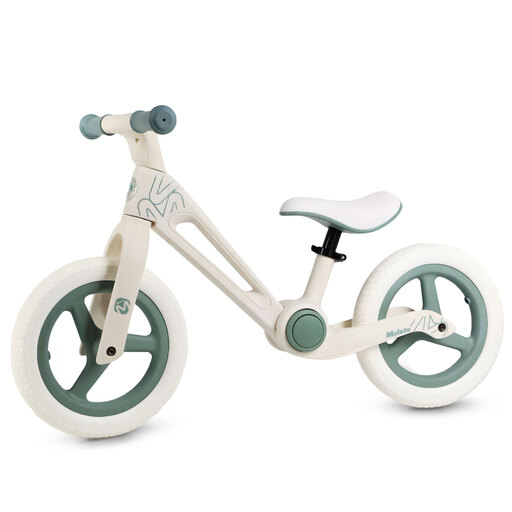
Why it's a great fit: Ideal as a first balance bike for families seeking a functional and adaptable model without a large budget. It focuses on the core features that are essential for learning success.
Thanks to its adjustable saddle and handlebars, this bike grows with the child, avoiding the fixed-size trap and ensuring a longer period of use.
The low weight makes it easy for toddlers to handle and encourages independent use. Assembly is straightforward.
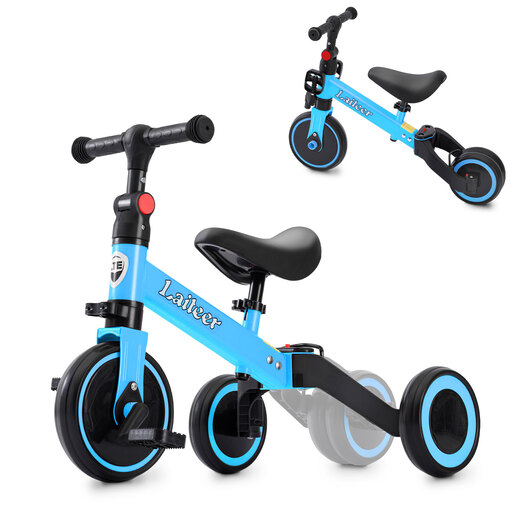
Why it's a great fit: Perfect for parents looking for a long-term solution. It starts as a stable tricycle for the youngest riders and later converts into a balance bike to train their balance.
This model is the definition of adaptability. Instead of quickly becoming obsolete, it transforms to accompany different developmental stages, from a toddler tricycle to a training balance bike.
The foldable design and removable pedals make it space-saving and versatile. It combines two vehicle types in one product.

Why it's a great fit: This model combines a low weight with maintenance-free tires and a practical kickstand. It's a thoughtful choice for parents who value safety and hassle-free handling. A matching kids' bike helmet is a smart addition.
It avoids the unsuitable tire trap by using puncture-proof EVA tires. These offer worry-free use without maintenance and are ideal for urban environments.
The integrated kickstand is a practical detail that teaches children to park their bike properly and protects the frame from scratches.
We have compiled a complete, up-to-date list of products that fully meet these strict selection criteria and all applicable safety regulations.
1. At what age is a balance bike recommended? Most children are ready for their first balance bike between 18 months and 2 years of age. More important than age is their physical development. The child should be able to walk and stand confidently. Models labelled as a balance bike for 2-year-olds typically offer the right size and a low saddle height for getting started.
2. How do I correctly adjust the saddle height on a balance bike? Have your child sit on the saddle. Their feet should be completely flat on the ground while their knees are slightly bent. This position allows the child to push off powerfully and bring the bike to a safe stop at any time. A setting that is too high leads to instability, while one that is too low results in an unergonomic posture.
3. Is a kids' bike helmet necessary when riding a balance bike? Although helmet laws for balance bikes may vary by region, wearing a helmet is strongly recommended. It teaches children that a helmet is part of riding—a habit that is crucial for their future safety. A well-fitting kids' bike helmet protects them during falls, which are common during the learning phase. Look for a lightweight design with good ventilation.