
Lieferung heute & morgen

Qualitätsgarantie

Willkommens-Angebote freischalten: KOSTENLOSE Lieferung | Bis zu 80 % RABATT | Kostenlose 30-Tage-JoyPlus-Testphase
App herunterladen
A balcony power station often generates electricity when the household needs the least energy: during the day, when many residents are at work or out and about. A balcony power station battery can store surplus solar energy and make it available later for the fridge, router, lighting and other appliances. To ensure your purchase proves worthwhile in everyday use, you should carefully check the capacity, system compatibility and safety features before buying.
A high figure in kilowatt-hours initially sounds appealing. However, it only describes how much energy the battery can store. The output in watts is equally important. A battery with a large capacity but low discharge output may not be able to power high-performance household appliances sufficiently.
Always check:
Not every solar battery can be connected to every balcony power station. Some batteries are designed exclusively as expansion modules for a specific system. For example, according to the manufacturer, the TSUN SolarCan TSOL-DB2000Lite is only compatible with the TSUN SolarCan DCU2000Lite. The Zendure AB3000X is also designed for the SolarFlow 2400 AC system, according to the manufacturer.
Before placing your order, compare the connections, voltage range, inverter, communication protocols and system combinations approved by the manufacturer.
The IP65 rating means that an enclosure is protected against dust and water jets from various directions. It does not automatically mean that the device may be operated permanently without protection in the rain, standing water or direct sunlight.
You should also consider:
For a small household with a balcony power station, a battery in the region of 2 kWh may be sufficient if you mainly want to cover the base load in the evening. With higher consumption, a larger photovoltaic system or a desire for longer backup power, a capacity of 5 kWh or more may be worthwhile.
A simple guide:
Many current solar batteries use LiFePO4 cells. The lithium iron phosphate technology used in the products mentioned is promoted as offering high thermal stability and many charging cycles. However, the specific manufacturer’s information, permitted depth of discharge and operating conditions remain decisive.
An integrated battery management system (BMS) should protect against overcharging, deep discharge, overcurrent, short circuits and overheating, among other risks. A stated cycle count is not a guaranteed service period for every type of use. Temperature, charging profile and depth of discharge all affect actual ageing.
An expandable battery storage system can initially be bought in a smaller configuration and adapted to growing demand later. Check whether expansion is only possible with identical modules and whether a maximum system capacity applies.
An app can display the state of charge, solar yield, consumption and schedules. For backup power, however, the app is not the only relevant factor. The key considerations are:
A portable solar power station is not automatically a home battery and does not replace a professionally planned domestic installation. For grid-connected systems, the applicable German connection and registration requirements must be observed. Work on the mains electricity system should be carried out by a qualified electrician.
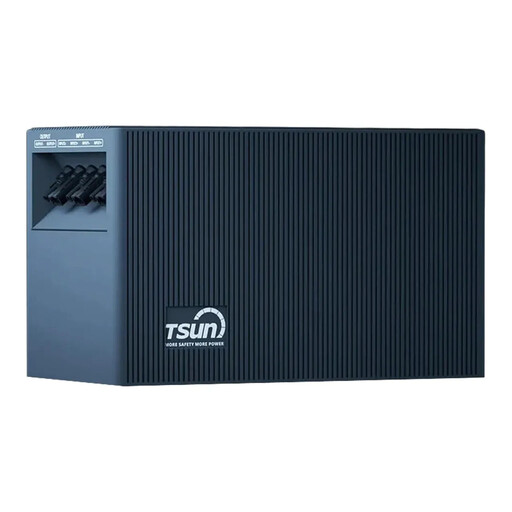
Why this product suits the profile: According to the manufacturer, the system combines a 2-kWh LiFePO4 battery with up to 2,400 W of PV input and can be expanded to approximately 10 kWh. This makes it suitable for households that want to start with a manageable base capacity.
The compatible system architecture reduces the risk of buying an unsuitable expansion module. The IP65 rating is intended for indoor and outdoor areas, but does not replace a sheltered installation location.
2 kWh LiFePO4 capacity, up to 2,400 W PV input, expansion to approximately 10 kWh and monitoring via the TSUNESS platform.
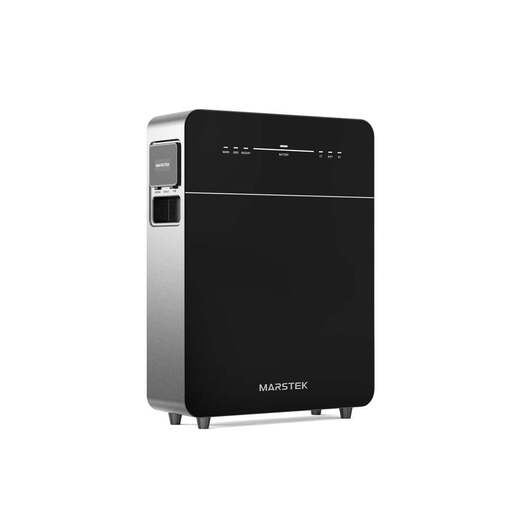
Why this product suits the profile: According to the manufacturer, this AC-coupled home battery offers 5.12 kWh, up to 2,500 W of continuous output and expansion to 15.36 kWh with three units. It is suitable for households with higher evening consumption and a desire for backup power.
The stated continuous output is listed separately from the peak output. The product also clearly specifies AC coupling and the need for installation by a certified electrician.
5.12 kWh capacity, 2,500 W continuous output, IP65 enclosure, LiFePO4 technology and, according to the manufacturer, more than 6,000 charging cycles under defined conditions.
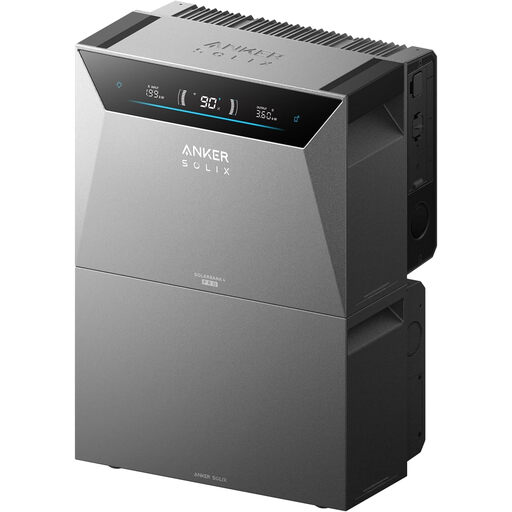
Why this product suits the profile: According to the manufacturer, the system starts with 10 kWh, handles up to 5,000 W of solar input via four MPPTs and can be expanded to up to 30 kWh. It is aimed at users with a larger PV system and greater storage requirements.
The high capacity is combined with specific input and output figures. For connecting to the mains, for example via a Wieland plug, the product information states that a qualified electrician is required.
10 kWh output capacity in the set, four MPPTs, 5,000 W PV input, 2,500 W bidirectional charging output and expansion to 30 kWh according to the manufacturer.
We have put together a complete, regularly updated list of products that fully meet these strict selection criteria and the safety regulations applicable in the EU.
This depends on your daily consumption and the output of your PV system. A 2 kWh battery may be enough to cover the base load in the evening. Households with higher consumption should consider capacity, charging output and usable energy together, rather than focusing solely on the largest kWh figure.
Service life is generally specified in terms of charging cycles and remaining capacity, for example 6,000 cycles up to a specific capacity level. These figures are based on defined manufacturer conditions and are not a blanket guarantee for every household. Temperature, depth of discharge and charging habits all affect ageing.
Not necessarily. A PV battery needs a designated backup or emergency power function, suitable outputs and an appropriate electrical installation to do so. Check the continuous output, changeover time and connection type. Work on the domestic electrical installation must be carried out by a qualified electrician.