
Lieferung heute & morgen

Qualitätsgarantie

Willkommens-Angebote freischalten: KOSTENLOSE Lieferung | Bis zu 80 % RABATT | Kostenlose 30-Tage-JoyPlus-Testphase
App herunterladen
A balcony power station with storage can make excess solar power available for the evening or cloudy periods. However, for the investment to work in everyday life, several technical specifications need to align. A high capacity alone doesn't tell you much about whether a balcony storage unit is compatible with your PV system, your electricity consumption and your spatial conditions.
As a Joybuy Product Recommendation Officer, I objectively assess the relevant product data and highlight which specifications are particularly important before purchasing a solar storage unit for a balcony power station.
Manufacturers often state the total battery capacity, for example 2 kWh or 5.12 kWh. However, the full amount of energy is not always available. What matters are the details on usable capacity and depth of discharge (DoD).
A storage unit with a nominal capacity of 5.12 kWh and 90% DoD theoretically provides around 4.61 kWh for operation. Charging and conversion losses add to this. So don't just compare the kWh figure, but also:
An AC-coupled storage unit is connected on the AC side to an existing balcony power station or microinverter. This is useful if the PV system is already installed and you don't want to replace the inverter.
A DC-coupled storage unit takes the solar power directly on the DC side. Here, the PV voltage, current, MPPT ranges and connectors must match exactly. A DC system is therefore not automatically compatible with every existing balcony power station.
A common purchasing mistake occurs when someone tries to connect an AC storage unit directly to solar panels. According to the product description, the Marstek Venus E Gen 3.0 is designed exclusively for AC coupling; a direct DC connection to PV modules is not intended.
The term emergency power supply does not necessarily mean that all circuits in the building will continue to run during a power cut. Check which outputs remain active during a grid failure, what their continuous power rating is, and whether a manual switchover is required.
A continuous power output of 1,200 W is sufficient for lighting, a router and smaller appliances, for example. For a fridge, microwave or several high-power household appliances at the same time, higher values are needed. The specific connection type and the manufacturer's specifications are decisive.
First, work out how much electricity you need in the evening and at night. For a small household, a LiFePO4 storage unit of around 2 kWh may be sufficient, while higher consumption may justify a modular solution with 5 kWh or more.
An oversized battery may not charge fully on days with little sun. A home storage unit that is too small, on the other hand, will be quickly depleted. An expandable solar storage unit allows for later adjustment, provided additional modules and the system output remain compatible.
The number of MPPTs describes how many PV inputs are regulated independently. Multiple MPPT channels can be helpful with different orientations or partial shading. Check:
A system with four MPPT inputs is not automatically sensible for every installation. The technical values of the solar modules must fall within the permissible range of the storage unit.
The protection rating IP65 indicates dust-tightness and protection against low-pressure water jets. However, it does not replace a sheltered installation location. Operating instructions may additionally require a dry, well-ventilated position and protection from direct weather exposure.
Also pay attention to dimensions, wall or floor mounting and weight. According to the product data, the Marstek Venus E Gen 3.0 weighs 60 kg. Secure fixing and a load-bearing surface are therefore important prerequisites.
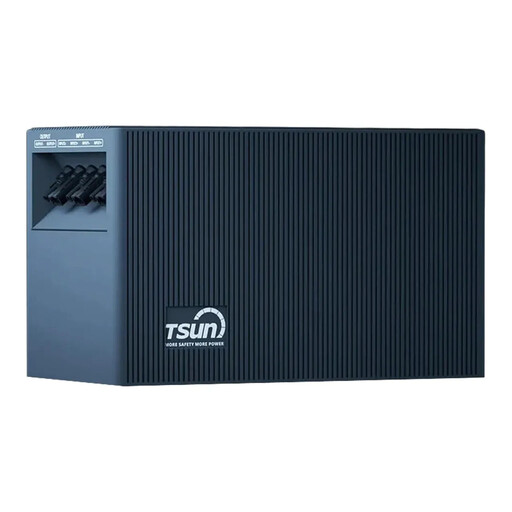
Why this product suits the profile: The 2 kWh base is suitable for users who want to store solar power on a smaller scale initially and expand the system later.
The product data explicitly states the PV input power, voltage range and MPPT configuration. This makes it easier to check compatibility with existing modules.
DC-coupled architecture, two MPPT channels and expandability up to approximately 10 kWh according to product specifications.
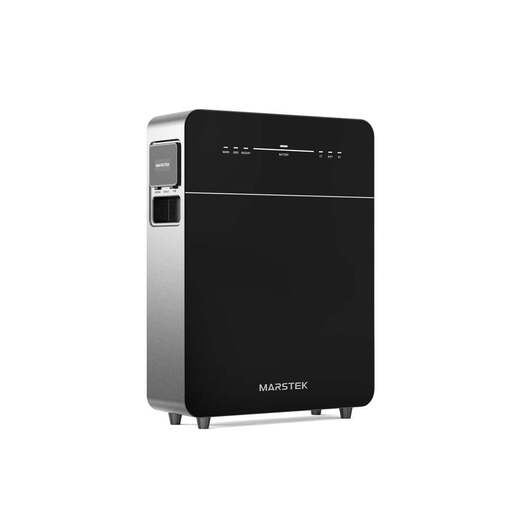
Why this product suits the profile: For existing PV systems, the AC-coupled design offers a way to store solar power without a direct DC connection to the modules.
The AC coupling is clearly stated. This helps buyers avoid assuming a DC connection that would be unsuitable for their system.
5.12 kWh capacity, 2.5 kW continuous power, LiFePO4 technology and expansion with up to three units according to manufacturer specifications.
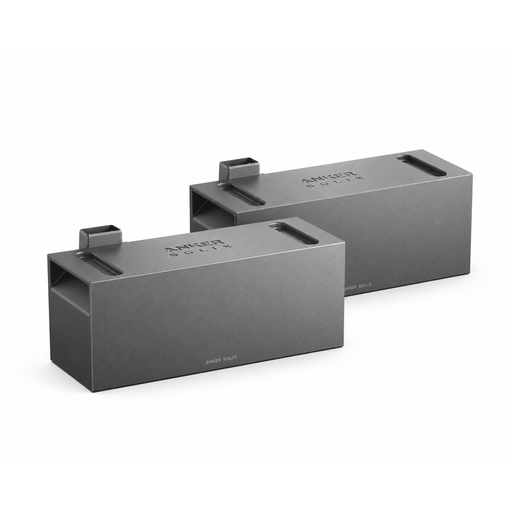
Why this product suits the profile: The bundle is aimed at operators of compatible Solarbank systems who want to expand their storage capacity modularly.
Compatibility with specific Solarbank generations is stated. This allows you to check the most important requirement before purchasing.
Two expansion batteries with a total of 5.36 kWh, LiFePO4 cells, IP65 protection and a stated cycle life of up to 6,000.
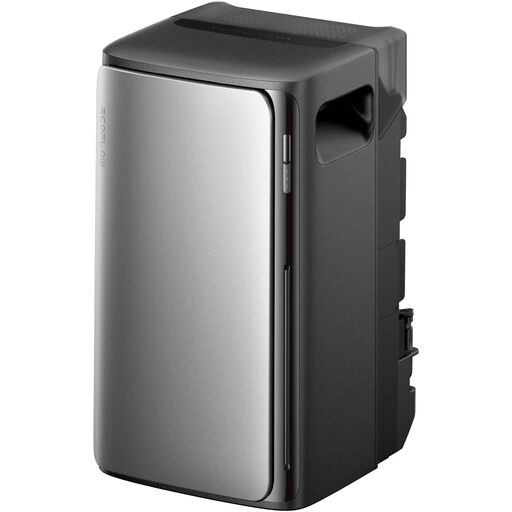
Why this product suits the profile: According to the product description, the AC-coupled plug-and-play solution is compactly designed and can be expanded up to 11.52 kWh.
Capacity, PV input and expansion limit are clearly stated. However, installation must still be carried out in accordance with the instructions and local regulations.
2 MPPT, 1,800 W solar input, LiFePO4 battery and modular expansion up to 11.52 kWh according to the manufacturer's description.
We have compiled a complete, regularly updated list of products that fully meet these strict selection criteria and the safety regulations applicable in the EU.
Before purchasing, you should clarify whether it is a plug-and-play system or a system that requires installation work. For devices with a mains connection, fixed wiring or special protection requirements, installation by a qualified electrician may be necessary. Also observe the technical connection conditions, the operating instructions and, if applicable, registration in the Market Master Data Register (Marktstammdatenregister).
A storage unit should be placed in a dry, stable and adequately ventilated location. Do not open, modify or repair the device yourself. If cables are damaged, or if you notice unusual odours, swelling or overheating, stop using the device immediately. LiFePO4 batteries and electronic storage units must not be disposed of with household waste at the end of their service life; instead, take them to designated battery or electrical collection points.
The right size depends on your evening electricity consumption, the PV output and your desired level of self-consumption. For a small household, a base of around 2 kWh may be sufficient. For higher consumption or multiple appliances, systems with 5 kWh and modular expansion are worth considering. What matters is the usable capacity, not just the nominal figure.
Not automatically. AC systems require suitable mains connections, inverter and communication prerequisites. Check the manufacturer's specifications regarding microinverters, the electricity grid, power output and installation type. With a DC-coupled system, the PV voltage, current and MPPT range must also match.
The service life is often described in terms of charge cycles and a remaining capacity value. Several products in this selection state up to 6,000 charge cycles according to the manufacturer. The actual service life depends on factors including temperature, depth of discharge, charging power and operating conditions. The full warranty and product terms are therefore decisive.