
Lieferung heute & morgen

Qualitätsgarantie

Willkommens-Angebote freischalten: KOSTENLOSE Lieferung | Bis zu 80 % RABATT | Kostenlose 30-Tage-JoyPlus-Testphase
App herunterladen
A balcony power station with storage promises to make your self-generated solar energy usable even after sunset, lowering electricity bills and increasing your energy independence. However, the market is flooded with options, and not every system delivers on its promises. Before making a decision, it's crucial to understand the common pitfalls that can lead to a poor investment.
This guide will help you navigate the complexities. We'll highlight the three most common purchasing mistakes and show you which technical specifications truly matter.
To avoid these pitfalls, you should carefully examine three key technical metrics. These will determine the performance and practical value of your system.
Capacity indicates how much energy the storage unit can hold. Consider which appliances you want to run and for how long. A typical household's base load (refrigerator, router, standby devices) is around 100-300 watts. A storage unit with 2 kWh of usable capacity could therefore cover this base load for approximately 6 to 20 hours.
Pay close attention to the battery technology. Lithium Iron Phosphate (LiFePO4) batteries are considered the gold standard for longevity and safety. They often offer a high cycle life (e.g., 6,000 charge cycles) and a high depth of discharge of 90% or more, which maximises the usable capacity.
The output power, measured in watts (W), determines which devices you can run simultaneously.
A true emergency power supply for the home requires uninterruptible power supply (UPS) functionality and a sufficiently high output to keep critical appliances running during a power outage.
A future-proof system should be modular in design. An expandable solar storage system allows you to start with a base unit and increase the capacity later by adding more battery modules.
Also, check the number of MPPT (Maximum Power Point Tracking) trackers. Multiple MPPTs (e.g., 4) allow you to connect solar panels with different orientations or those affected by partial shading without compromising the system's overall performance. This maximises your solar yield throughout the day.
Based on the criteria above, we've curated a selection of systems for different user profiles.
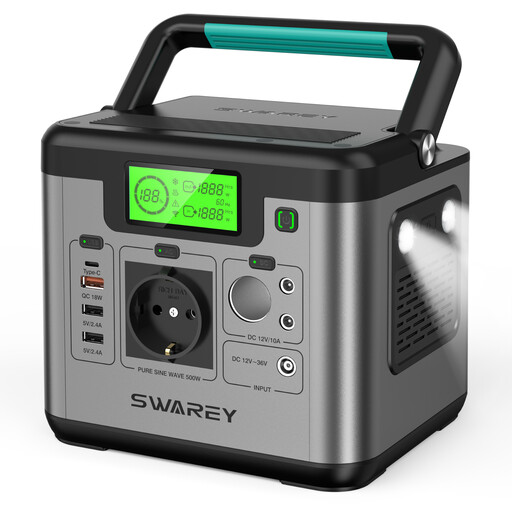
Why This Fits Their Persona: Ideal for users seeking a flexible solution. This home power station can be used on the go, charged with a solar panel, and serves as an entry point into solar energy storage without requiring a fixed installation. Perfect for the balcony, camping, or as an emergency backup for essential small devices.
As a self-contained system, it bypasses compatibility issues (Pitfall 3). The capacity is clearly defined and designed for mobile use, which prevents mismatched expectations.
High portability and versatile connectivity options (AC, USB-C PD 65W, DC). The pure sine wave output also protects sensitive electronics.
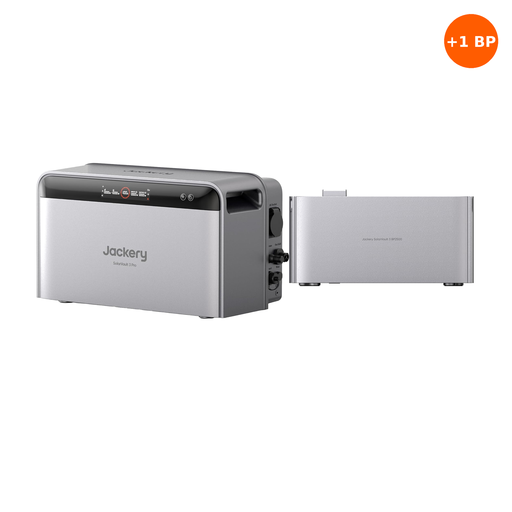
Why This Fits Their Persona: Perfect for homeowners and renters who want to cover their base load day and night with solar power and reduce their electricity bills. The 5.04 kWh capacity and 1200 W output are ideally sized to significantly increase self-consumption.
This system is modular, avoiding the lack of future-proofing (Pitfall 2). You can start with this configuration and add more batteries as needed.
High PV input of 4000 W with 4 MPPTs for maximum solar harvest and a scalable design. The installation is designed as a plug-and-play solar system with storage.
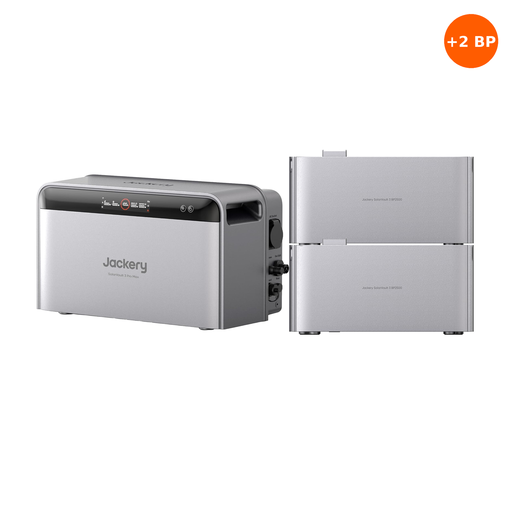
Why This Fits Their Persona: For those aiming for maximum energy self-sufficiency. With 7.56 kWh of capacity and 2500 W of power, it can run energy-intensive appliances like washing machines or air conditioners. A robust solution for a comprehensive emergency power supply for the home.
This system is designed for maximum performance and expandability (up to 15 kWh according to the manufacturer). It avoids the capacity trap (Pitfall 1) with a large, usable LiFePO4 battery and the future-proofing trap (Pitfall 2) with its scalability.
Massive total capacity of 7.56 kWh and a high output power of 2500 W. The 4 MPPTs maximise solar yield even in complex roof or balcony situations.
We have compiled a complete, real-time list of products that fully meet these strict selection criteria and German safety regulations.
The lifespan of a solar storage system depends heavily on the battery technology used. Modern systems with LiFePO4 cells are designed for long-term use. Many manufacturers specify a lifespan of 6,000 charge cycles or more. With one charge cycle per day, this equates to a theoretical lifespan of over 15 years before the capacity significantly degrades (e.g., to 70% of its original capacity).
A balcony power station with storage can be a sound financial investment as it significantly increases the self-consumption rate of your generated solar power. Without storage, excess energy produced around noon is often fed into the grid unused. With a storage unit, you can save this energy for the evening and night, meaning you have to buy less expensive electricity from your utility provider. The payback period depends on the system's size, your electricity consumption, and the price of electricity.
The term plug-and-play solar system with storage means the system is designed for simple installation by the end-user, without needing an electrician. Typically, the storage unit is connected between the solar panels and the microinverter or plugged directly into a wall socket. However, it's crucial to follow the manufacturer's instructions carefully and ensure all components are compatible. You should also check local regulations and registration requirements for systems with a feed-in power exceeding 800 W.