
Lieferung heute & morgen

Qualitätsgarantie
App herunterladen
Kategorien
A balcony privacy screen primarily serves to protect your privacy. It also fulfils functional purposes as a windbreak and a source of shade. Selecting the right product depends on the structural conditions of your balcony, the material properties, and the desired installation method. The most common solutions are based on fabric balcony covers or freestanding elements.
The decision for a balcony cover should be based on objective criteria. Material, craftsmanship, and the mounting system are the key parameters.
The choice of material significantly influences the privacy screen's durability, weather resistance, and maintenance requirements.
Fabric weight, specified in grams per square metre (g/m²), is a measure of the material's density and thickness.
The type of mounting is crucial for stability and suitability for different types of balconies.
The following products have been selected based on their technical specifications and intended use cases.
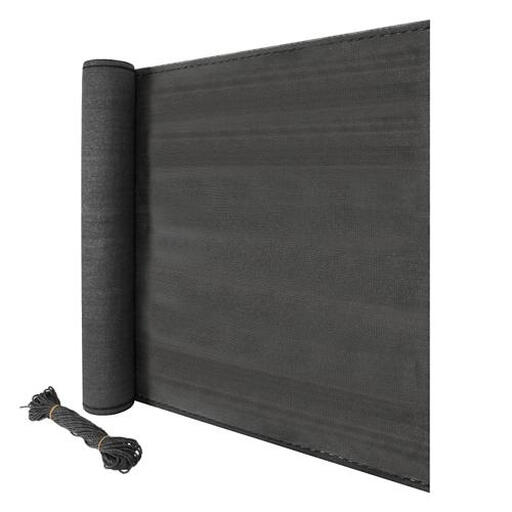
Why we recommend this product: This model stands out for its generous dimensions (1.8 x 15 m) and robust material. According to the manufacturer, the HDPE fabric, with a weight of approx. 180 g/m², provides up to 90% privacy and UV blockage. The reinforced edges and integrated grommets ensure high tear resistance and a stable installation. The Anthracite colour is resistant to dirt and blends seamlessly into modern architectural styles.
Advantages:
Best for:
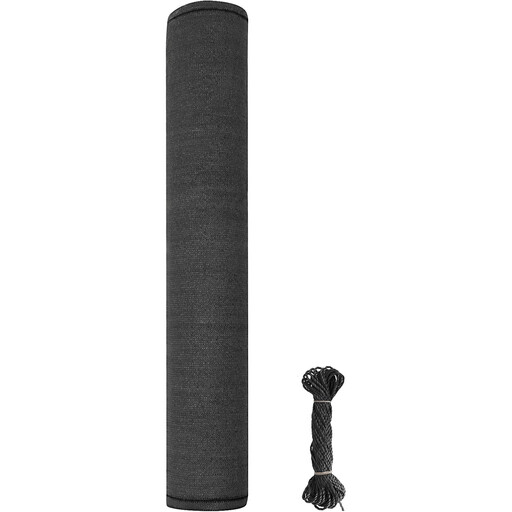
Why we recommend this product: This HDPE netting's key feature is its flexibility. With a fabric weight of 150 g/m², it offers solid privacy protection (at least 80% according to the manufacturer) while being easy to handle. A significant advantage is that the material can be cut to custom dimensions without fraying. Its temperature resistance from -40°C to +80°C highlights its suitability for year-round outdoor use. It is fastened using the included PE cord, which is threaded through the grommets on the top and bottom edges.
Advantages:
Best for:
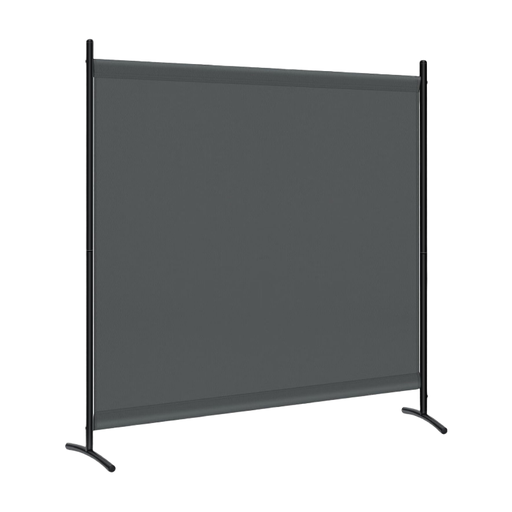
Why we recommend this product: This freestanding screen offers a mobile and flexible privacy solution without requiring fixed installation. The tubular steel frame provides the necessary stability for the 160 g/m² polyester fabric. According to the manufacturer, the fabric is PA-coated, making it water-repellent and sun-protective. Its low weight makes the screen easy to move, and it can be used outdoors on a balcony or as a patio privacy screen, as well as indoors as a room divider.
Advantages:
Best for:
The products featured here cover common use cases. However, the market offers a wide variety of other specialised solutions, from retractable side awnings to fixed cladding elements. You can find a broader selection of products for different requirements in our Garden Privacy Screens category.
1. What is the best material for a durable balcony privacy screen? For a long-lasting, permanently installed solution, HDPE (High-Density Polyethylene) is an excellent choice due to its high UV and weather resistance. The material is tear-resistant, breathable, and low-maintenance. For flexible, mobile solutions, coated polyester combined with a sturdy metal frame is ideal.
2. How is a privacy screen attached to a balcony railing? The most common method for fabric balcony screens is to attach them with zip ties or a sturdy cord threaded through the grommets on the screen and secured to the railing. It is important to pull the screen taut to minimise fluttering in the wind. Freestanding screens do not require attachment to the railing; they are simply placed on the floor.
3. Do I need my landlord's permission to install a privacy screen? Installing a privacy screen may require approval depending on your rental agreement or building regulations, especially if it alters the building's external appearance or is permanently attached to the structure. As a rule, mobile solutions like freestanding screens or discreet covers that can be attached to the railing without drilling are generally not an issue. It is recommended to check your building's regulations or consult with property management or your landlord before installation.