Lieferung heute & morgen

Qualitätsgarantie

Willkommens-Angebote freischalten: KOSTENLOSE Lieferung | Bis zu 80 % RABATT | Kostenlose 30-Tage-JoyPlus-Testphase
App herunterladen
The urban balcony is a unique space. It is a threshold between the private interior and the public exterior. Here, we read, drink our morning coffee, or watch the quiet awakening of the neighbourhood. Yet this small outdoor space often presents a challenge: finding the balance between openness and intimacy. Creating a personal retreat, sheltered from prying eyes and the elements, becomes a deliberate design choice. The goal is not to wall oneself off, but to define a space that fosters peace and focus.
Designing for privacy in an outdoor setting follows its own logic. An effective balcony privacy screen is more than just a barrier. It is a tool for modulating light, wind, and perception. The choice of material and structure determines how we experience the space. A completely opaque screen can create a sense of confinement, while one that is too permeable fails its purpose. The solution lies in thoughtful materiality.
Modern textiles and polymers offer precise properties for this purpose. A fabric made of high-density polyethylene (HDPE), for example, can be engineered to filter a high percentage of light while still allowing for some air circulation. This quality is crucial for a balcony windbreak that doesn't block wind pressure but gently diffuses it. Such a balcony covering protects from gusts without compromising the structure's stability. The same principle applies to a garden privacy screen or a patio privacy screen. It is about creating a membrane that positively influences the microclimate.
In addition to fixed installations, mobile elements are gaining importance. An outdoor folding screen or a flexible outdoor room divider allows for dynamic zoning. It can be repositioned according to the sun's position or the occasion. This transforms an open area into a sheltered dining space or a quiet reading nook. This flexibility allows one to treat the outdoor area as an extension of the living space, actively shaping it rather than just passively using it.
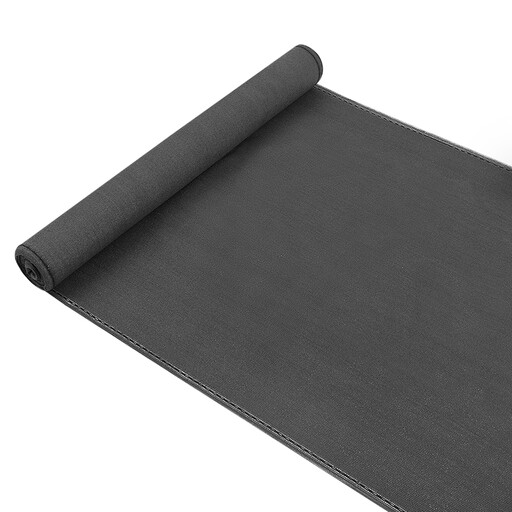
For a durable and integrated solution that blends seamlessly with the architecture, specially designed privacy screen mats are ideal. Such a privacy screen mat like the Woltu 180g/m? HDPE Privacy Screen is attached directly to the balcony railing. The material, an HDPE fabric with a density of 180g/m?, offers high tear resistance and is weather-resistant. The anthracite-coloured surface absorbs light pleasantly, creating a calm, visually understated backdrop. Thanks to its wind permeability of about 10 percent, according to the manufacturer, comfort is enhanced without compromising safety. Installation with cable ties through reinforced metal eyelets is straightforward and ensures a stable hold.
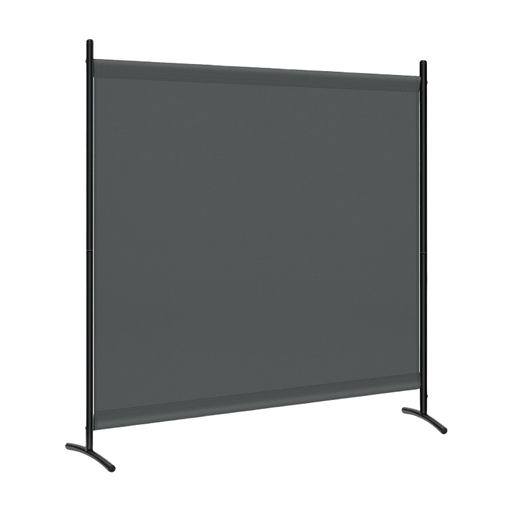
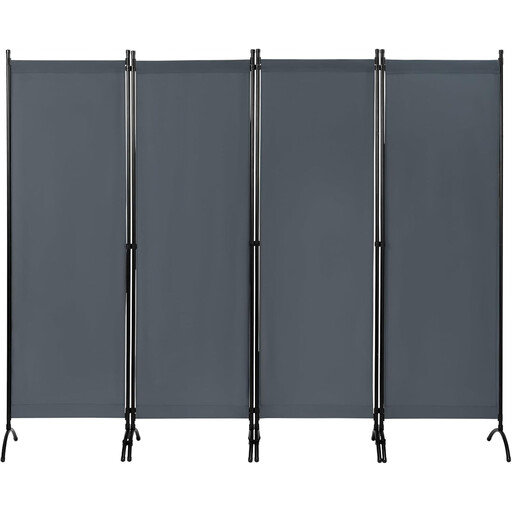
Where more flexibility is required, freestanding elements are the answer. They act as mobile walls that define spaces and can be removed as needed. The WOLTU 1-Panel Room Divider is an example of this modular approach. With its robust tubular steel frame and weatherproof polyester fabric, it can be easily moved to selectively partition areas or shield from the low evening sun. For larger areas or more comprehensive room division, a multi-panel solution like the WOLTU 4-Panel Room Divider can be used. These folding screens are not just functional but are also aesthetic objects that bring structure and depth to an open area. Their dark grey hue blends discreetly into various settings, creating an atmosphere of ordered serenity.
For those who wish to explore a wider selection of objects designed to these material standards, further inspiration can be found in the complete garden divider collection.