
Lieferung heute & morgen

Qualitätsgarantie

Willkommens-Angebote freischalten: KOSTENLOSE Lieferung | Bis zu 80 % RABATT | Kostenlose 30-Tage-JoyPlus-Testphase
App herunterladen
A balcony solar system with battery storage is designed to generate solar power, store surplus energy and increase the amount of electricity you use at home. In practice, however, the stated wattage alone does not determine whether a system is right for you. For tenants, flat owners and households in Germany, compatibility, connection type, storage capacity and the conditions at the installation site are all important.
A set of four 200-watt solar panels has a rated output of 800 watts. However, this does not automatically mean that 800 watts will be fed into your household electricity supply continuously. The key figure is the inverter’s continuous output power. Weather, orientation, shade and temperature also affect the actual yield.
When choosing an 800-watt balcony solar system, check the following:
Depending on the system, a 5 kWh balcony battery may not be able to deliver its full rated capacity to connected devices. Charging losses, battery management reserves and conversion losses all reduce the energy actually available.
The right size depends on your consumption pattern. A household that uses a lot of electricity in the evening will need different specifications from a single-person household where someone works from home during the day. An oversized battery can mean unnecessary expense, while a smaller one may only be able to store a limited amount of surplus solar power.
A plug-and-play solar system can make commissioning simpler, but you still need to check:
Some systems are designed for connection via a Schuko plug. Other connections, such as a Wieland plug, must be installed by a qualified electrician, according to the product information. Always follow the relevant instruction manual and local regulations.
The inverter converts the direct current produced by the solar panels into alternating current suitable for the grid. Look for specifications such as 220–240 volts, 50/60 Hertz, VDE-AR-N 4105 or EN 50549-1, where these are listed for the specific product. The maximum input current and permitted input voltage must also be suitable for the panel configuration.
A balcony solar system with an inverter should also have protective functions against overload, overheating and grid faults. An app or optional Wi-Fi meter can make monitoring easier, but it is no substitute for professional installation.
If you plan to install the system on a balcony, patio or elsewhere on your property, its weather resistance is important. The IP65, IP66 or IP67 rating describes protection against dust and water according to the relevant product classification. It does not mean that a device can be left standing in water or used in any weather.
Flexible panels may be worth considering if your balcony railing has a limited weight capacity. Glass panels, on the other hand, need a secure fixing and enough space. For any system, take wind load, snow, tilt angle and secure anchoring into account.
When choosing a balcony solar system with battery storage, check whether the battery:
Not every battery supports additional modules. This is especially important if you expect your energy needs to increase in the future. A backup power function will not automatically supply electricity to your entire flat, either. It often supports only selected devices or separate outputs.
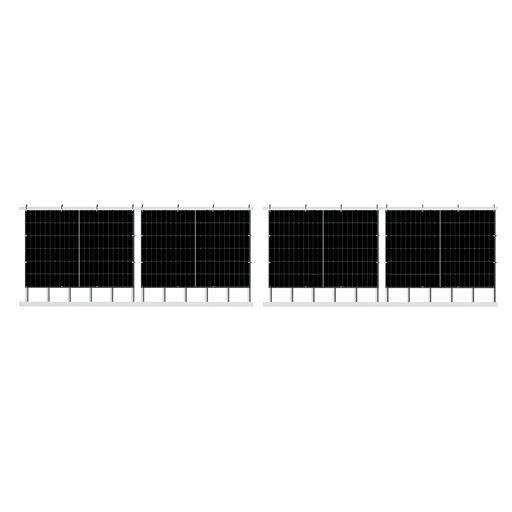
Why this product suits this profile: The set includes four 200 W panels, an MS800 microinverter and a Schuko plug. It is suitable for buyers who want to start generating solar power and consider a storage solution separately.
The specifications distinguish between panel and inverter output. Check separately that the system is compatible with a battery before buying.
Maximum continuous system output of 800 W, IP67 protection rating and a stated weight of 25 kg.
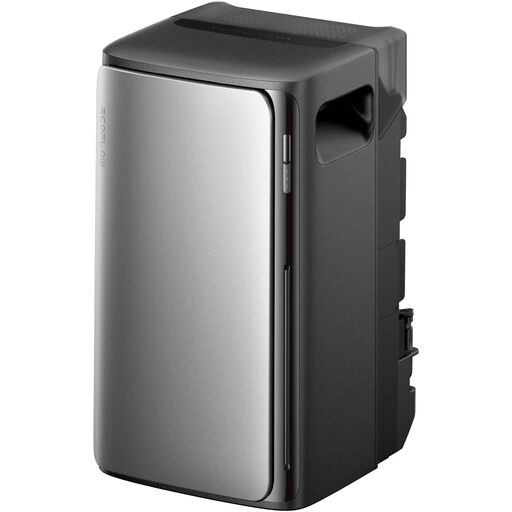
Why this product suits this profile: The system combines battery storage, two MPPT inputs and bidirectional output of up to 1,200 watts. According to the product description, its capacity can be expanded to up to 11.52 kWh.
The initial capacity and potential expansion are listed separately, helping you avoid misjudging the system’s fixed storage capacity.
1.92 kWh base capacity, 1,800 W solar input according to the product information, and an LFP battery rated for 6,000 charge cycles.
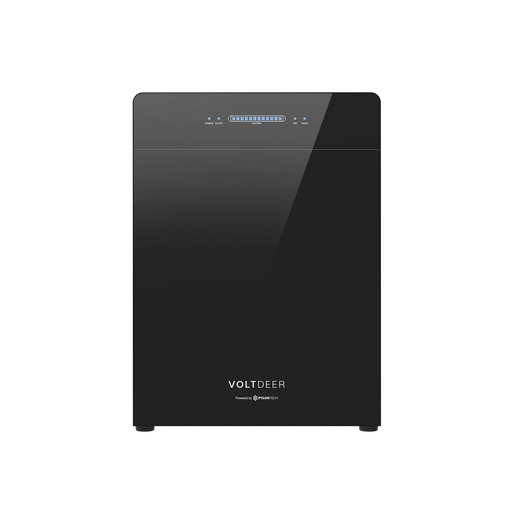
Why this product suits this profile: With 5.12 kWh of integrated storage, this system is aimed at households that regularly use more electricity in the evening and need greater storage capacity. The unit is supplied as the main device, without solar panels or mounting accessories.
The fact that the capacity cannot be expanded is clearly stated. This lets you compare the fixed capacity with your actual energy use before buying.
5.12 kWh of integrated battery capacity, up to 2,000 W PV input and up to 2,400 W output, according to the product description.
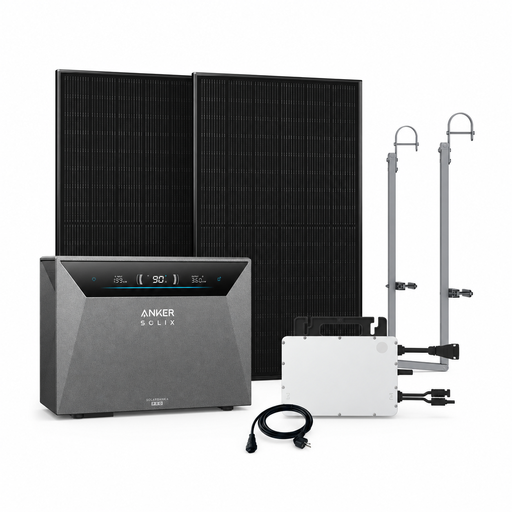
Why this product suits this profile: This bundle combines a battery with four 450 W solar panels, an 800 W microinverter and a mounting system. According to the product description, it also has separate outputs for off-grid devices.
The bundle lists the solar panels, battery and inverter separately. According to the product information, connections via a Wieland plug require a qualified electrician.
5 kWh base capacity, 2,000 W solar input and four MPPT trackers, according to the product description. Check expansion options separately.
We’ve put together a complete, regularly updated list of products that meet these strict selection criteria and fully comply with the safety regulations in force in the EU.
It depends on the system. Some devices connect to your household electricity supply via a Schuko plug, while other components need a special connection or an electrician. Before commissioning the system, check the instruction manual, earthing, electrical protection and applicable grid connection rules.
Its lifespan depends on the cell chemistry, charge cycles, temperature, depth of discharge and how it is used. LFP batteries are often rated for a specified number of charge cycles. This is a manufacturer’s figure, not a guarantee that every household will get the same service life.
That depends on how much of your own electricity you use and how much your panels generate. A battery can shift surplus energy from the daytime to the evening. If your consumption is low or your panels are heavily shaded, a smaller system may make better financial sense. So compare the purchase price, usable capacity, expected charge cycles and your actual daily energy use.