
Lieferung heute & morgen

Qualitätsgarantie

Willkommens-Angebote freischalten: KOSTENLOSE Lieferung | Bis zu 80 % RABATT | Kostenlose 30-Tage-JoyPlus-Testphase
App herunterladen
Rising electricity prices and a growing desire for energy independence are prompting more and more people to consider their own solar solutions. A balcony solar system is an accessible way to start generating your own power. But what happens to that energy when the sun goes down? A balcony solar system with battery storage allows you to store the solar power generated during the day and use it precisely when you need it most—in the evening and at night.
This article serves as a guide. As your Joybuy Product Recommendation Officer, I will provide objective information and a selection of products to help you make an informed decision for your home.
Choosing the right system depends on several technical factors. The following points will help you find the solution that best suits your needs.
The capacity of a solar battery is measured in kilowatt-hours (kWh) and should be matched to your nightly electricity consumption. For an average household, a battery with 1 to 2 kWh is often sufficient to cover the base load (refrigerator, router, standby devices) overnight. An 800W balcony solar system with battery storage can thus significantly increase the self-consumption of the power you generate, as less energy is fed back into the grid unused.
You have two options: purchase an all-in-one balcony solar kit with storage or retrofit an existing system.
Most modern solar batteries use Lithium Iron Phosphate (LFP or LiFePO4) cells. This technology is characterized by a high number of charge cycles (often 6,000 or more) and a long lifespan. Furthermore, LFP batteries are considered thermally stable and safe to operate. Pay attention to the manufacturer's specified cycle count and warranty period to better assess the long-term investment.
Here is a selection of products that cover different needs—from a simple retrofit battery to a high-performance complete system.
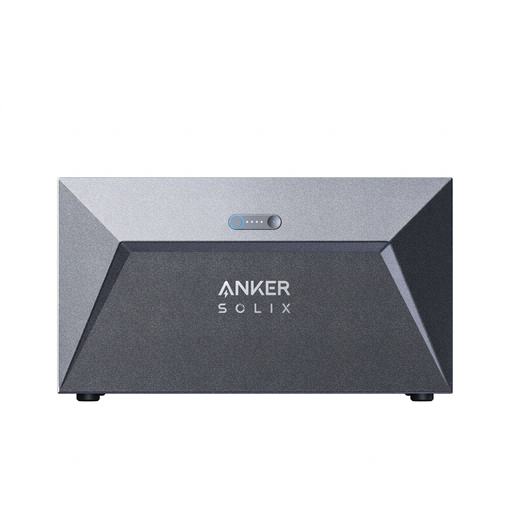
Why it stands out: The Anker Solix Solarbank E1600 is designed as a universal solar battery for balcony power stations. According to Anker, it is compatible with 99% of all commercially available balcony solar systems and can be installed in minutes thanks to its plug-and-play design. The LFP battery cells are built for a long service life.
Advantages:
Who is it for? This model is an excellent choice for owners of existing balcony solar systems looking for a straightforward retrofit storage solution. It is also suitable for beginners who want to build a flexible plug-and-play solar system with storage.
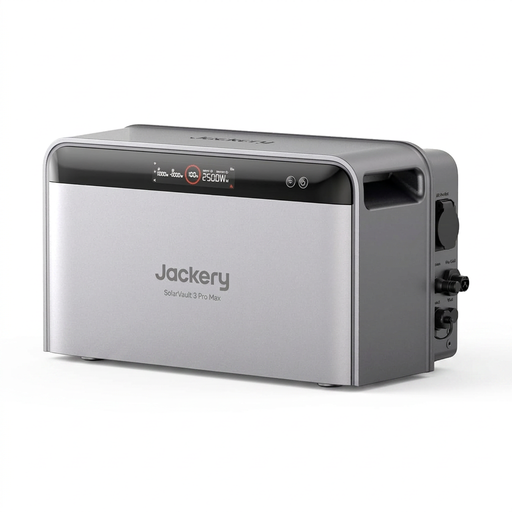
Why it stands out: The Jackery SolarVault 3 Pro Max is a high-performance system designed for high energy demands and expandability. With four independent MPPT inputs, it can optimally process energy from up to 4000W of solar power. The ability to expand its capacity wirelessly makes it future-proof.
Advantages:
Who is it for? This system is aimed at households with high electricity consumption, owners of multi-family homes, or users seeking a scalable solution with an emergency power function.
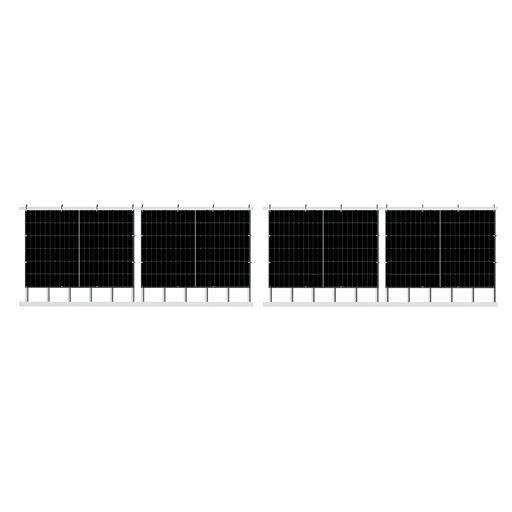
Why it stands out: This is an all-in-one balcony solar kit for getting started with solar power generation right away. It includes four flexible 200W solar panels and the high-performance TSOL-MS800 microinverter. The inverter features two independent MPPT inputs, which optimizes the energy yield, especially with panels that are not ideally aligned.
Advantages:
Who is it for? Ideal for beginners looking for a complete 800W balcony solar system. It provides a solid foundation that can be expanded later with a compatible battery like the Anker Solix Solarbank.
Once you've optimized your home's energy supply, you might also consider switching your outdoor lighting to solar power. This not only reduces further costs but also enhances the safety and ambiance of your garden or balcony.
Discover our selection of Solar Outdoor Stake Lights to illuminate your garden in an energy-efficient way.
Whether the investment is worthwhile depends heavily on your consumption habits. A battery is particularly beneficial if you use little electricity during the day but have a consistent base load in the evening and at night. It maximizes the self-consumption of your self-generated power and reduces the amount you need to buy from your utility provider. The payback period is a key factor in calculating its economic viability.
For an 800-watt balcony solar system, a storage capacity between 1 kWh and 2 kWh is often recommended. This size is typically sufficient to cover the overnight base load of an average household and efficiently use the surplus power generated during the day. Larger batteries may be practical for households with an above-average electricity consumption in the evening.
Not every battery is automatically compatible with every balcony solar system. It is important to compare the technical specifications of your microinverter and the desired battery. However, many new storage systems, like the Anker Solix Solarbank, are designed for broad compatibility and use standard connectors (e.g., MC4), which makes retrofitting a balcony solar system much simpler.