
Lieferung heute & morgen

Qualitätsgarantie

Willkommens-Angebote freischalten: KOSTENLOSE Lieferung | Bis zu 80 % RABATT | Kostenlose 30-Tage-JoyPlus-Testphase
App herunterladen
Rising electricity prices and a growing desire for energy independence are prompting many in Germany to consider generating their own power. A balcony solar system with battery storage offers a practical and accessible way to harness solar energy right at home and lower your electricity bill. This article serves as a guide, introducing various components and systems to help you make an informed choice.
The decision to invest in a system should be based on clear technical parameters. Three aspects are particularly important.
The storage capacity, measured in kilowatt-hours (kWh), determines how much surplus solar power can be stored for use in the evening or at night. A small household with low overnight consumption will require a different capacity than a family that uses electrical appliances heavily in the evenings. Look for a solar battery that is expandable. This allows you to start with a smaller initial investment and increase the capacity later as needed, without having to replace the entire system.
A balcony solar system consists of solar panels, an inverter, and an optional battery. The power of the solar panels is specified in Watt Peak (Wp), while the output power of the inverter is measured in Watts (W). In Germany, the feed-in power for balcony systems is limited to 800 W. However, it is possible to install panels with a higher total output (e.g., 900 Wp or more) to maximise the use of the 800 W limit, even in less-than-optimal lighting conditions. Ensure that all components—panels, inverter, and battery—are compatible with each other.
Some storage systems offer integrated backup power. During a power outage, these systems can continue to supply energy to selected devices, maintaining essential household functions. For users who value flexibility, portability can also be a key factor. A portable 500W solar panel or larger, combined with a mobile power station, is suitable not only for the balcony but also for camping trips or use in the garden.
Here is a curated selection of products that cater to different needs—from complete systems to individual components for expansion.
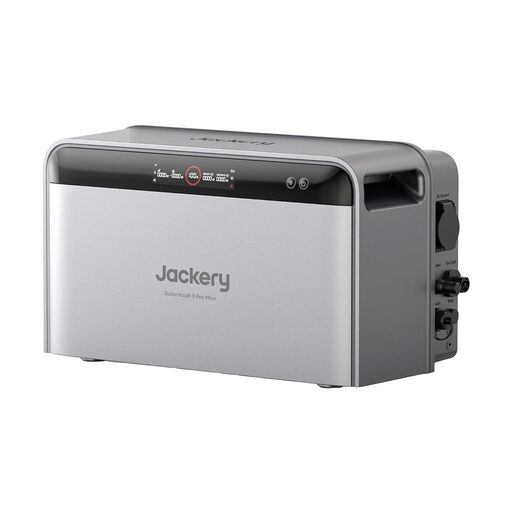
Why it stands out The Jackery SolarVault 3 Pro is a comprehensive system designed for high performance and scalability. With an expandable storage capacity from 2.52 kWh to 15.12 kWh and a PV input of up to 4,000 W, it targets users aiming for maximum energy self-sufficiency. According to the manufacturer, its AI-powered energy management optimises self-consumption and can leverage dynamic electricity tariffs.
Advantages
Who is it for? For homeowners and demanding users seeking a powerful, future-proof solar system for the balcony or rooftop, who also value smart home integration and reliable backup power.
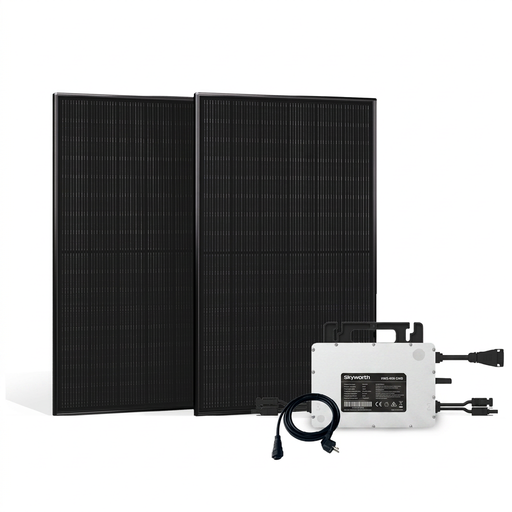
Why it stands out This kit from Skyworth provides a solid foundation for getting started with solar power generation. It includes two 450 W solar panels with a discreet "All Black" aesthetic and a matching microinverter. Designed as a pure generation system, it serves as an excellent base for later expansion with a compatible storage system.
Advantages
Who is it for? For beginners who want an uncomplicated way to start saving on electricity costs with solar and are looking for an aesthetically pleasing solution for their balcony. It's a great choice for users who want to prioritise power generation now and potentially add a battery later.
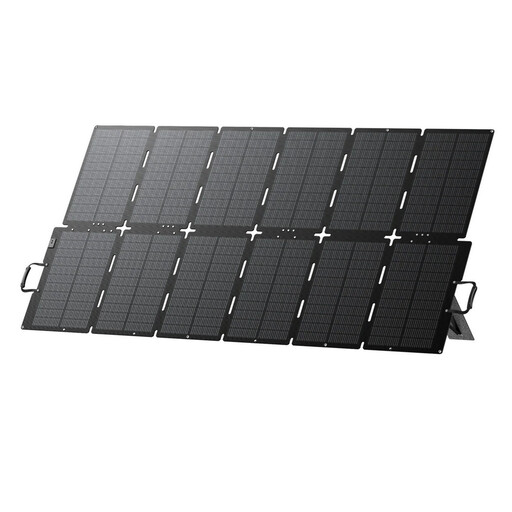
Why it stands out The BLUETTI SORA 500 is a single, foldable solar panel with a high output of 500 W. Designed as a mobile or supplementary component, it stands out for its portability and high efficiency. Thanks to its standard MC4 connector, it is compatible with many power stations and solar systems.
Advantages
Who is it for? For owners of compatible power stations looking to maximise their charging speed, as well as for campers, RV users, and anyone who needs a powerful and flexible solar solution for mobile use.
Beyond power generation, the right lighting plays a crucial role in creating atmosphere and ensuring safety. If you want to further enhance your balcony, terrace, or garden, explore our selection of wooden post outdoor lights to add stylish accents.
The amount you save depends on several factors: your electricity consumption profile, the orientation and tilt of the solar panels, the size of the battery, and local weather conditions. The basic principle is to store power generated during the day but not immediately consumed, and use it in the evening or at night. This minimises your reliance on expensive grid electricity and maximises your self-consumption rate, which directly contributes to saving on electricity costs with solar.
Yes, the basic setup of a plug-and-play solar system is generally straightforward for tech-savvy individuals: mount the panels, connect them to the inverter, and plug the inverter into your power grid. For connecting to the home grid in Germany, a special energy socket (compliant with the Wieland standard) is often recommended, which should be installed by a qualified electrician. Registering the system in the Market Master Data Register of the German Federal Network Agency is also a necessary and simple step.
In Germany, a simplified procedure applies to balcony power stations with an inverter output of up to 800 W. A formal building permit is generally not required. However, the systems must be registered with the German Federal Network Agency's Market Master Data Register and with the grid operator. For tenants and members of homeowners' associations, it is also advisable to obtain consent from the landlord or the association before installation.