
Lieferung heute & morgen

Qualitätsgarantie

Willkommens-Angebote freischalten: KOSTENLOSE Lieferung | Bis zu 80 % RABATT | Kostenlose 30-Tage-JoyPlus-Testphase
App herunterladen
The selection of dolls is vast, ranging from classic play dolls to interactive collectible figures. Making the right choice—one that not only lights up a child's eyes but is also safe and durable—can be a challenge. Many products promise more than they deliver, leading to disappointment once the initial excitement wears off. As your Joybuy Product Recommendation Officer, I'll help you spot common purchasing traps and make an informed decision.
Before you decide on a model, you should be aware of the most common issues that can quickly spoil the fun.
To avoid a bad buy, focus on three objective features that determine a doll's true value.
A child's safety is the top priority. Always look for the CE marking, with which the manufacturer declares that the product complies with applicable EU requirements. For plastic dolls, labels like "BPA-free" indicate the use of tested materials. For a fabric doll, washable textiles (ideally machine washable at 30°C) are a major advantage for hygiene and longevity. For dolls intended for toddlers, always check the warnings for small parts that could be swallowed.
A well-designed play concept fosters creativity more sustainably than a single, short-lived effect. A posable play doll with combable hair and a basic set of clothes often offers more long-term engagement. Brands like Barbie dolls or Disney Princess have relied on proven role-playing concepts for decades, which are now complemented by new themed worlds like the mermaid doll. Consider whether the play principle—be it fashion, adventure, or collecting figures like L.O.L. Surprise—matches the child's interests.
A doll should match the child's motor and cognitive development. Soft fabric dolls without small parts are suitable for younger children. From around the age of three, dolls with clothes that can be put on and taken off and simple accessories become interesting, as they train fine motor skills. Complex collectible figures for kids or sets with very delicate parts are better suited for older children or teenage collectors.
Here are some recommendations tailored to different needs and play preferences.
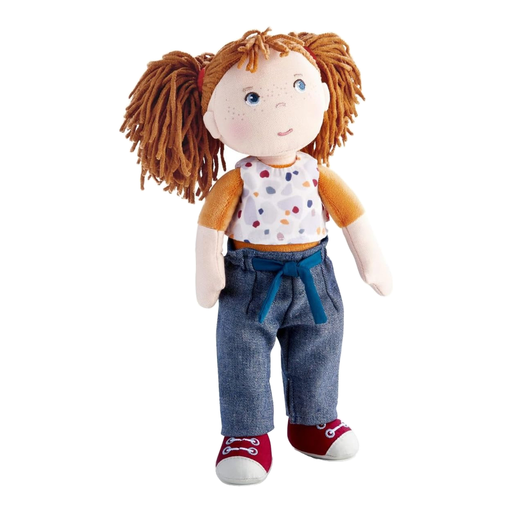
Why this model is a great fit: Ideal as a first doll for toddlers. Its soft texture encourages a sense of closeness and early nurturing role-play without being overwhelming with complex features.
This fabric doll intentionally avoids electronic gimmicks and the accessory cost trap. Its play value lies in its tactile feel and the child's imagination. The clothing is removable but doesn't require mandatory expansion for play.
According to the manufacturer, the doll is washable at 30°C, which significantly simplifies cleaning and ensures hygiene. The embroidered face prevents small parts from detaching or being swallowed.
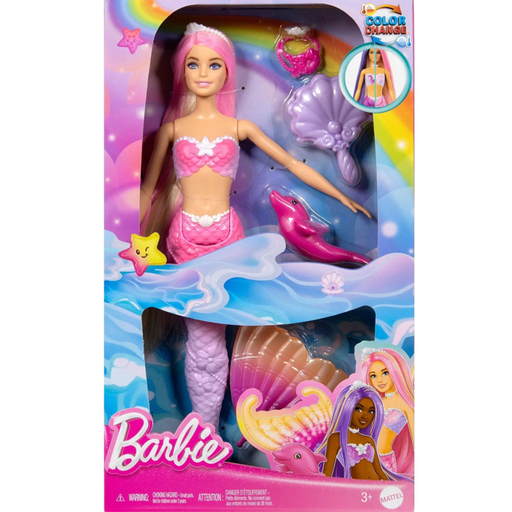
Why this model is a great fit: Appeals to children who love magical themes and interactive play. The colour change in water provides a direct incentive for engagement and makes the doll a perfect companion for bathtime.
The colour-change effect is a durable, purely physical function (thermochromic) that works without electronics. The set already includes accessories like a brush and an animal friend, allowing for immediate play without additional purchases.
The colour change is reversible: cold water transforms it to purple, while warm water restores the original pink colour. This increases the replay value compared to one-time effects.
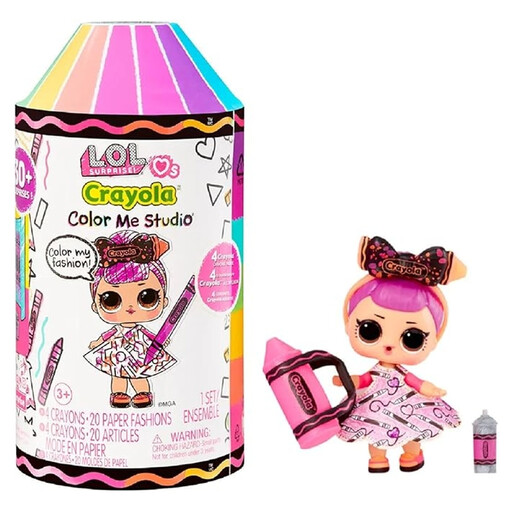
Why this model is a great fit: It combines the thrill of unboxing and collecting L.O.L. Surprise with a creative activity. Here, children can become designers themselves and create their own fashions.
The play value lies in the creative process, not a fragile gimmick. The set is designed as a complete art studio and, according to the manufacturer, includes 20 paper fashions and 4 Crayola crayons. Everything can be stored inside the capsule.
This set actively promotes fine motor skills and creativity. The combination of a well-known toy brand and an established creative brand (Crayola) creates a self-contained, high-quality play experience.
We have compiled a complete, up-to-date list of products that fully meet these strict selection criteria and safety standards.
The cleaning method depends on the material. Hard plastic dolls, like most Barbie dolls, can be simply wiped with a damp cloth and mild soap. For fabric dolls, you should always check the care label. Some models, like the Haba Doll Malou, are machine washable, which makes cleaning much easier. Synthetic hair can be gently combed with cold water and a little conditioner to detangle it.
Most manufacturers label toys with small parts with the warning "Not suitable for children under 36 months" due to the choking hazard. This age limit is an important safety guideline. Even for children over three, it is advisable to check the durability of the accessories and supervise play initially to ensure the child handles them responsibly.
The CE marking is not a quality seal but a declaration of conformity by the manufacturer. With this mark, the manufacturer confirms that the product complies with all relevant European directives regarding safety, health, and environmental protection. For toys, the Toy Safety Directive (2009/48/EC) is particularly relevant, which sets limits for chemical substances and requirements for mechanical and physical safety, among other things. The presence of the mark is a basic prerequisite for selling toys in the EU.