
Lieferung heute & morgen

Qualitätsgarantie

Willkommens-Angebote freischalten: KOSTENLOSE Lieferung | Bis zu 80 % RABATT | Kostenlose 30-Tage-JoyPlus-Testphase
App herunterladen
A ball may seem like a simple purchase. But unclear age guidance, unsuitable materials or the wrong size can quickly lead to disappointment. When choosing balls for children, parents, grandparents and carers should look beyond colour and design, and focus above all on how the ball will be used, its construction and its safety.
A product may be marketed for a particular age while carrying a different warning. For example, the Chicco Musical Ball is listed as suitable from 0.5 years, while the product information also includes a restriction for children under 6. Check this kind of information directly on the packaging and in the manufacturer's guidance before you buy.
A soft ball may be easier for babies to hold, but that does not mean it is free from small parts that could be swallowed, loose seams or detachable components. Regular checks are particularly important for a soft ball for babies, a musical ball or a ball with filling.
A ball that bounces a lot may not be practical in a home with hard floors, glass surfaces or delicate furniture. On the other hand, a lightweight sensory ball may not be robust enough for active play in the garden. Think about whether you need an indoor ball, an outdoor ball, a bath toy or a ball for a particular game.
For babies and younger toddlers, low weight, a grippy surface and a clearly defined shape are particularly important. A grasping ball with openings is usually easier for little hands to pick up than a smooth, heavy ball. With a ball toy from 3 months, also check for small parts, battery compartments and moving decorations.
For children aged around 3 and over, larger play balls, throwing games or simple catching games may be suitable. Depending on the product, a ball toy from 5 years may bounce more strongly or involve more complex movements. Always follow the manufacturer's specific age guidance.
Fabric balls feel soft, but absorb liquids and dirt differently from plastic or PU models. Look for:
A sensory ball with different textures can encourage children to explore by touch and practise gripping. This describes the play idea; it is not a medical or therapeutic claim.
For toys sold in Germany, the packaging, age guidance and warnings should be consistent. The EN 71 series covers various aspects of toy safety. For example, the BanaSuper Soft Play Set is stated to comply with EN71-1, EN71-2 and EN71-3. This information applies to the product described and should not automatically be assumed to apply to other balls.
For a musical ball for babies, you should also consider the batteries, volume, fastening and cleaning method. The Chicco Musical Ball is described as having a removable battery compartment for cleaning. Check that the compartment is securely closed before every use.

Why this product suits them: This lightweight ball has 32 finger holes to make it easy to grip, and is suitable for playing at home or on the go.
The open design makes it easier to pick up than a smooth, solid ball. Even so, check the material regularly for cracks.
10.16 cm in diameter, weighs 23 g and requires no batteries, according to the product information.
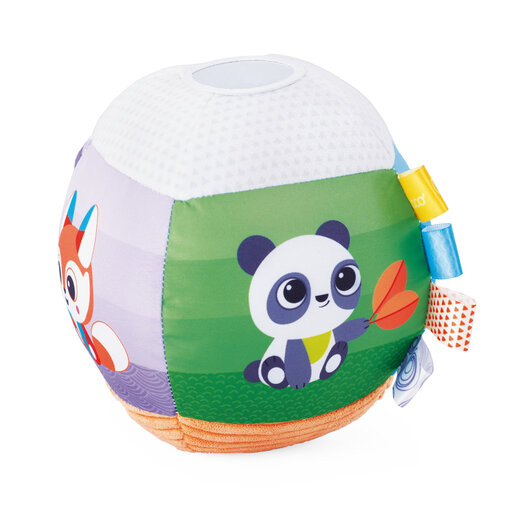
Why this product suits them: With several fabric textures, hanging elements and music, this ball is a good choice for families looking to combine different sensory features in one toy.
The product description lists different fabrics and a removable battery compartment. Check the conflicting age guidance and warnings before buying.
Fabric surfaces, music and sound effects, and the option to wash it after removing the battery compartment.

Why this product suits them: This compact PU ball is listed as suitable for children aged 5 and over. It's aimed at families who want to play indoors or outdoors on hard surfaces.
The manufacturer's information specifies hard surfaces and rules out soft ground. This makes it easier to plan realistically how and where to use the ball.
PU material, around 6.3 cm in diameter and weighing approximately 56.7 g, according to the product details.
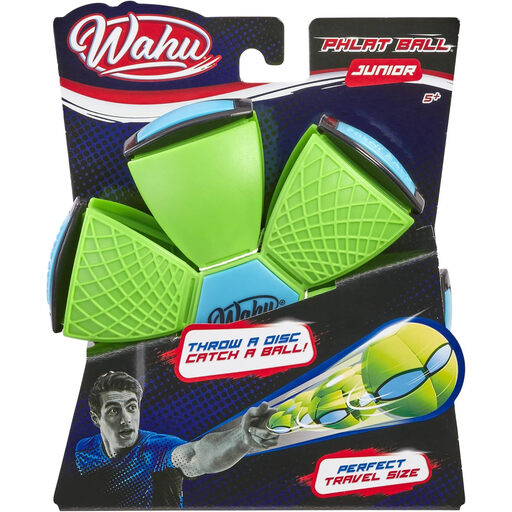
Why this product suits them: Throw it like a disc and it transforms into a ball as it flies through the air. It's a fun choice for the garden, park or holidays.
Its flexible design is made for catching games and is not the same as a hard sports ball. Check the age guidance on the packaging before you buy.
Around 15 cm in diameter, lightweight and made from soft, flexible plastic, according to the product description.
We've put together a complete, regularly updated list of products that meet these strict selection criteria and fully comply with the safety regulations in force in the EU.
It depends on the shape, material and warnings. Some products are listed as suitable from 0 months or 3 months, while others are only suitable from 5 years. The specific age guidance, ball size and absence of small parts are what matter. Babies should always be supervised during play.
Its lifespan depends on the material, how often it's used and how it's stored. With regular use on suitable surfaces, a PU or plastic ball may last longer than a fabric ball that's often exposed to moisture. Cracks, loose seams, damaged surfaces or leaking fillings are signs that it's time to stop using the product.
Depending on the model, a musical ball needs batteries. The Chicco Musical Ball is listed as requiring two AAA batteries. So, as well as the purchase price, factor in battery replacements, cleaning and any spare parts you may need. For battery-operated ball toys, also check that the battery compartment stays securely closed.