
Lieferung heute & morgen

Qualitätsgarantie

Willkommens-Angebote freischalten: KOSTENLOSE Lieferung | Bis zu 80 % RABATT | Kostenlose 30-Tage-JoyPlus-Testphase
App herunterladen
A good cutting board is the foundation of any kitchen. The bamboo cutting board, in particular, has gained popularity in recent years, promoted as a sustainable and durable alternative. However, not every bamboo board lives up to its promise. Many buyers find that after a short time, their new board warps, develops cracks, or dulls their knives faster than expected.
As your Joybuy Product Recommendation Officer, I'm here to help you recognise the common pitfalls and make an informed decision. This guide focuses on the objective criteria that define a long-lasting and functional bamboo cutting board.
Before you invest, you should be aware of the weaknesses that often only become apparent after purchase:
To avoid these problems, pay close attention to the following three parameters. They are more crucial than any marketing promise.
The manufacturing process is the most important indicator of longevity.
The thickness of a cutting board is directly linked to its stability.
Practical details significantly enhance everyday usability.
Based on these objective criteria, we have identified products that are well-suited for different user profiles and their specific requirements.
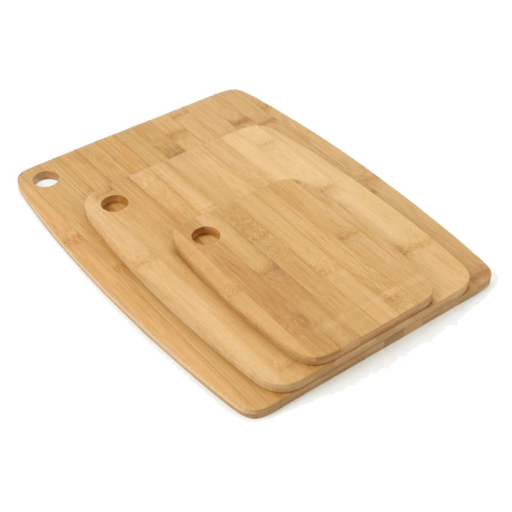
Why This Fits Their Persona: Ideal for outfitting a student or shared flat kitchen for the first time. The set of three different sizes (small, medium, large) allows for hygienic separation of foods like meat, vegetables, and bread without breaking the bank.
Instead of buying a single, low-quality board, this set provides a functional solution. By distributing tasks across three boards, the strain on each individual board is reduced, increasing their lifespan compared to a single budget option.
Practical cutting board set with three sizes for different applications. Promotes kitchen hygiene through separate use.

Why This Fits Their Persona: Perfect for anyone who cooks regularly and needs a reliable tool. The large surface area and juice groove make it an ideal carving board for roasts or for prepping larger quantities of vegetables. The WMF brand is known in Germany for its kitchen standards.
With a thickness of 1.9 cm and high-quality material, this board resists warping. The wrap-around juice groove solves the problem of messy countertops when dealing with juicy foods—a common annoyance with boards lacking this feature.
Generous work surface and integrated juice groove. The surface is designed as a knife-friendly cutting board.
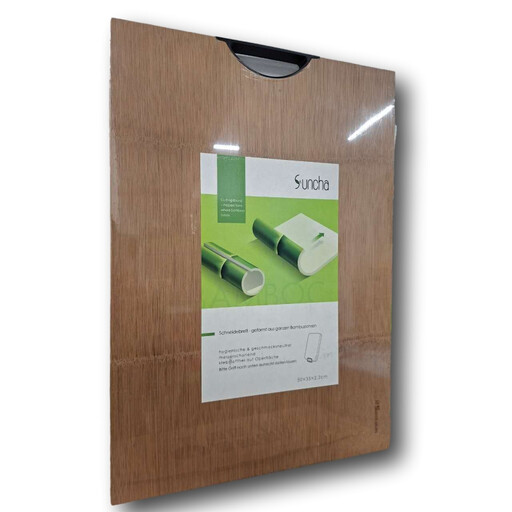
Why This Fits Their Persona: For users seeking a single, extremely durable, and aesthetically pleasing board. Ideal for open-plan kitchens where the board also serves as a design object. The solid construction is engineered for maximum longevity.
According to the manufacturer, this board is crafted from a single piece of bamboo, making it glue-free. This eliminates the most common weak point—failing glue seams. The exceptional thickness of 2.6 cm ensures maximum stability against warping.
Crafted from a solid piece of bamboo without adhesive. Extremely robust and dimensionally stable due to its significant thickness. A large cutting board for the highest demands.
We have compiled a complete, up-to-date list of products that fully meet these strict selection criteria and German safety regulations.
1. How do you properly clean and care for a bamboo cutting board? Clean the board by hand after each use with warm water and a mild dish soap. Rinse it thoroughly and dry it immediately with a cloth. Store it upright to allow air to circulate. Never put a bamboo board in the dishwasher or soak it in water. To keep the material supple and prevent it from drying out, you can rub it with a food-safe mineral oil every few weeks.
2. Is bamboo more hygienic than plastic? Bamboo naturally possesses antibacterial properties. A hard, low-porosity surface like bamboo's is very hygienic with proper care, as it makes it difficult for bacteria to penetrate. However, regular and thorough cleaning is crucial. Deep cuts can lead to hygiene issues in both bamboo and plastic, which is why heavily worn boards should be replaced.
3. How knife-friendly is a bamboo cutting board? A knife-friendly cutting board is crucial for the longevity of your kitchen knives. Bamboo is harder than most woods like maple or beech, but generally more forgiving than cutting boards made of plastic, glass, or stone. It offers a good middle ground between board surface durability and blade preservation. Boards that are not excessively hard are the better choice here.